


 1045
/ 4
Min Read
1045
/ 4
Min Read


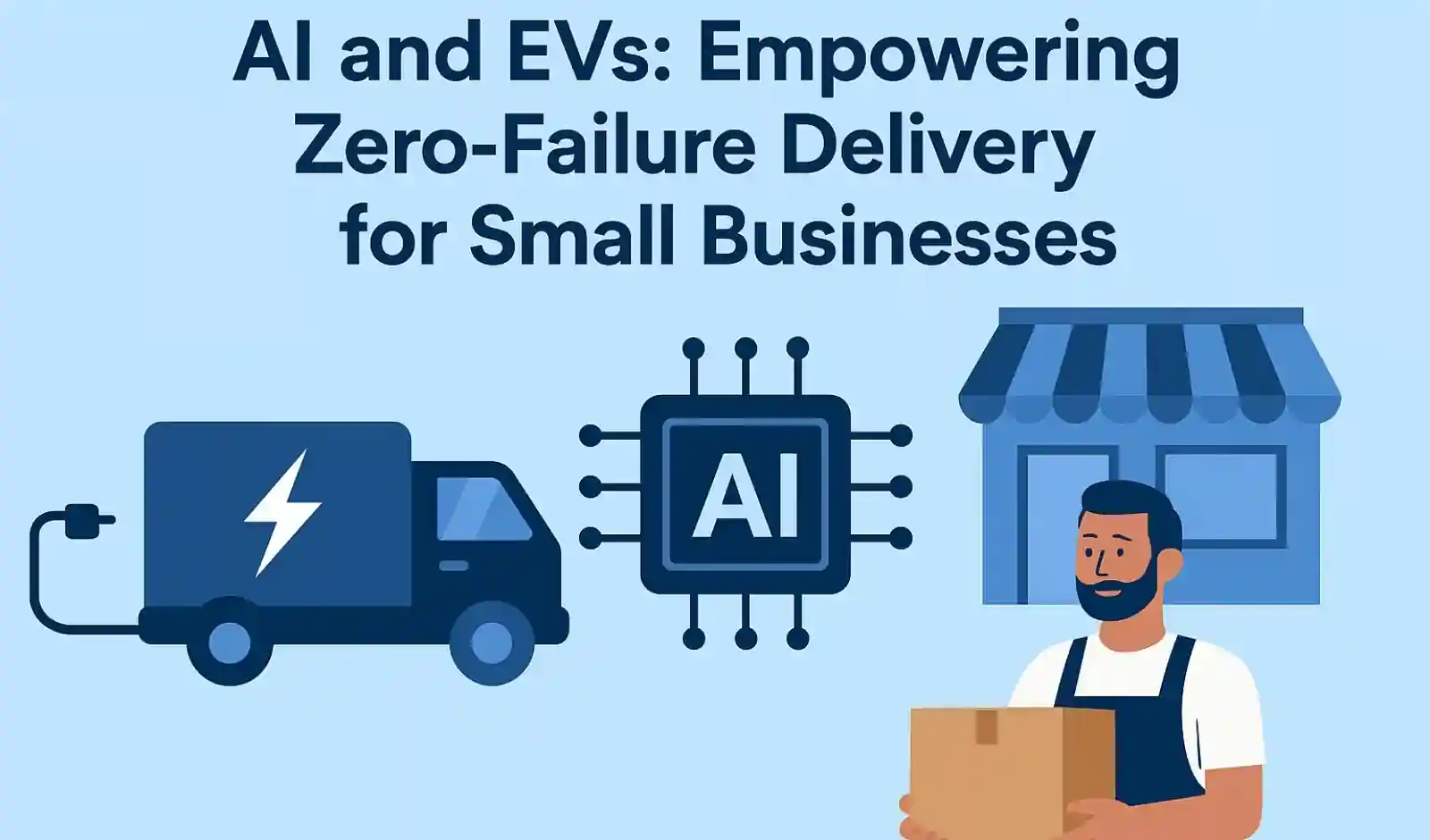
India logistics sector is transforming at an unprecedented pace, driven primarily by Artificial Intelligence (AI) and electric vehicles (EVs). Small businesses are now able to provide fast, reliable, and zero-failure deliveries similar to large enterprises. AI enables demand forecasting, smart routing, and real-time tracking, while EVs help reduce costs and make delivery operations more sustainable. In this new era, even small retailers can deliver precise, fast, and dependable services to customers.
Prateek Rao, Co-Founder of HUGHES, stated that India’s logistics sector is evolving very quickly. The rise of 10–15 minute delivery models has completely changed customer expectations. Now, not only large e-commerce companies but also small businesses face the pressure of providing near-zero failure deliveries.
However, India presents unique challenges such as crowded cities, unpredictable traffic, fragmented supply chains, and inconsistent infrastructure, making last-mile delivery the most complex and expensive segment. This is where AI plays a transformative role. AI-based demand prediction helps determine which products should be stored in which areas, ensuring availability in nearby dark stores. Smart routing systems analyze traffic and micro-zone patterns to find the fastest paths. Machine learning helps optimize delivery fleets, especially EVs, reducing costs. Computer vision and IoT tracking improve package monitoring and accuracy.
Services that were previously limited to large brands are now accessible to small businesses through cloud-based AI logistics platforms. Small retailers can now provide the same reliable and fast delivery experiences as quick-commerce companies. In the next decade, logistics success in India will be measured not by distance but by precision, consistent performance, and customer trust.
Challenges and the Importance of AI
Last-mile delivery is particularly challenging in India due to congested cities, traffic, fragmented supply chains, and inconsistent infrastructure, making it time-consuming and expensive. AI and EVs are becoming game-changers here. AI-based demand prediction ensures the right stock is placed in the right locations, while EVs reduce fleet costs and energy consumption, making operations more efficient and affordable for small businesses.
Himanshu Arya, Founder and CEO of Luxury Cart, said, “AI is transforming logistics from a probabilistic system to a precise and reliable process. For small businesses, this means a delivery system where errors are not just reduced but almost eliminated. AI allows real-time demand forecasting, dynamic routing, and proactive problem detection. This enables us to promise zero-failure deliveries, even under high-pressure or high-cost operations. The biggest transformation is in customer experience. When every step is planned, every delay pre-empted, and every parcel trackable in real time, small businesses can offer the same reliability that was previously only possible for large enterprises.”
Technology Access for Small Businesses
Services that were once restricted to large companies like Amazon or Flipkart are now available to small retailers through cloud-based AI logistics platforms. Even small stores can now provide fast, reliable, and accurate delivery experiences comparable to quick-commerce brands.
Ravi Goel, CEO of RapidShyp, added, “AI is bringing a major shift in the logistics sector. Features that were previously exclusive to large companies, like zero-failure delivery models, are now available to small businesses. AI makes real-time decisions, anticipates disruptions, and optimizes operations, making deliveries easier and more reliable for smaller brands. Smart route optimization prevents delays, AI-based demand forecasting keeps inventory balanced, and address verification reduces failed deliveries, saving costs. At RapidShyp, we leverage these technologies to help D2C and e-commerce brands scale confidently. Our AI-based courier recommendation engine selects the best courier based on speed, cost, and historical performance, while RTO prediction tools help sellers avoid risky orders. Real-time tracking, alerts, and smart management ensure errors are not just fixed but proactively prevented. In the coming years, AI will make logistics not just smart but nearly error-free, enabling small businesses across India to achieve higher precision, reliable delivery, and a competitive edge.”
Conclusion
The combination of AI and electric vehicles has opened new possibilities for small businesses in India’s logistics sector. Small retailers can now offer fast, precise, and reliable deliveries that were previously limited to large companies. In the coming years, the success of logistics will be measured not by distance or volume, but by precision, consistent performance, and customer trust. Through AI and EVs, small businesses can make their operations sustainable, cost-efficient, and error-free, delivering a superior experience to customers.


