


 138
/ 3
Min Read
138
/ 3
Min Read


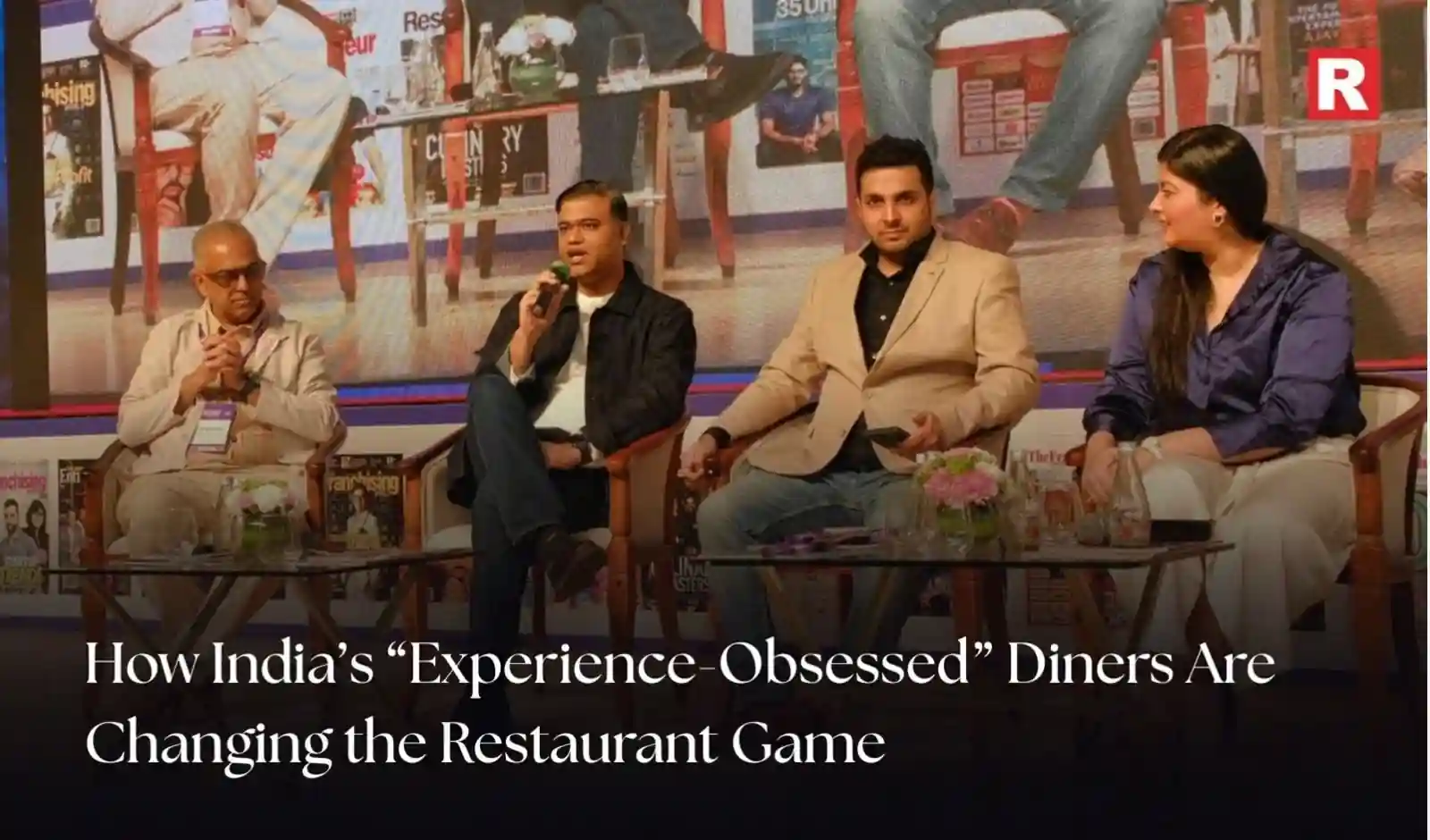
As disposable incomes rise global travel expands and younger diners demand more immersive interactions, the traditional definition of good dining has been replaced by a new benchmark experience.
What once revolved around cuisine and convenience has evolved into something more immersive, more intimate and more emotionally charged: the experience economy. Today, 60% of the diners focus on experience along with dining experiences. Around 80% of these trends are known to the consumers with the power of social media.
From Cuisine to Curation: Understanding the Shift: Experiential dining isn’t a buzzword it’s a shift in how India consumes hospitality. For many diners, the restaurant experience now begins long before the first bite.
According to Chef Nitin Tandon Founder Nitin Tandon Food styling, the transformation is undeniable. “Everything today is part of the experience be it ambience, music, storytelling, lighting, branding. You’re not selling a dish you’re selling a memory.”
Restaurants are no longer isolated culinary spaces; they are curated emotional journeys. A meal is accompanied by a narrative. A cocktail is enhanced by a visual. A dessert arrives with a ritual. A playlist shapes the mood.
Chef Sarfaraz Ahmed Corporate Executive Chef Passion Cuisine India said “If someone leaves with a memory, they will come back. That is the core of experiential dining.” For him menus today lean into nostalgia, regional stories or surprise-driven courses because emotions generate recall and recall drives in repeat business.
Dining has a New Address : There was a time when success meant being on a high street, in a mall, or in a landmark commercial zone. But India’s diners especially millennials and Gen Z have rewritten the map.
Niketa Sharma Founder of Keish Hospitality added From Bandra’s hidden rooftops to Byculla’s revived mills diners are preferring character over convenience. This is the new geography of experience. Spaces like Paash 1633 or Lovefools prove that if the story is compelling, people will find you.
For today’s guests, discovery is part of the joy. A tucked-away cafe is more Instagrammable more personal, more atmospheric than a formulaic mall outlet.
Nikhil Rochlani Managing Partner of Kyma Butterfly High highlighted restaurants can outperform in prime rental locations. “Being located in a quirky lane is an experience in itself. A great location may give you footfalls; a great experience gives you loyalty.”
The Future of Experiential Dining: The experience economy demands evolution not only in design and storytelling but also in operations. Automated ordering kiosks, AI inventory tools and smart prep systems can ease pressure. But the magic, the panelists insisted must remain human.
Chef Ahmed noted “Tech is tool to enhance the experience. There is a hotel in Delhi which gives you AR/VR experience where people can see how they cook. AR is better in my view. But I have experienced both. One in Italy in a Michelin starred restaurant where tech played a major role.”
While Sharma highlighted that VR is important. “AI can help us in analyzing the data to the repetition of customers number of dishes being ordered to ensure customer retention is made. Everything which was done manually, AI can give you spending culture of consumers and help in customer loyalty. If we use it wisely it will enhance the experiences in a positive note.”
The experience economy has already reshaped what guests expect like emotion, atmosphere and memory. But for these experiences to thrive sustainably, the machinery behind them must evolve.
The future will belong to restaurants that understand that hospitality is not a product as it is more like a relationship built with memories, intention, empathy and imagination.
 This article was originally published by the Restaurantindia.in. To read the full version, visit here


