


 79
/ 4
Min Read
79
/ 4
Min Read


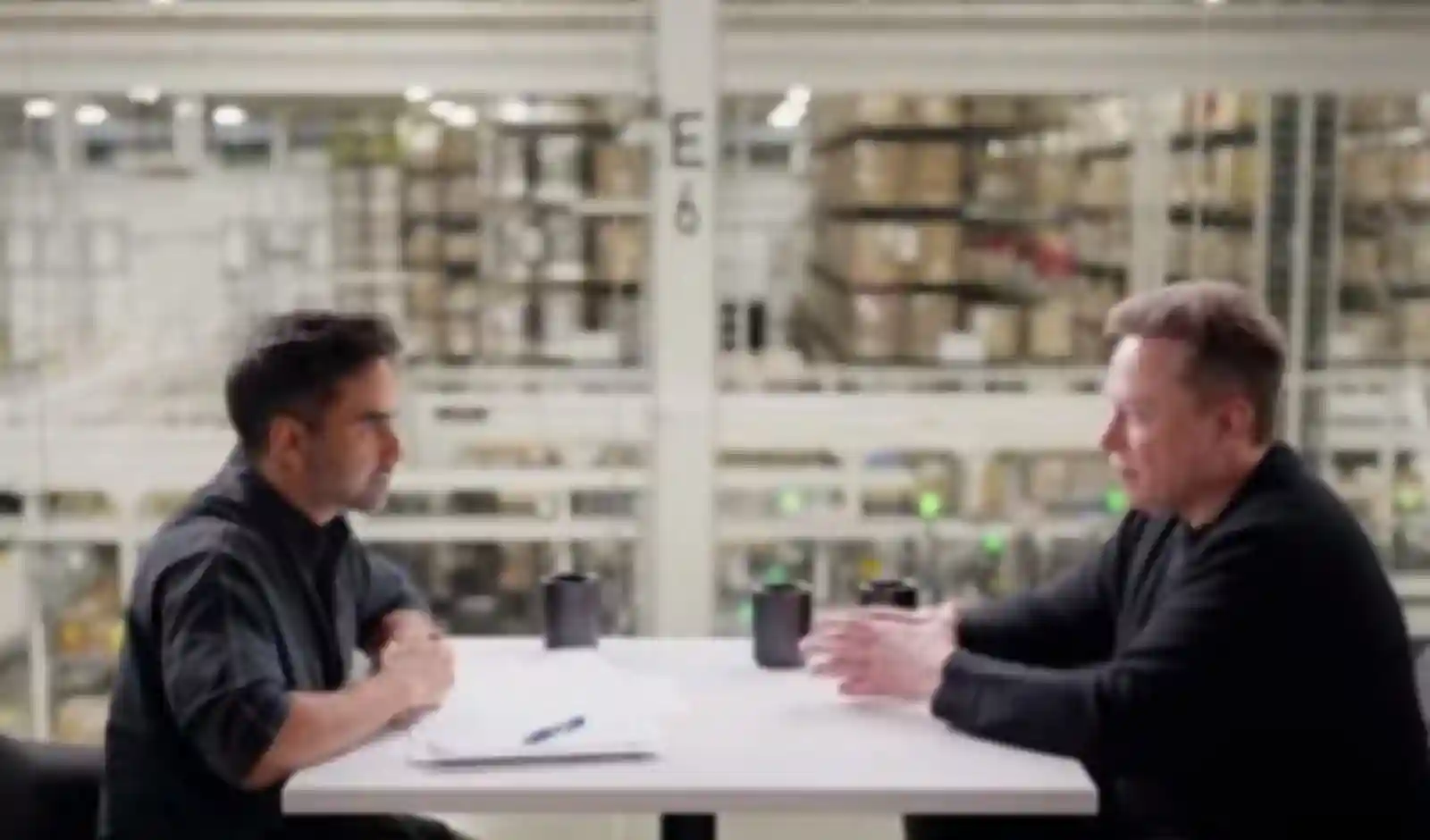
Recent conversation between entrepreneur Nikhil Kamath and Elon Musk covered a broad set of themes shaping global business and technology. The discussion moved through the future of digital platforms, artificial intelligence, energy, immigration, markets and the changing nature of work.
The exchange opened with Kamath asking about the scale and direction of X, the platform Musk is transforming. Musk explained its current reach in simple terms. "We have like about 600 million monthly users. It can get up to 800 million or a billion if there is some major event in the world." He added that his long term goal for X is to become a global communication layer. He described it as an effort "to bring together what people say in many different languages automatically translated so you have the collective consciousness of every language group."
Kamath then raised Musk's decision to acquire Twitter. Musk said his motivation stemmed from concern over the platform's direction. "I felt like Twitter had gone in a direction that had more of a negative influence on the world," he said. His aim, he explained, was to bring balance back to public conversation. "I just want to really have a global platform that becomes close to a collective consciousness of humanity as possible."
On the evolution of digital formats, Musk predicted that communication will shift toward video supported by artificial intelligence. "I do think most interaction is going to be video in the future real time video with AI real time video comprehension real time video generation." Even so, he noted that text will remain important because "text tends to be higher value generally" due to its density of meaning.
When Kamath asked how social platforms could be redesigned from the ground up, Musk said his focus is on creating a global space where open communication is possible. He described it as "a global town square where people can say what they want to say with words, pictures, video where there is a secure messaging system."
The conversation then moved into Musk's various companies and what excites him most at the moment. Musk spoke about a growing convergence between SpaceX, Tesla and XAI. He pointed to the potential of solar powered AI satellites and steady progress in autonomous driving. "All the companies are doing great things" he said while highlighting the work of the teams behind them.
Starlink and its relevance to India also became a key point of discussion. Musk shared that SpaceX would like to operate the service in India but clarified its limitations. "It is not physically possible for Starlink to serve densely populated cities maybe 1 percent or 2 percent but it can be much more effective in rural areas." He described Starlink as a solution tailored for locations where traditional infrastructure struggles to reach.
The topic of investing brought out Musk's first principles approach. He explained that long term investing should be based on fundamentals rather than predictions. "A company is just a group of people assembled to create products and services," he said. For him strong teams and high quality products matter far more than daily fluctuations in the market.
Kamath also asked Musk how work patterns might change as artificial intelligence grows. Musk offered one of his most striking forecasts. "My prediction is that in the future, working will be optional. Like a hobby." He added that although AI may reduce the need to work, building ambitious companies will still require significant effort.
When asked which companies outside his own are positioned for future value, Musk pointed to Google for its foundational AI work and described NVIDIA as a clear leader in the AI economy. He also suggested that live events could become more valuable because physical presence cannot be replicated digitally.
Kamath later brought up tariffs, the United States debt burden and the role of politics in business. Musk said political involvement becomes difficult to avoid once a company becomes large enough. "Politics is a blood sport," he said. "Best to avoid politics where possible."
The discussion also touched on immigration. Musk said the United States has benefited from skilled Indian talent for many years but argued that border management needs clear rules. He expressed support for fixing misuses of the H1B system while maintaining the program for genuine talent.
When Kamath asked Musk for advice for young Indian entrepreneurs, Musk kept it simple. "Aim to make more than you take be a net contributor to society." He advised founders to expect hard work and accept that failure is always a possibility.
In the the final moments, Kamath asked why Musk is drawn to the letter X. Musk responded with humour before tracing the idea back to his early vision for digital money and the original X dot com concept.
The conversation presented Musk's views on technology, economics and society, revealing how he connects engineering, policy and long term global trends into a single vision of the future.
 This article was originally published by the Entrepreneurindia.com. To read the full version, visit here


