


 2641
/ 3
Min Read
2641
/ 3
Min Read


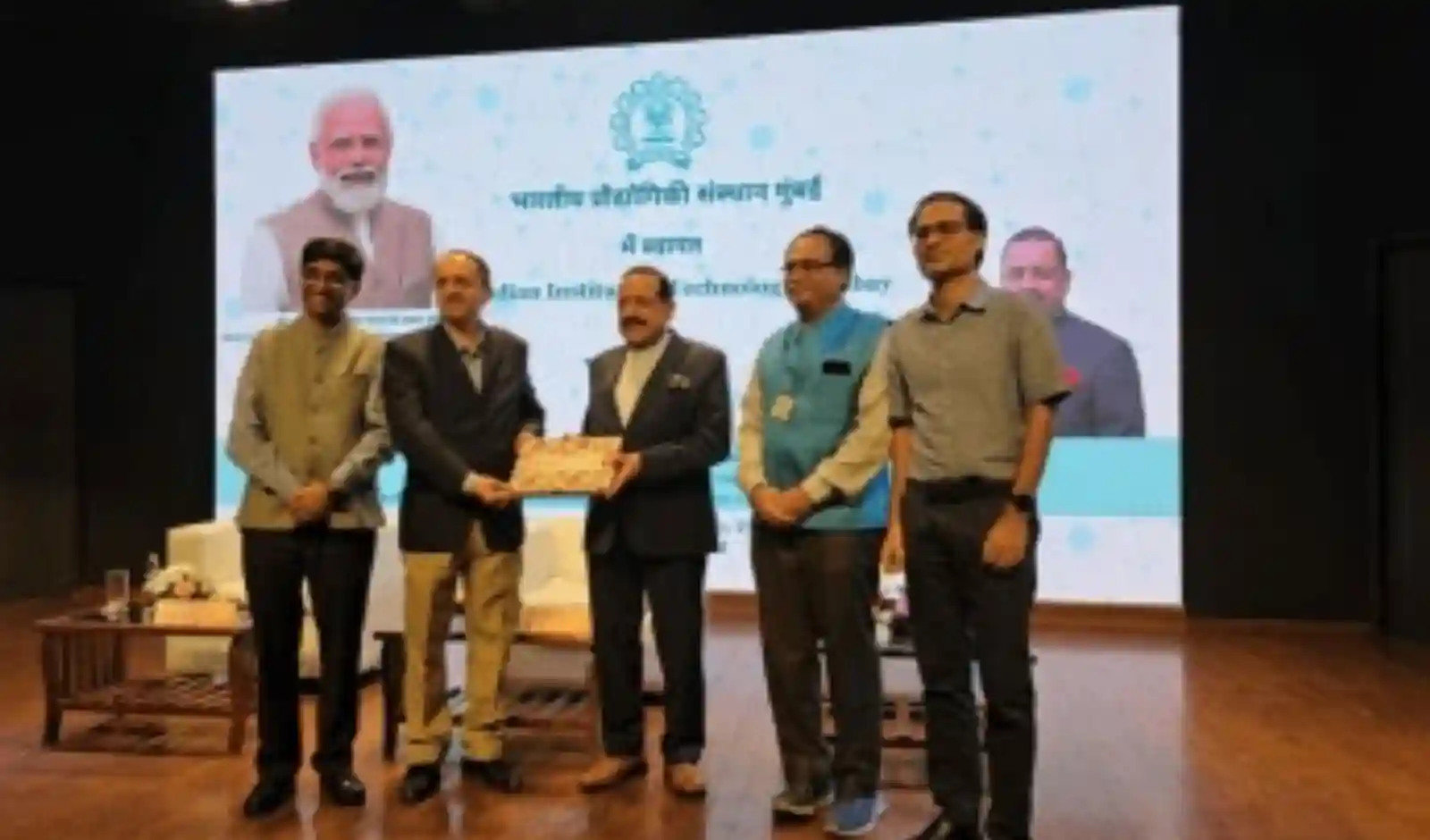
The government is planning to provide Rs 1 crore assistance to 100 engineering colleges to set up laboratories to teach undergraduate short programmes in quantum research, Department of Science and Technology (DST) Secretary Professor Abhay Karandikar said on Monday.
Addressing a function at the Indian Institute of Technology Bombay (IIT Bombay), he said the DST also plans to set up a quantum algorithms technology group to support start-ups and build capacity for research and technology development.
"We are going to set up teaching laboratories in 100 engineering colleges and institutes for teaching undergraduate short programmes . In fact, we have received more than 500 proposals for this, out of which we will select around 100," Karandikar said.
He said, "DST is proud to see strong progress under the National Mission on Interdisciplinary Cyber Physical Systems and the National Quantum Mission, where IIT Bombay is playing a key leadership role."
In this context, he further said that “The Technology Innovation Centre at IIT Bombay has made significant progress by supporting startups, developing new technologies and recently starting work on large-scale models of Indian languages.
He said that all four centres under the National Quantum Mission (i.e. IISc Bengaluru, IIT Madras, IIT Delhi and IIT Bombay) have shown impressive progress in the last few months and the 'Quantum Sensing Hub' at IIT Bombay has been particularly noteworthy.
Union Minister for Science and Technology Dr Jitendra Singh on Monday announced the establishment of two major state-of-the-art quantum fabrication and central facilities under the National Quantum Mission (NQM) during his visit to IIT Bombay.
With a total investment of Rs 720 crore, these two central manufacturing flagship facilities to be set up at IIT Bombay and IISc Bengaluru will indigenise the manufacturing of quantum computing chips and quantum sensors, thereby accelerating their development in India .
Discussing this in detail, he said “Two additional small-scale facilities will also be set up at IIT Delhi and IIT Kanpur.” He also said that till now, India had to largely depend on facilities located abroad for manufacturing quantum devices, which posed challenges in accelerating the process of technology development .
The Minister said that these facilities, which will be accessible to academic institutions, science and technology institutes, industry, start-ups, MSMEs and strategic sectors across the country , will help speed up the manufacturing process and support technology development, prototyping and small-scale production, especially in startups and MSMEs.
Regarding this Singh said, “This will significantly enhance India's capabilities in cryogenic engineering, superconductivity, quantum computing, quantum sensing, photonics, healthcare technologies and green energy devices.” He further said that liquid helium is indispensable for MRI systems, advanced materials characterization and cryogenic electron microscopy (cryo-EM).
"The new facility, which is now dedicated to the nation and open for use by industries, universities and research institutes is equipped with an efficient helium recovery system, which is expected to reduce the cost of cryogenic experiments to about a tenth of the current expenditure, while conserving one of the world's scarcest resources," Singh said.
The Minister said that as global demand for quantum computers grows, India must also strengthen its cryogenics infrastructure. He said that the progress of the Quantum Lab and the new cryogenics facility demonstrate India's rapidly growing leadership in next-generation science and technology.
He said, "The work of IIT Bombay demonstrates how academia, government and industry can work together to build a world-class scientific ecosystem capable of shaping future technologies."


