


 2
/ 2
Min Read
2
/ 2
Min Read


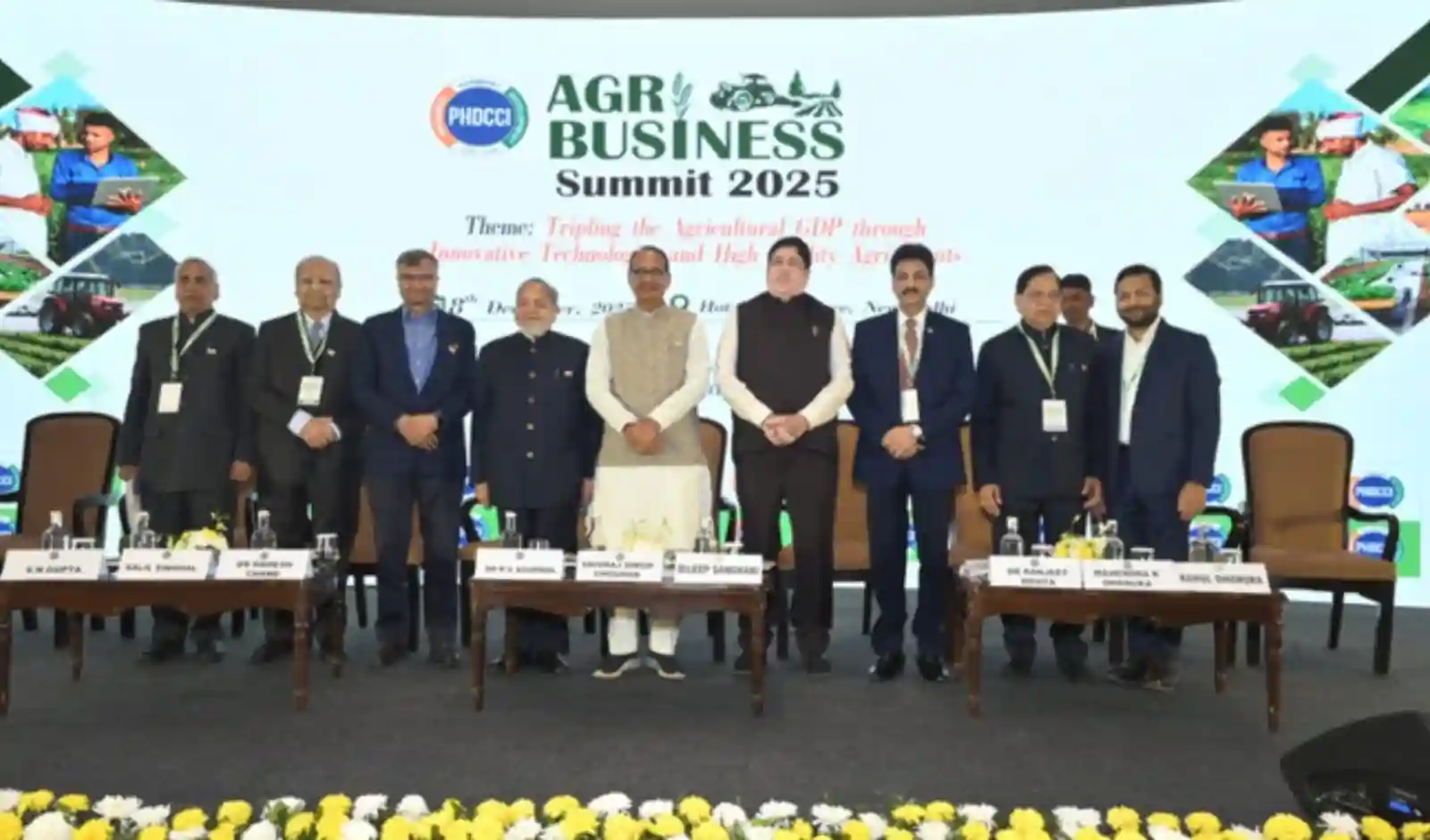
India's agricultural future took centre stage in New Delhi today as leaders, experts and farmers discussed new paths to strengthen rural growth and improve productivity. Speakers stressed the need for technology driven solutions, better resource management and greater support for small and marginal farmers who form the backbone of the sector.
The Agribusiness Summit 2025 brought together policymakers and industry representatives for discussions on modern agricultural practices. The gathering served as a platform to highlight ideas that can contribute to long term improvement in India's farm economy.
Shivraj Singh Chouhan, Union Minister for Agriculture and Farmers Welfare, highlighted remarkable progress under the Modi government, including a 44% surge in sugarcane production since 2014, development of 3,300 climate-resilient seeds, and 36% overall production growth driven by quality seeds, mechanization, and schemes like MSP with price deficiency payments shared between central and state governments.
The Minister stressed integrated farming models for small landholdings averaging less than 1 hectare, value addition, diversification into fish and cattle, and strict regulations on bio-inputs, reducing from 30,000 to just 8,000 compliant producers, while urging balanced fertilizer use to prevent soil degradation and ensure future generations' prosperity.
Dr Ramesh Chand, Member of NITI Aayog, explained that India needs to focus equally on production and productivity. "Our farmers work with great dedication, but we must target higher output per acre," he said. Drawing a comparison with global examples, he added that careful land management and precise farming practices can help India achieve stronger results.
Dr R G Agarwal, Chair of the Agribusiness Committee at PHDCCI, highlighted the longstanding contribution of farmers. "They have always delivered for the country. It is time we ensure they receive the best knowledge and technologies to strengthen their income," he stated.
Industry insights were also shared during the session. Rahul Dhanuka, Managing Director of Dhanuka Agritech Limited, noted that India features the world's lowest agricultural medicine usage as per FAO data, with recent studies showing further declines, though misuse in certain pockets remains a concern. He advocated public-private partnerships to boost national productivity through responsible agrochemical and fertilizer practices.
Dr Ranjeet Mehta, CEO and Secretary General of PHDCCI, said India's agribusiness sector is witnessing rapid transformation, citing 1.7 crore beneficiaries under the Pradhan Mantri Dhan Dhaanya Krishi Yojana and 15,000 natural farming clusters covering 7.5 lakh hectares. He noted that the INR 2,817 crore Digital Agriculture Mission is boosting precision farming through 38,000 MAITRIs and AI centres. With 10,000 Bio Input Resource Centres and carbon credit opportunities, he urged stronger collaboration to drive sustainable agricultural growth.
The session concluded with a shared call for innovation and cooperation to build a productive, profitable and sustainable agricultural landscape for the nation.
 This article was originally published by the


