



 43
/
4
Min Read
43
/
4
Min Read


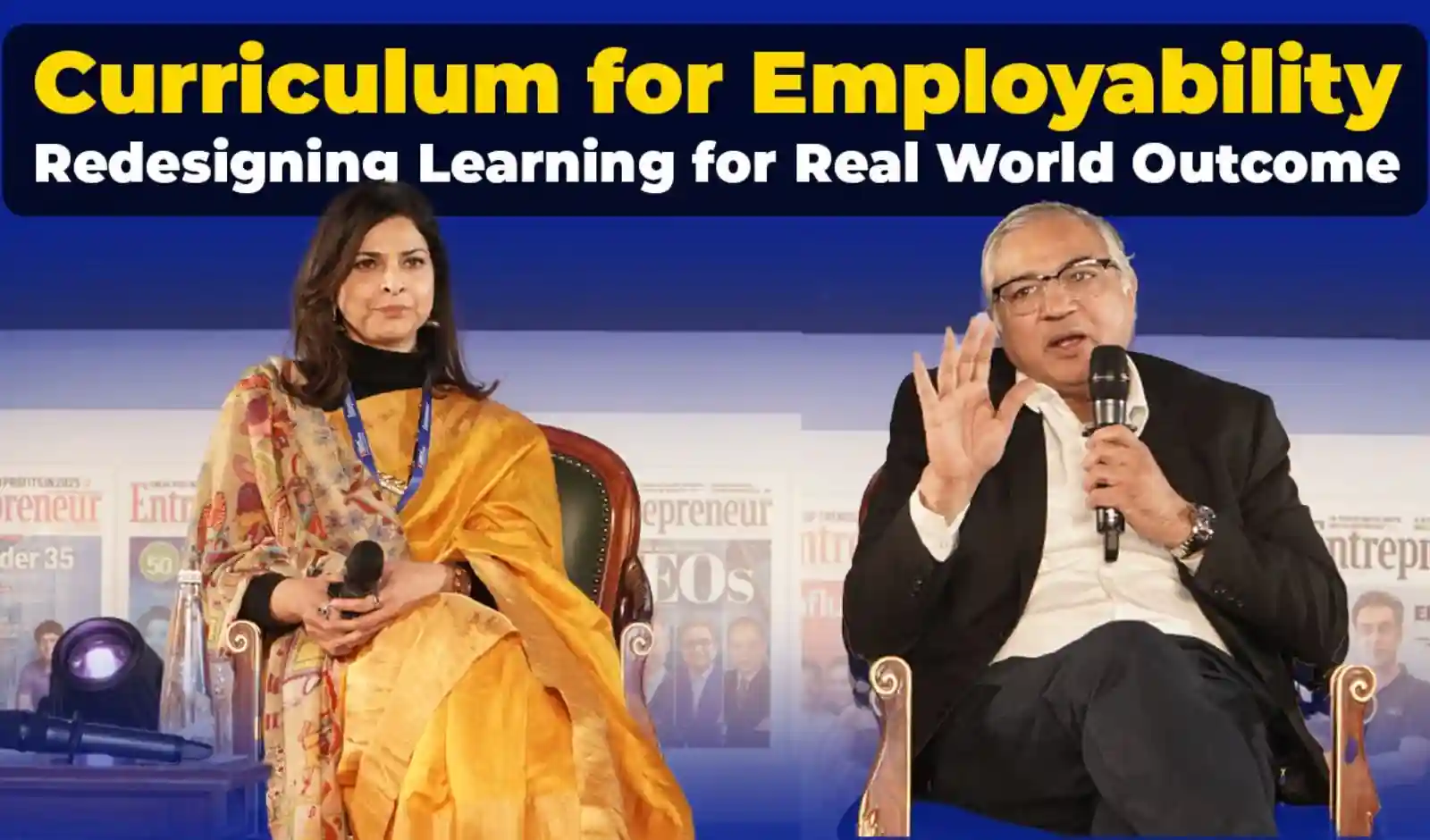
The session featured Vivek Agarwal (Co-Founder and CEO, Liqvid e-Learning Services) and Payal Jindal Khanna (Associate Director & Head, Centre for Leadership Coaching, Shoolini University) as the keynote panelists.
Policy and Real Impact: The Challenge of Bridging the Gap
In his opening remarks, Vivek Agarwal highlighted that while India has strong frameworks such as NEP 2020 and NCERT , the real challenge lies in translating these policies into classroom practices that truly impact students.
He said “For the past 25 years, the issue has been clear: the number of employable candidates remains limited. Policies exist, but implementing them effectively is the real challenge. Today, we will not just discuss problems; we will focus on solutions and practical steps forward.”
He also pointed out that there is still a significant gap between policy and practice in higher education institutions. Policies will only make a real difference when properly implemented at the classroom level and when teachers and institutions are equipped to execute them effectively.
Policy vs Implementation: The Need for Change
Payal Jindal Khanna emphasized that while policies are strong, bringing tangible results into classrooms remains a challenge. She said “NEP 2020 emphasizes flexibility, interdisciplinary learning, and holistic development. The real question is how to translate these policies into actual teaching and learning practices. Policies should not remain on paper they must become lived experiences supported by leadership and institutional culture.”
She further highlighted that budget allocations often prioritize hardware and software, while the quality of teaching and follow-up on learning processes receives insufficient attention.
“Policy should reach institutions, classrooms and students. Real change begins with leadership and only then will tangible results be visible.”
Audience members also shared important perspectives during the session. Sudeep from Delhi said, “Teachers should focus not just on what to teach, but also on how to teach. Similarly, students should not only learn subject content but also problem-solving skills and ways of learning.”
Manoj Paveria, a former corporate professional with 28 years of experience and now active in education, added: “Creating interest in students is crucial. If children aged 10 12 are introduced to robotics, automation and AI, their skills and engagement develop early. Currently, engineering students still receive very limited practical exposure. We need to build practical experience and interest from the early stages of education.”
Institutional Innovation: Coaching-Based Pedagogy
Payal elaborated on Shoolini University’s Leadership Coaching Program, which she personally leads. This program provides students with one-on-one sessions with globally certified coaches.
“Students develop not only academic knowledge but also decision-making, empathy, self-awareness, communication skills and collaboration. So far, 1,468 students have participated, guided by 363 international coaches.”
Such coaching-based pedagogy helps students engage in self-reflection, handle difficult conversations, and develop leadership skills.
Curriculum Integration: Technical Skills with Soft Skills
Payal emphasized that rather than just adding more content, curricula must integrate technical skills with soft skills. “Student assessment should go beyond exams to include teamwork, collaboration, decision-making, leadership and creative thinking. This holistic evaluation prepares them for future employment and real-world challenges.”
Industry Exposure and Real-World Readiness
Vivek Agarwal noted that technical knowledge alone is insufficient. Students need hands-on experience through real projects and internships. He cited examples of student projects being implemented in organizations such as DRDO.
“Students need to understand how their knowledge applies in the real world. Contextual understanding and soft skills are extremely important in this regard.”
Conclusion: Human Skills as the Key Differentiator
In closing, Payal Khanna said “In the future, human skills will become more important than technical knowledge. Educational reform should not be limited to content alone; it must focus on capacity building, collaboration and fostering a culture of continuous learning.”
The session highlighted that while India has strong policies and vision, the real challenge lies in effective implementation in classrooms and institutions. Only through curriculum redesign aimed at real-world outcomes can higher education become employment-focused and future-ready.


