


 104
/
14
Min Read
104
/
14
Min Read


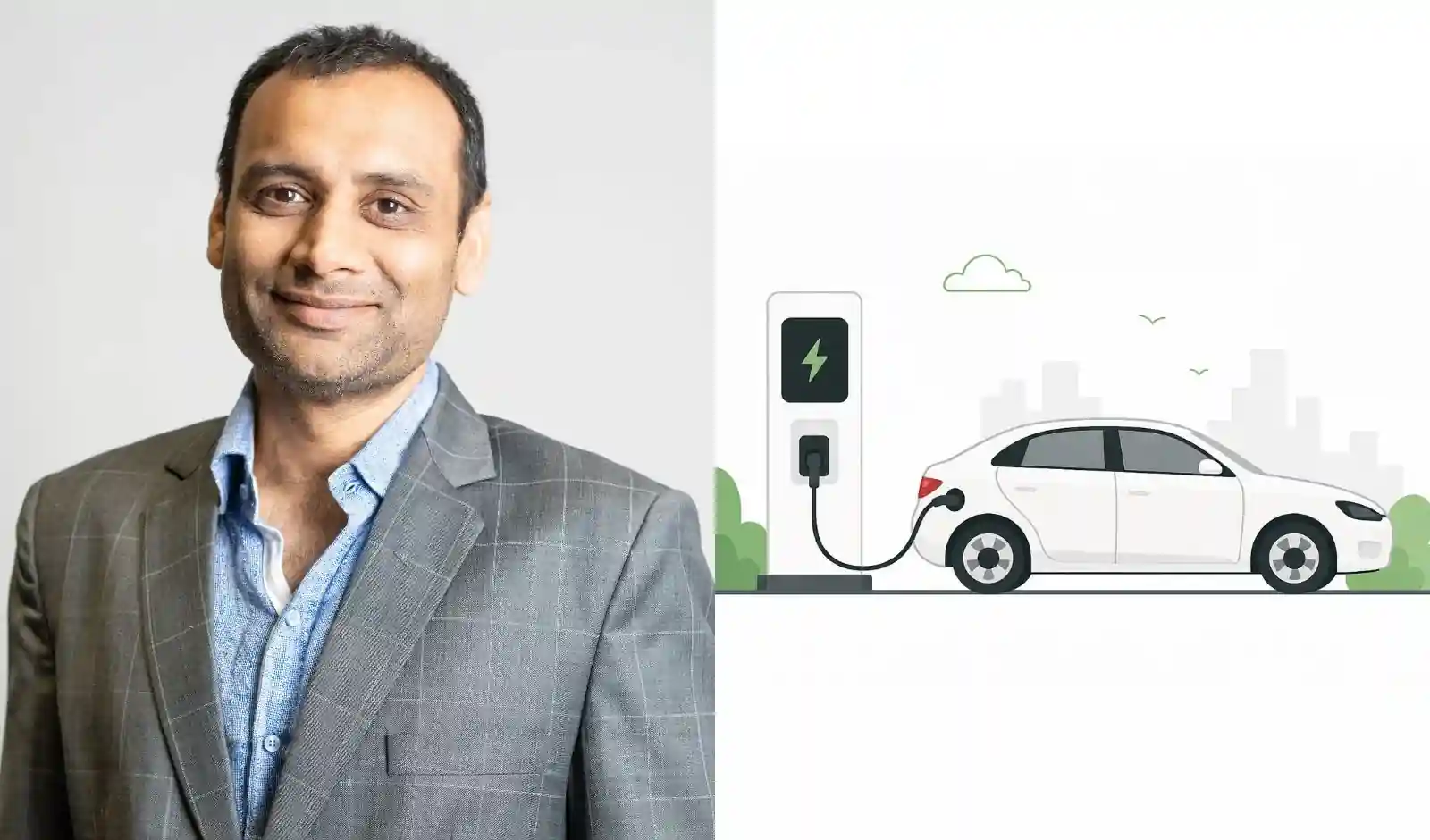
As India’s electric vehicle ecosystem accelerates, the focus is rapidly shifting from vehicle adoption to building a reliable and future-ready charging infrastructure. In this in-depth conversation, Navneet Daga, Co-Founder & CEO of Zenergize, shares his insights on the critical gaps, technological challenges, and emerging opportunities in India’s EV charging landscape.
He highlights key issues such as reliability, import dependency, and uneven infrastructure distribution, while emphasizing the importance of indigenous engineering, software-led intelligence, and advanced technologies like SiC. The discussion also sheds light on policy impact, energy security concerns, and what will define successful EV charging players in India over the next few years.
India's EV ecosystem is scaling rapidly. From your perspective, what are the biggest gaps that still exist in EV charging infrastructure today?
Navneet Daga: The momentum is real and encouraging, but when you look closely at the ground reality, three gaps stand out clearly.
The first is reliability. A large share of chargers being deployed today were designed for European or Chinese conditions, stable grids and moderate temperatures. In India, that design mismatch surfaces quickly. Chargers throttle during peak summer heat or drop sessions when the grid fluctuates. Uptime remains a serious problem, and unreliable infrastructure erodes consumer confidence faster than almost anything else.
The second gap is technology ownership. Much of what's being deployed is imported or assembled from imported kits, with very little genuine domestic engineering behind these products. When something goes wrong, operators are entirely dependent on overseas suppliers for diagnosis, parts, and updates. That is not a sustainable foundation for what is, fundamentally, critical national infrastructure.
The third is density and distribution. Urban corridors are seeing some development, but semi-urban and highway charging remains very thin. For EVs to genuinely replace internal combustion vehicles across all segments, not just in metro cities, that network needs to expand significantly, and the products powering it need to be far more robust.
What inspired the founding of Zenergize, and what problem were you most keen to solve when you started the company?
Navneet Daga: The inspiration came directly from what we were observing on the ground. Between my experience scaling technology-led businesses and Veer's deep background in power electronics, across solar PV and Indian Railways, we both arrived at the same conclusion independently: the charging infrastructure being deployed in India was not engineered for India.
The problem we set out to solve was simple but fundamental: building power electronics that are not just used in India, but truly designed and manufactured here, with Indian grid conditions and climate embedded into every layer of the architecture.
India's operating reality involves extreme heat, frequent grid fluctuations, and regular power cuts. These are not edge cases; they are the daily norm. Yet the products available in the market consistently treated them as exceptions. We knew India had the engineering capability to do this properly. That conviction, that India could build world-class power electronics domestically, is what gave rise to Zenergize.
A large portion of EV chargers in India are still imported or assembled from global components. How does this impact performance, reliability, and long-term costs in Indian conditions?
Navneet Daga: The impact is significant and, in our view, consistently underappreciated. When a product is designed for a different climate and grid profile, deploying it in India without consequence is simply not realistic. What operators experience in practice is derating, chargers that slow down or shut off during peak summer temperatures, and session interruptions every time the grid fluctuates. In Indian conditions, that happens with regularity.
From a reliability standpoint, import dependency also means losing the ability to quickly diagnose and resolve issues. When the core technology is owned by an overseas OEM, every firmware update, every hardware fix, and every support escalation runs through a third party. That adds time, adds cost, and places the operator at a structural disadvantage.
On long-term costs, this dependency compounds over time. As energy prices shift, operational scale grows, and customer expectations around uptime rise, you need products that can be updated, optimised, and supported with agility. That is very difficult to achieve when the technology sits entirely outside your control. True cost efficiency for fleet operators, for charge point operators, for the ecosystem as a whole, demands products engineered for Indian conditions from the ground up, and supported domestically.
The recent Delhi EV policy update places strong emphasis on expanding charging infrastructure and accelerating EV adoption. How do you see such state-level policies shaping the pace of infrastructure development, and what more is needed to ensure effective on-ground implementation?
Navneet Daga: State-level policies like Delhi's EV policy are genuinely consequential. They generate demand signals, direct capital, and create the confidence that operators and investors need to make long-term commitments. When a state government sets clear targets for charging density and backs them with meaningful incentives, deployment accelerates. We have seen that with Delhi, and similarly with the central government's PM E-DRIVE Scheme.
That said, policy alone does not guarantee quality infrastructure. The risk with rapid, incentive-driven deployment is that speed takes priority over reliability. The result is chargers in the ground with poor uptime, and that actively sets back adoption, because EV users who experience unreliable infrastructure lose confidence in the ecosystem as a whole.
What's needed alongside the deployment push is a much stronger emphasis on performance standards. Policies should specify minimum uptime requirements, thermal operating ranges, and grid resilience capabilities. Procurement decisions, whether by government bodies or private operators, need to reward reliability and domestic engineering capability, not simply the lowest landed cost. That is where effective implementation truly lies: aligning the incentive structure with the outcomes India actually needs.
With ongoing geopolitical tensions and supply chain disruptions globally, how do you see this import dependency impacting India's energy security and broader economy?
Navneet Daga: Think about what EV charging infrastructure actually is, it's the foundation that every electric vehicle, every fleet, and eventually every urban mobility system will depend on. EV charging infrastructure is not a consumer product; it is the backbone of a nation's mobility and energy transition. Just as we wouldn't tolerate critical dependence on imported technology for our power grid or telecom networks, we cannot afford that same vulnerability in our EV charging network. And yet, that's largely where we are today. This is a risk that doesn't get nearly enough attention in the EV infrastructure conversation.
The risks are layered. In the short term, supply chain disruptions, like those we saw post-COVID, create availability and pricing volatility. In the medium term, the dependency means India has limited ability to customise, upgrade, or secure these systems independently. And strategically, a large share of the technology being deployed in India's EV transition is currently sourced from China. That's a concentration risk that policymakers are beginning to take seriously, and rightly so.
True energy security in the EV context means building domestic technology capability, not just assembly, but genuine R&D, firmware ownership, and manufacturing. That's precisely what we're working to build at Zenergize, and it's why we believe the Make In India or the Atmanirbhar Bharat vision applies as urgently to power electronics as it does to semiconductors or defence.
How important is the "Make in India" approach in EV charging infrastructure, and what does true indigenisation look like beyond assembly?
Navneet Daga: It's critically important, but the distinction you're drawing in the question is exactly the right one. Assembly is not indigenisation. Importing fully designed PCBs, assembling them locally, and affixing a domestic label does not build capability, does not create strategic resilience, and does not serve the long-term interests of the ecosystem.
True indigenisation, from our perspective, means owning the technology stack end to end. That includes hardware design, PCB layout, firmware and control algorithms, thermal engineering, and manufacturing of critical sub-components. It means your engineers understand every design decision, can modify it, can improve it, and can support it without being dependent on an overseas supplier.
At Zenergize, we've built that from the ground up. We design our own power stages, develop our own control algorithms, manufacture critical components like specialised inductors and heat sinks ourselves, and work closely with Indian vendors for components where domestic capability exists. That's what a genuine domestic power-electronics ecosystem looks like, not imported kits assembled in India, but Indian engineering powering Indian infrastructure.
EV chargers in India operate in challenging conditions like high temperatures and grid instability. What design and engineering changes are needed to address these realities?
Navneet Daga: This is at the core of everything we do, so I'll be specific. On thermal performance, the standard approach of designing for 40–45°C and then derating above that simply doesn’t work in India. Our systems are engineered to operate at full rated capacity up to 55°C. That requires a combination of the right semiconductor choices, we use SiC MOSFETs, which are inherently more heat-tolerant, combined with rigorous thermal modelling and mechanical design. You have to solve the heat problem at the architecture level, not patch it with fans and hope for the best.
On grid instability, the critical design change is building protection and recovery logic directly into the firmware. Our chargers are engineered so that short voltage fluctuations do not interrupt an active charging session. Our AC chargers also support configurable automatic restart after power cuts, significantly reducing the need for manual intervention. None of this is achievable unless you own the firmware and control logic entirely; it cannot be requested from an overseas OEM after the fact.
The broader principle is that India-ready design has to be intentional from the first schematic, not added as an afterthought. That's the mindset shift the industry needs.
How is increasing digitisation and software-led intelligence changing the way EV charging infrastructure is built and managed?
Navneet Daga: It's changing it fundamentally, and the companies that recognise this early will have a significant advantage.
Hardware is increasingly becoming a platform for software intelligence. The charger itself is just one part of the value chain; what sits on top of it, in terms of remote diagnostics, predictive maintenance, load management, and session optimisation, is becoming equally important. An operator managing hundreds of chargers across a city cannot afford to send a technician every time something goes wrong. They need systems that can self-diagnose, flag anomalies, and, in many cases, self-recover, all through software.
This capability is only possible when you own the full technology stack. Because we develop our own firmware and control systems at Zenergize, we can push updates, refine charging behaviour, and extend diagnostic capability remotely, without waiting on a third-party supplier. That is a meaningful and durable operational advantage, and one that only grows more valuable as networks scale.
Looking ahead, we see intelligence around grid integration, smart charging that responds to grid load, time-of-use pricing, and renewable availability as a major area of development. The charger of the future is not a dumb power converter; it's an intelligent grid asset.
What role do advanced technologies like Silicon Carbide (SiC) play in improving efficiency and performance in EV chargers?
Navneet Daga: SiC represents one of the most significant technology shifts in power electronics in the last decade, and it is central to how we engineer at Zenergize.
The core advantage lies in switching performance. SiC MOSFETs have approximately 70-80% lower switching losses compared to traditional silicon IGBTs. In practical terms, that pushes system efficiency from around 94–95% to nearly 97–98.5%. For fleet operators or bus OEMs running chargers at high utilisation, that efficiency gain translates directly into meaningful energy cost savings at scale.
Equally important for Indian conditions is thermal performance. SiC devices can operate reliably at significantly higher temperatures, which is a primary reason our systems run without derating up to 55°C. SiC's support for higher switching frequencies also enables more compact system designs, as it reduces the size requirements for passive components.
The critical nuance, however, is this: SiC only delivers its full potential when the entire system is designed around it from the outset. Dropping a SiC device into a legacy architecture leaves most of the benefit unrealised. Because we build the entire stack in-house, we are able to optimise every layer of the system around SiC, and that integration is ultimately what delivers both the efficiency numbers and the real-world reliability our customers depend on.
Early demand for indigenous solutions seems to be picking up. What kind of market response have you seen so far, and what does that indicate about the opportunity ahead?
Navneet Daga: The response has been encouraging, and more importantly, it is coming from customers who know precisely what they are evaluating. Fleet operators, bus OEMs, and larger charge point operators have all lived through the experience of deploying chargers that underperform in Indian conditions. They have dealt with thermal throttling, grid-related session drops, and slow support cycles tied to overseas supply chains. When they encounter a product that is genuinely engineered for those conditions, backed by a team that owns the technology end to end, the conversation moves with real conviction.
What this tells us is that the market is maturing. Early purchasing decisions in this space were largely driven by price and availability. As operators shift focus to total cost of ownership and uptime commitments, the calculus changes, and reliability with domestic support capability becomes a genuine competitive advantage, not simply a line on a specification sheet.
The company has seen strong demand. What does this indicate about the market opportunity for indigenous solutions?
Navneet Daga: It validates something we believed from the beginning, that India's EV transition would eventually demand power electronics built here, engineered here, and supported here. What strong early demand confirms is that this shift is already underway, not years away.
The more significant signal, however, is who is buying and why. These are not early adopters willing to accept trade-offs. These are operators making infrastructure decisions with a ten-year horizon. That quality of demand, at this stage of market development, tells us the opportunity ahead is not just large, it is structural. India will need to build an enormous charging network over the next decade, and the companies with genuine technology foundations will be the ones defining it. That is the opportunity Zenergize is positioned to capture.
Looking ahead, what will differentiate successful EV charging players in India over the next 3–5 years?
Navneet Daga: Three things, in my view, will differentiate EV Charging players in India. The first is technology ownership. As the market matures and customers become more experienced, the gap between genuine technology companies and assemblers will widen. Operators will demand higher uptime, faster support, and the ability to customise and update systems. That's only possible if you own the stack.
The second is proven performance in real Indian conditions. Thermal reliability, grid resilience, and consistent uptime will transition from differentiators to baseline expectations. Players who have not designed for these realities from the ground up will find performance gaps increasingly difficult to conceal as deployment scales
The third is the ability to evolve with a rapidly shifting ecosystem. Charging speeds will increase, grid integration will grow more complex, and software intelligence will deepen. Companies that have built modular, software-upgradeable, deeply engineered platforms will be able to adapt continuously. Those dependent on third-party hardware or foreign firmware will remain constrained by whatever their suppliers choose to offer.
At Zenergize, they are the foundations we have been building on since day one. The next 3–5 years will separate companies that truly engineered for India from those that simply deployed here.


