


 83
/
3
Min Read



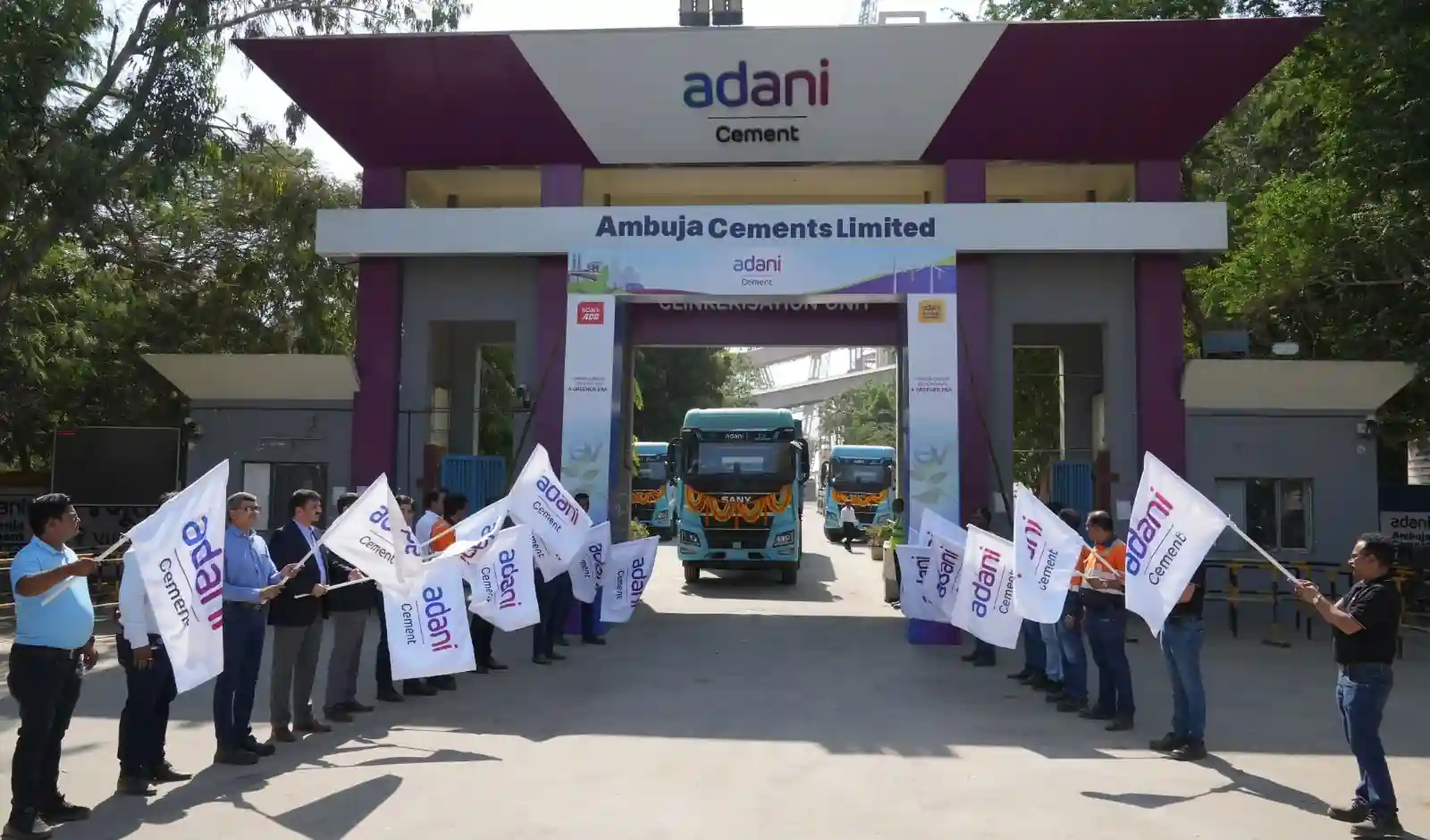
Adani Cement, part of the Adani Group, has flagged off its first fleet of heavy-duty electric trucks at its Sanghi Plant in Gujarat, marking a significant step towards decarbonising its cement and clinker transportation operations.
As part of its first-phase deployment plan, the company aims to introduce 410 electric trucks by March 2027. The fleet is expected to reduce more than 25,000 tonnes of carbon dioxide (CO₂) emissions annually and replace approximately 11 million litres of diesel consumption each year.
The company has also outlined an ambitious long-term target of shifting 10% of its road logistics volume to electric trucks by 2030, with plans to deploy more than 2,000 electric vehicles (EVs) across its operations.
EV Deployment to Strengthen Green Logistics
Commenting on the initiative, Vinod Bahety, CEO - Cement Business, Adani Group, said the deployment at Sanghi marks the beginning of a broader transition towards electric transportation. The company has identified multiple routes across India for the movement of clinker and cement through EV-based logistics.
He added that electrifying its truck fleet would help reduce the company's carbon footprint while limiting its exposure to fluctuations in diesel prices. According to Bahety, the initiative combines sustainability with operational efficiency and supports the company's ambition to build a greener and more competitive cement business.
The company said that powering electric trucks through renewable energy can help eliminate freight-related emissions, contributing to its Scope 3 emission reduction strategy and long-term net-zero goals.
Falling Battery Costs Improve EV Economics
The economic viability of heavy-duty electric trucks in India's cement sector has improved over the past decade. According to the company, diesel prices have increased by around 60%, while lithium-ion battery pack costs have declined by approximately 70%. Solar tariffs have also fallen by 47% during the same period.
Diesel-powered trucks emit approximately 0.7375 kg of CO₂ per kilometre. In comparison, electric trucks powered by renewable energy can eliminate up to 100% of these freight-related emissions, making transportation electrification an important lever for reducing Scope 3 emissions.
The proposed fleet of 410 electric trucks is expected to deliver annual carbon savings of more than 25,000 tonnes. Adani Cement plans to expand the initiative to additional routes and manufacturing plants as part of its broader green logistics strategy.
Addressing Emissions Across Cement Supply Chains
India is the world's second-largest cement producer with the transportation of limestone, clinker and finished cement forming a significant part of the industry's supply chain. However, the movement of these materials across long distances also contributes to the sector's overall carbon footprint.
Through its electric truck deployment, Adani Cement aims to address both the environmental and operational challenges associated with conventional diesel-powered transportation. The initiative is expected to support cleaner freight movement, improve logistics efficiency and reduce dependence on fossil fuels.
The deployment also aligns with the company's broader sustainability commitments, as it works towards integrating renewable energy and low-emission transportation solutions across its cement manufacturing and distribution network.


