


 23
/
6
Min Read



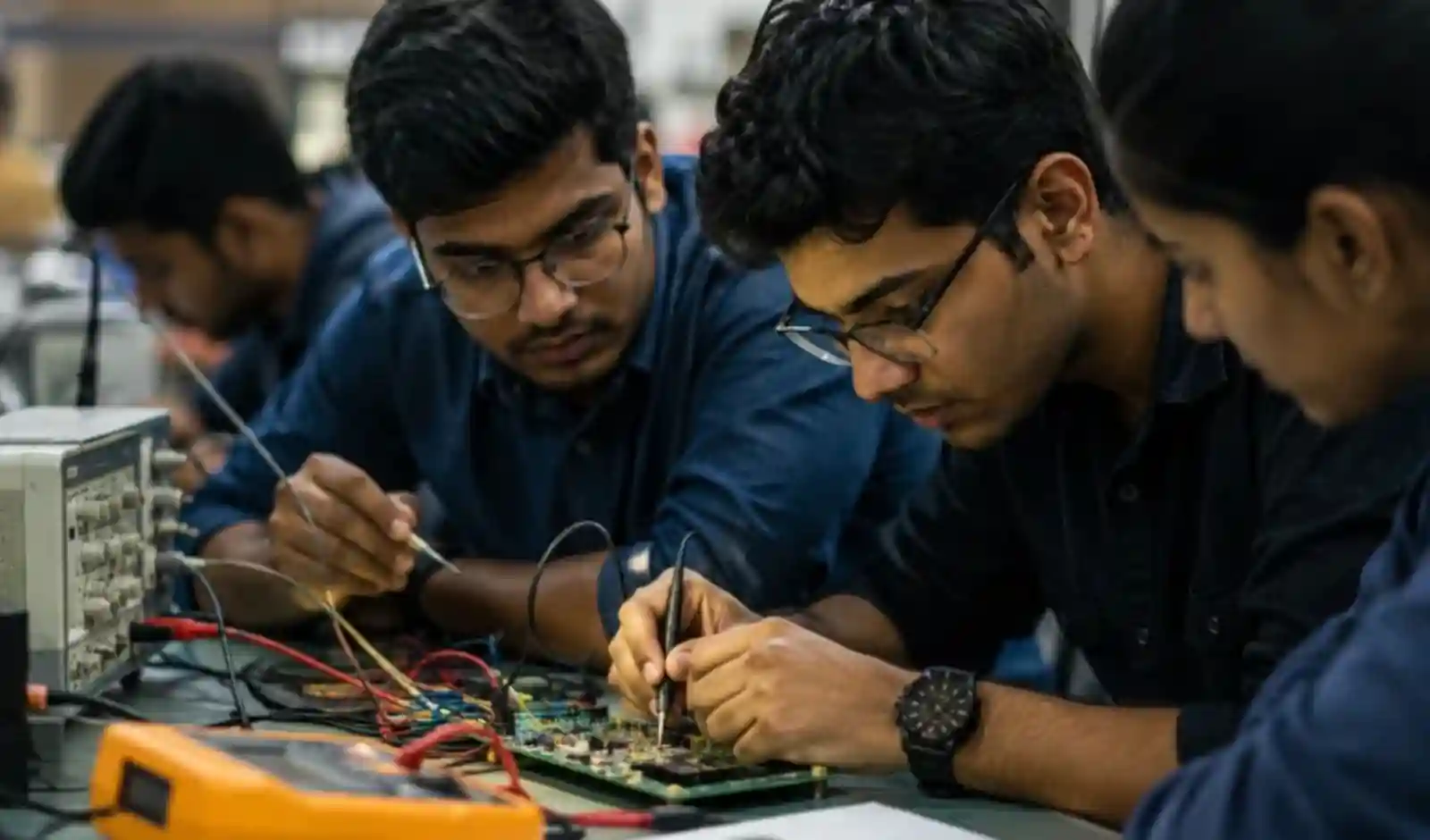
Their journeys show that education at home can open doors to the world. Indian universities must make this possibility accessible to more young people.
Graduates of the Indian Institutes of Technology (IITs) and Indian Institutes of Management (IIMs) have built careers in multinational companies, investment banks and consulting firms. Some have become chief executives; others lead businesses and develop technologies across countries. Ajay Banga, an IIM Ahmedabad alumnus who went on to lead Mastercard, is one prominent example. These achievements reflect years of learning and experience, but show that a foreign degree need not be the starting point for a global career.
Making Global Pathways More Accessible
For Indian universities, the challenge is to create such pathways at scale. However, opportunities for Indian talent may increasingly emerge across the Global South, particularly Africa.
Across African countries and other emerging economies, demand is growing for affordable healthcare, better education, reliable energy, financial services, food processing and digital infrastructure. Meeting these needs requires entrepreneurs, engineers, researchers and managers able to develop solutions in complex environments.
India has relevant experience. Its businesses have learned to serve large populations at affordable prices, operate with uneven infrastructure and respond to customers with diverse languages and aspirations. These capabilities can be valuable elsewhere when combined with an understanding of local conditions. Kenya, Nigeria and South Africa, for example, have different institutions, business environments and customer expectations. Universities must prepare students to work with local talent, learn from entrepreneurs and build partnerships that create shared value. A global career requires the ability to listen as much as the confidence to lead.
Building Global Experience from India
Universities can prepare students for international careers through several pathways that begin in India.
The first : is through global companies operating in India. Their local teams expose graduates to international customers, colleagues, technologies and standards. Nasscom estimated that India’s global capability centres (GCCs) employed more than 1.9 million people in FY2024, demonstrating the scale of this opportunity.
Graduates in Bengaluru or Hyderabad may contribute to products used worldwide, join international research teams or support financial decisions across markets. Universities should look beyond multinational logos in recruitment brochures and assess the work graduates will perform and their potential to progress internationally. Employer partnerships should shape curricula and practical projects well before recruitment season.
The second pathway : is through Indian multinational companies. As Indian businesses expand overseas, they need employees who understand their organisations and can adapt to new markets. Universities can work with these companies on graduate programmes combining technical training, language learning, country-specific knowledge and mentored assignments. Students could begin with an internship in India and later take responsibility for an overseas project. Their education and first professional opportunity can start at home.
The third pathway : is entrepreneurship. Students should be encouraged to identify customers and problems beyond India. A start-up developing affordable diagnostic equipment, agricultural technology or learning software could explore demand in emerging markets. Students must test these opportunities through customer conversations and evidence. University incubators can connect founders with overseas mentors, distributors, researchers and potential customers. Pilot projects can teach students about pricing, payments, after-sales service and local partnerships.
Four Capabilities Universities Must Build
Creating these pathways requires universities to rethink what they teach. Four capabilities deserve particular attention.
First, students need an entrepreneurial mindset. They should learn to identify real problems, understand customers, build workable solutions and create sustainable businesses. Managing finances, recruiting colleagues, negotiating partnerships and handling uncertainty are essential skills.
Second, students need strong technical foundations. International ambition cannot make up for weak subject knowledge. Engineers must be able to design and test; data scientists must understand data and the limitations of models; and biotechnology graduates must be confident in laboratory practice. This calls for better laboratories, research opportunities and faculty connected to their fields. A working prototype or research project can tell employers more than course titles.
Third, universities must build cultural understanding. Working across countries involves different ways of communicating, negotiating, resolving disagreements and building trust. English proficiency alone is not enough. Students need exposure to other histories and perspectives, opportunities to learn languages and experience collaborating with people whose assumptions differ from their own. Joint online projects with overseas universities and meaningful collaboration with international students on Indian campuses can provide this exposure.
Fourth, students need a practical understanding of legal and institutional differences. Contracts, employment rules, intellectual property, taxation and data obligations vary across countries. Every graduate need not become a legal expert, but should be able to recognise potential issues, ask informed questions and seek qualified local advice.
Turning Partnerships into Outcomes
Universities can combine these capabilities through country- and industry-specific projects. For example, a team could study how an affordable medical device could reach customers in Kenya, considering customer needs, distribution, culture and regulations with local partners.
Delivering this education requires investment and accountability. Universities should select meaningful partnerships, support faculty collaboration and make international projects available beyond a small, privileged group. Scholarships, shared digital classrooms and employer support can widen participation. Outcomes should be measured through demonstrated skills, meaningful work and career progression, and tracked over time.
The IITs and IIMs will continue to play an important role, but India’s talent pool and the diversity of global demand call for a wider institutional response. Private universities can develop distinctive strengths, respond to employers and build lasting relationships across the Global South. Signing agreements or adding the word “international” to a programme will achieve little on its own.
Universities must be honest with students and families: access to global career pathways depends on individual performance, employer demand and the requirements of specific roles. Their responsibility is to provide strong preparation, credible access to employers and guidance as graduates build their careers.
Indian universities have an opportunity to connect talent at home with needs beyond the country’s borders. With rigorous education, practical experience and partnerships that deliver real outcomes, students can begin in an Indian classroom and build careers that make a difference around the world.
(Author: Prof. Atul Khosla, is the Founder and Vice Chancellor of the Shoolini University; The views expressed are personal.)


