


 30
/
4
Min Read



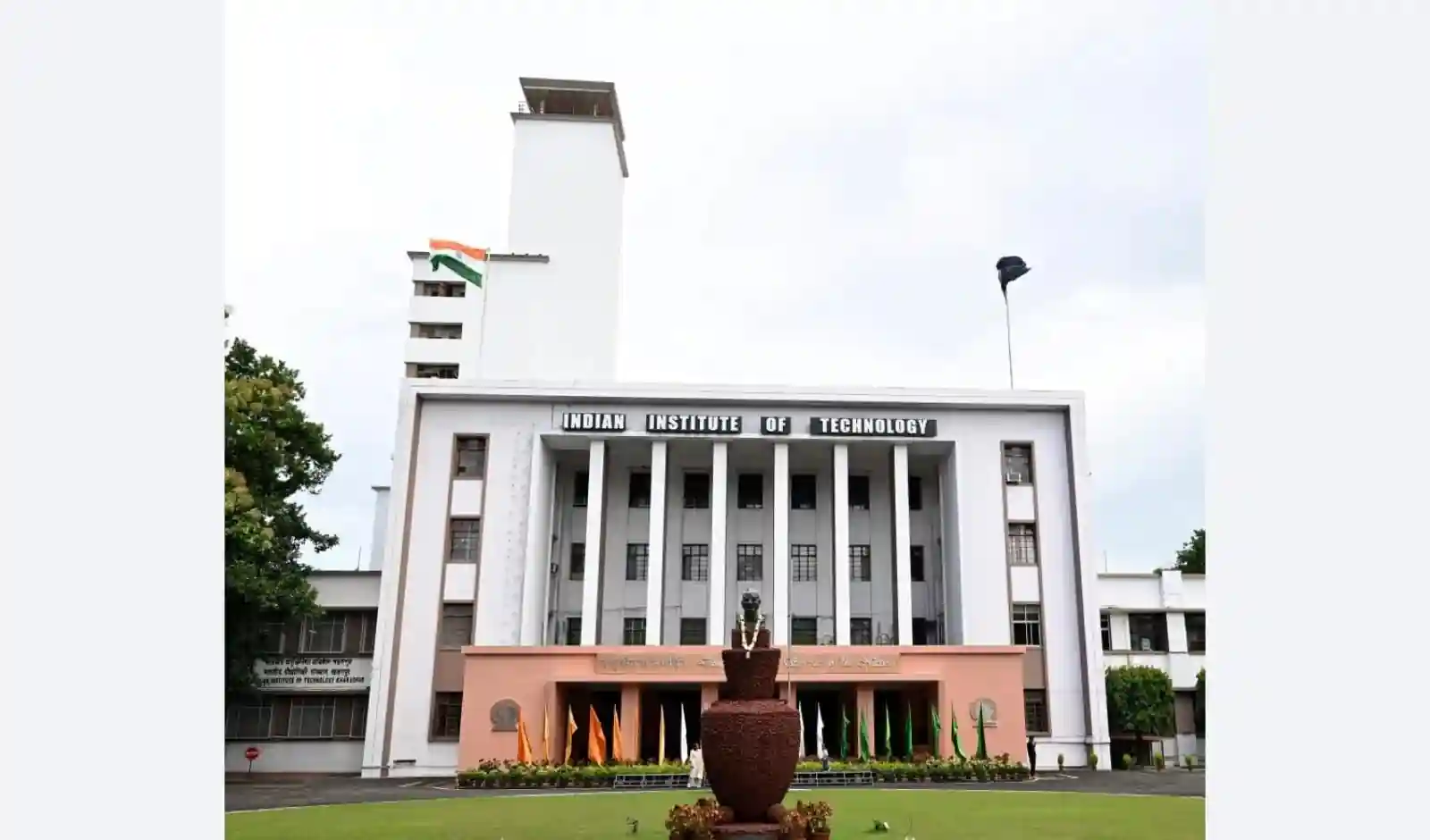
In a significant development for Indian higher education and the healthcare sector, IIT Kharagpur has entered the field of postgraduate medical education. The institute has become the first Indian Institute of Technology (IIT) in the country to introduce postgraduate medical degree programmes recognised by the National Medical Commission (NMC). These programmes will begin in the 2026–27 academic session, with students enrolling for MD courses at an IIT for the first time.
The institute will introduce Doctor of Medicine (MD) programmes in six medical specialisations at the Dr. B. C. Roy Multi-Speciality Medical Research Centre. Two seats have been allocated for each specialisation, taking the total intake to 12 seats. The initiative marks an important step towards expanding medical education within the IIT system while bringing together medicine, engineering, artificial intelligence (AI) and biomedical research.
MD Programmes to Be Introduced in Six Specialisations
IIT Kharagpur will introduce MD programmes in six disciplines: General Medicine, Radiology, Physiology, Pathology, Community Medicine and Biochemistry. Each specialisation will have two seats, taking the total number of available seats to 12.
Through these programmes, medical graduates will have the opportunity to pursue postgraduate specialisation in different fields. Students will also get the opportunity to become part of IIT Kharagpur's academic and research ecosystem, engaging with medical science, technology and interdisciplinary research.
Admissions Through NEET-PG Counselling
Admissions to these programmes for the 2026–27 academic session will be conducted through the NEET-PG online counselling process. According to the available information, candidates will be able to consider these programmes during the second round of counselling, subject to the prescribed eligibility criteria and the official seat matrix. The admission process will follow the official counselling schedule and applicable requirements.
Students admitted to this batch will become the first group of postgraduate medical students in the history of India's IIT system. For the institute, this will also mark a new academic beginning, bringing medical specialisation into its established technology-focused education ecosystem.
Stronger Integration of Medicine, Engineering and AI
Artificial intelligence, advanced imaging, biomedical engineering and digital health technologies are playing an increasingly important role in modern medicine. AI-based tools are supporting medical diagnosis, while new imaging technologies and biomedical devices are creating possibilities for improving treatment methods.
However, medical education and technological research have often developed within separate institutional frameworks. IIT Kharagpur's initiative is expected to encourage greater collaboration between these two fields. Through the new medical programmes, students may get opportunities to combine clinical knowledge with research in science and technology.
Potential interdisciplinary research areas include AI-assisted clinical decision-making, medical imaging, computational pathology, molecular diagnostics, precision medicine and biomedical devices. This could provide medical students with opportunities to work alongside technology experts and researchers.
Focus on Research-Based Medical Education
IIT Kharagpur aims to make the Dr. B. C. Roy Multi-Speciality Medical Research Centre a key centre for this new medical education initiative. The institute's existing capabilities in microfluidics, bioengineering, healthcare diagnostics, artificial intelligence and computational sciences could support the development of this initiative.
The objective is to nurture medical specialists with clinical competence, scientific thinking, technological understanding and research capabilities. The institute aims to connect medical education not only with hospital-based learning and clinical practice but also with emerging technologies and real-world healthcare challenges.
IIT Kharagpur's New Initiative After 75 Years
Established in 1951, IIT Kharagpur was the country's first IIT and has played an important role in the development of technical education in India. The institute has made significant contributions to engineering, science, research and innovation. With the introduction of postgraduate medical education, it is now expanding its academic scope.
Prof. Suman Chakraborty, Director, IIT Kharagpur, said, “India's first IIT is now taking a historic step towards shaping the future of medical education. Our vision is not simply to train specialist doctors, but to create an ecosystem where clinical excellence meets engineering ingenuity, artificial intelligence and translational research. We want our medical graduates to be not only outstanding clinicians, but also innovators capable of addressing some of humanity's most pressing healthcare challenges.”
Key Details : IIT Kharagpur's first MD batch will have a total of 12 seats. Interested and eligible medical graduates can consider these programmes during the second round of NEET-PG 2026 online counselling. Official information related to counselling and admissions will be available on the Medical Counselling Committee (MCC) website: https://mcc.nic.in/pg-medical-counselling/
With this initiative, IIT Kharagpur is opening new possibilities for collaboration between medical and technology education in India.


