


 74
/
2
Min Read
74
/
2
Min Read



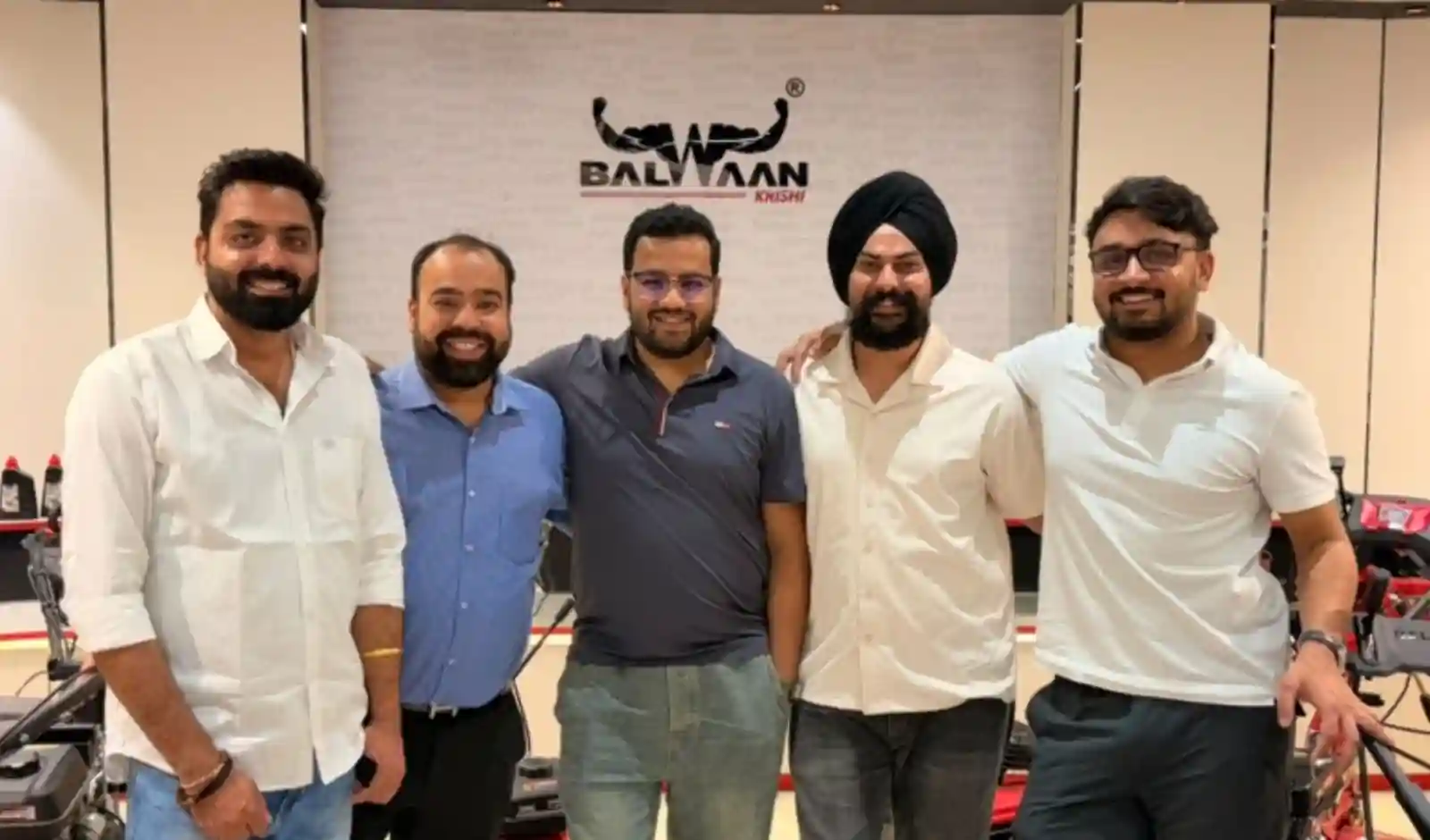
Balwaan Krishi, an agricultural machinery company, has raised INR 100 crore in Series B funding led by First Bridge India Growth Fund Private Equity with participation from other institutional investors. The transaction was advised by investment banking firm Right Pillar Advisors.
The company says it will deploy the fresh capital towards three strategic priorities: expanding domestic manufacturing capacity, strengthening Balwaan’s dealer and service network across Southern India and developing the next generation of farm equipment, enabled with predictive maintenance and IoT capability, including Power Weeders, Battery Sprayers and other mechanisation solutions.
Founded in 2016 by brothers Rohit Bajaj and Shubham Bajaj, the company provides equipment ranging from INR 10,000 to up to INR 1 lakh. Its hybrid B2B and B2C distribution model includes more than 800+ dealers across Northern India, supported by a growing e-commerce presence. It also now plans to expand its presence in the Southern India.
Co-Founder and CEO Bajaj said: “India’s small and marginal farmers are increasingly facing rising labour costs and pressure to improve productivity, yet access to affordable mechanisation remains limited. More than four lakh farmers already use Balwaan machines, giving us strong validation of the demand for affordable mechanisation. We have built Balwaan around this opportunity , creating practical, reliable equipment that farmers can afford. This funding allows us to strengthen manufacturing, broaden our reach and continue building products specifically for Indian farming conditions.”
Vishal Gupta, Managing Partner, First Bridge Investment Managers, adds: “Balwaan operates at the intersection of a large addressable market, rising farm mechanisation adoption and proven customer demand. The company has built a differentiated position through affordable, farmer-focused products, a strong distribution network and deep relevance among small and marginal farmers. We believe these strengths provide a strong platform for Balwaan to scale sustainably and build a long-term leadership position in the farm mechanisation market.”
 This article was originally
published by the
This article was originally
published by the 


