


 44
/
3
Min Read



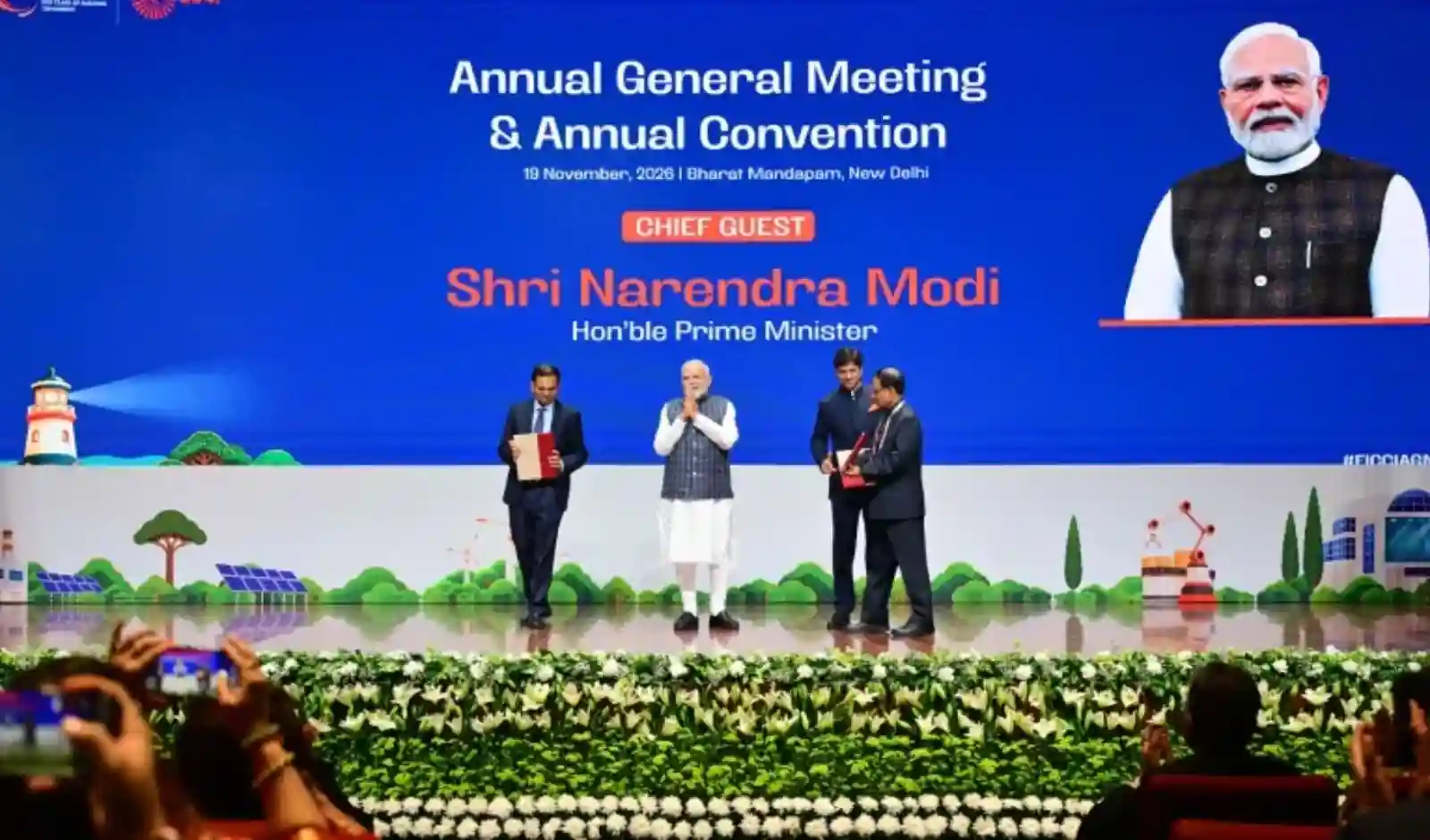
He took this opportunity to celebrate FICCI's 100 years and the vision for Bharat 2047 and pointed out India’s many advancements since the early policy changes, urging companies to increase their self-sufficiency in manufacturing, trade and innovation based on their earlier policies, as well as the developments taking place today.
India First as a 20-Year Investment Anchor
The Prime Minister urged corporate leaders to align every long-term investment decision over the next 20 years with an "India First" mindset. In a world where global supply chains and resources are increasingly weaponised or used as strategic leverage, he stressed that domestic capability and self-reliance are essential to safeguarding India's future while unlocking new business opportunities. He also underlined that meaningful progress starts with self-reflection, noting that institutions and individuals alike must evaluate where they stand before taking the next leap forward.
Moving Beyond the Domestic Comfort Zone
Despite having a large domestic market, Modi advised the industry against being complacent. He mentioned, “India’s recent achievement of its highest monthly exports of goods, which is $50 billion in October, along with the positive revisions in growth estimates by major institutions such as World Bank and Moody’s ratings, shows that global confidence in India is rising.” He said that businesses should expand outward and create reliable procurement and distribution channels and get involved in high-potential sectors like agriculture value addition, food processing, engineering products and industrial machinery.
Closing Critical Import Gaps in Key Sectors
One of the most important things discussed in the speech regarding self-sufficiency is less reliance on imports and supply chains that are essential. According to Modi, even though India is known as “the pharmacy of the world,” India is still importing active pharmaceutical ingredients (APIs) worth billions of dollars every year. He also pointed out how important sectors like steel and aluminum are lagging behind and urged Indian businesses to invest in local resources and energy production.
He has also drawn attention to the fact that agriculture and food production are the sectors the corporate India has failed to invest in sufficiently. Even though it is known as an agricultural country, agriculture contributes only 2-2.5% to world exports. The reason for this is the unwillingness of the corporate sector to invest heavily in agriculture. According to Modi, the share of the food processing sector in India increased from 13% to 20% during the last 12 years. He invited companies to participate in the activities of the food sector through the means of modern processing technologies.
Policy Continuity, Reform and Poverty Reduction
Contrasting earlier periods marked by licence-quota controls and sluggish growth with India’s current trajectory as a fast-growing major economy expanding at around 7%, the Prime Minister argued that clear policy intent and execution drive lasting change. Citing a World Bank report indicating that 50 crore Indians lifted themselves out of poverty over the past 12 to 13 years, he emphasized how rising incomes and expanding participation are reshaping India’s economic foundation.
Trust, Ease of Doing Business and Shared Responsibility
Modi emphasized that growth takes off when the policy is supportive of small enterprises, taxpayers, and wealth creators and makes the environment favorable for doing business. For instance, the tax rate of large corporations was reduced in 2014 from 30% to 22% to increase confidence of enterprises and the purchasing power of consumers. He also urged entrepreneurs to provide their proposals for improving the laws encouraging entrepreneurial growth.
 This article was originally
published by the


