



 69
/
5
Min Read
69
/
5
Min Read


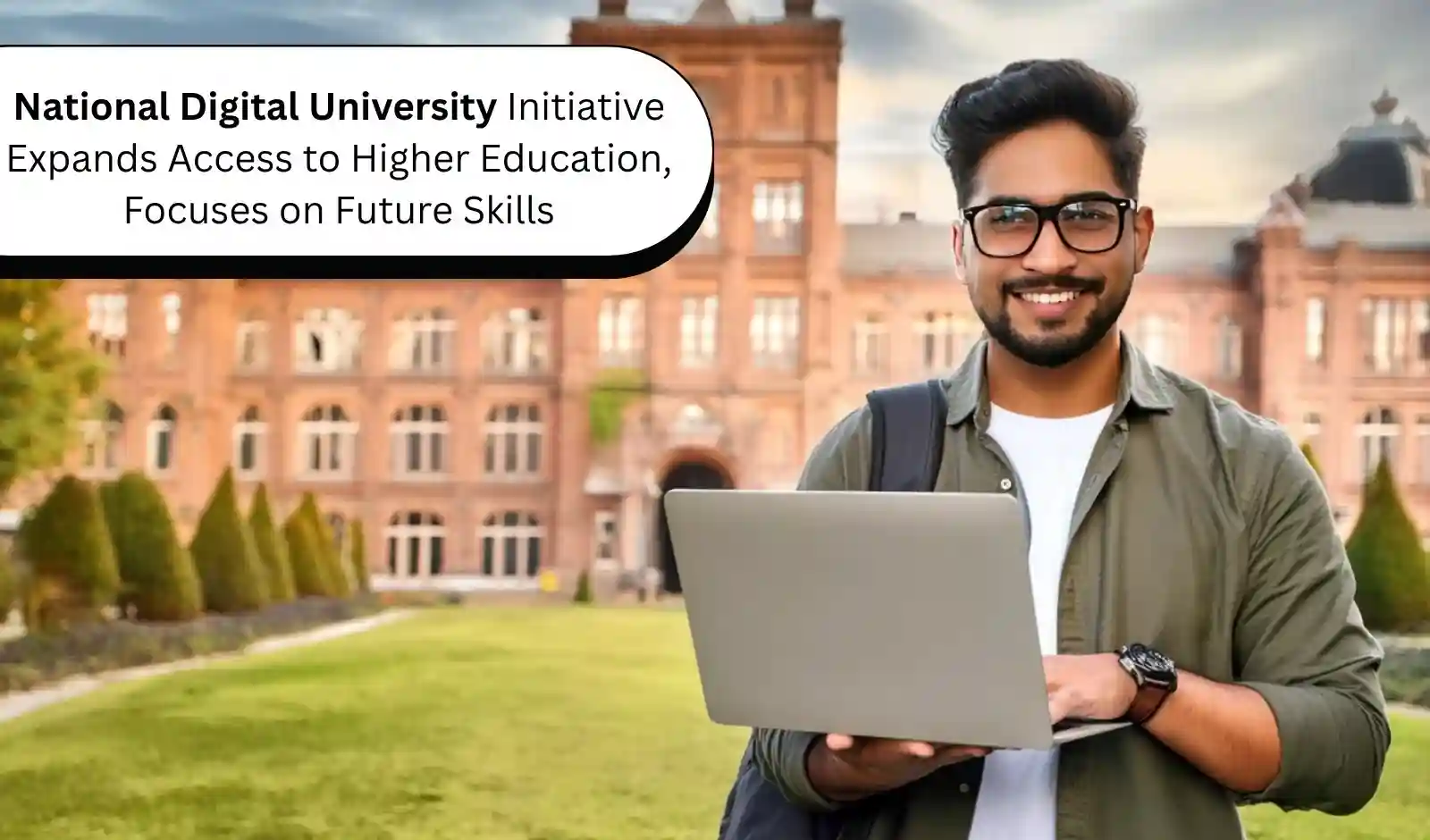
The government’s initiative to connect higher education and skill development with digital technology in India is now increasingly focused on emerging technologies and industry-ready skills. In this direction, the National Institute of Electronics and Information Technology (NIELIT) has launched the NIELIT Digital University (NDU) platform. The objective is to provide flexible, affordable and employment-oriented digital education to students and working professionals. NDU has been aligned with the goals of the National Education Policy (NEP) 2020, Digital India and Skill India.
Industry-Focused Education in AI and Emerging Technologies
The NIELIT Digital University was inaugurated by Union Minister for Electronics and Information Technology Ashwini Vaishnaw in New Delhi on October 2, 2025. The platform offers industry-focused programmes in emerging technology areas such as Artificial Intelligence, cybersecurity, data science, semiconductors and cloud computing. It also includes flexible digital learning modes and virtual labs.
NDU aims to take digital education beyond online courses. The platform has been designed to provide learners with practical and future-ready skills in emerging technologies. Its programmes are NCVET-approved and NSQF-aligned, while Academic Bank of Credit (ABC) integration enables credit transfer. Features such as multilingual learning and verifiable digital certificates are also part of the platform.
Target to Reach 4 Million Learners by 2030
NDU also includes AI-enabled tools such as career pathways, mentors, interview simulators and interactive learning modules. These tools are designed to support learners not only in course learning but also in career planning and employment preparation. The government has set a target of reaching 4 million learners through the platform by 2030.
The initiative is particularly important for learners who may not have easy access to traditional higher education institutions or technology training centres. Through digital learning modes, learners from different parts of the country can access courses in emerging technologies. This could strengthen the linkage between higher education, skill development and employability.
Five New NIELIT Centres Virtually Inaugurated
Five new NIELIT centres were also virtually inaugurated during the launch of NDU. The centres were opened in Muzaffarpur (Bihar), Balasore (Odisha), Tirupati (Andhra Pradesh), Lunglei (Mizoram) and Daman. The objective of these centres is to expand access to education and skill development related to electronics and information technology across different regions of the country.
The expansion is significant for the education sector as the demand for technology education is no longer limited to major cities and leading universities. Expanding access to digital skills and emerging technology training in rural, semi-urban and northeastern regions is important for building the future workforce.
Industry Partnerships to Strengthen the Education-Skill Connect
During the NDU launch, partnerships between NIELIT and several industry organisations were also highlighted. The objective is to develop courses and skill programmes according to changing industry requirements and reduce the skill gap between education and employment. During the launch, the government also emphasised course design and addressing skill gaps in education in collaboration with industry partners.
NDU’s industry-linked approach also reflects the changing model of higher education. Today, earning a degree alone is not sufficient for students. Practical skills and industry exposure in areas such as AI, data, cybersecurity, semiconductors and cloud computing have also become increasingly important. Therefore, curriculum alignment between universities and industry could become an important part of education growth in the coming years.
NIELIT’s Technology Skilling Network Strengthens in 2026
According to recent 2026 government updates, NIELIT is working on technology talent development through a network of 56 centres, more than 750 affiliated institutes and over 9,000 facilitation centres. NIELIT provides training in areas including AI, cybersecurity, blockchain, Internet of Things, cloud computing and Electronics System Design and Manufacturing.
In addition, NIELIT has established IndiaAI Data Labs at 27 centres and implemented digital skilling programmes in aspirational districts. These initiatives connect the broader technology education ecosystem of NDU and NIELIT not only with digital learning but also with practical skilling in AI and emerging technologies.
NIELIT Emerges as a Key Foundation for Higher Education and Future Skills
NIELIT received the status of a Deemed-to-be University under a distinct category from the Ministry of Education in July 2024. Its main campus is located in Ropar, Punjab, along with 11 constituent campuses. According to government data for 2026, NIELIT has conducted examinations for more than one crore candidates across the country. With its extensive network and emerging technology programmes, the institute is playing an important role in digital education and technology talent development.
Digital Pathway from Higher Education to Employability
The NIELIT Digital University initiative reflects the changing higher education landscape in India, where digital learning, industry partnerships, emerging technologies and employability are becoming increasingly interconnected. From AI and semiconductors to cybersecurity, cloud computing and data science, the demand for new skills for the future workforce continues to grow.
In this context, the next phase for platforms such as NDU will not be limited to providing online education to more learners. It will also need to integrate industry-ready skills, practical learning, academic credits and employment outcomes within a single digital ecosystem. NIELIT’s growing AI and digital skilling initiatives in 2026 are emerging as an important link in strengthening India’s education and future workforce ecosystem.


