


 26
/ 7
Min Read
26
/ 7
Min Read


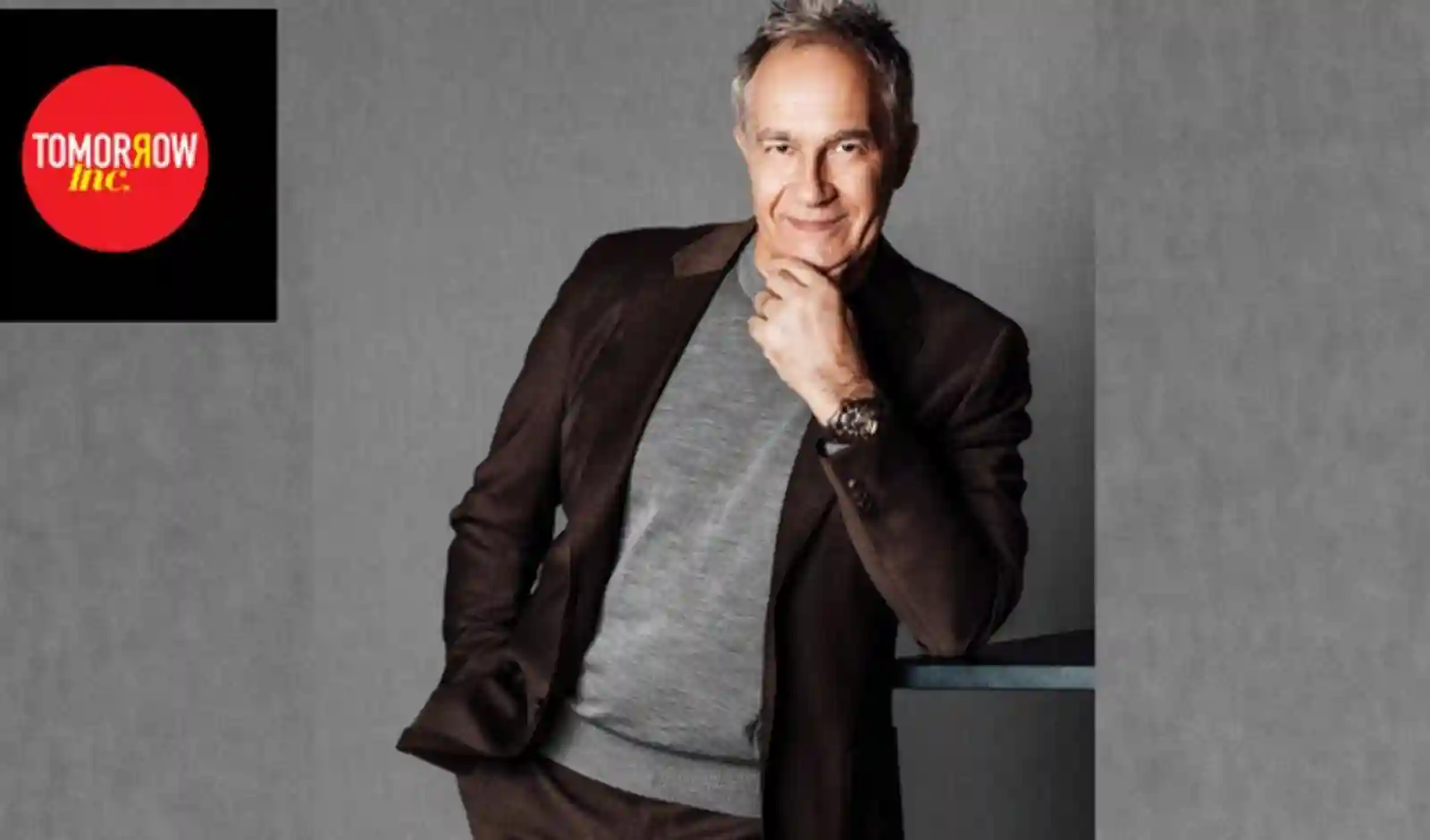
When Adrian Bosshard CEO of Rado, says that a market has become "the biggest" for his brand, he speaks with the calm cadence of a strategist who's watched decades of cycles, not the hyperbole of a short-term booster. For Rado, that market is India the product of nearly 70 years of presence, patient investments and a rare alignment between brand DNA and local desire.
Entrepreneur traces how a heritage Swiss watchmaker pivoted from craft to contemporary relevance under Bosshard's stewardship and why India now sits at the centre of Rado's global growth story.
FROM RACETRACK RIGOR TO BOARDROOM CLARITY
Adrian Bosshard's journey to the helm of Rado is a study in contrasts that somehow belong together. He spent his early life as a professional motorbike racer a period he calls his living classroom. "You are alone on the bike when you are in the race" he told me. Yet victory isn't solo: it requires a tight-knit team to prepare the machine
That dual insight intense individual responsibility coupled with collective execution informs his leadership today. The instincts of a racer are not far removed from those of a CEO steering a legacy brand through rapid cultural and economic shifts: relentless focus on targets; the humility to know that success doesn't guarantee tomorrow; the discipline to get up after a fall.
"Stay humble, stay reasonable and stay focused" he said summarizing a philosophy he's tested across three decades at Swatch Group and five-and-a-half years leading Rado. The motorsport metaphor is apt. Under his watch, performance depends on continuous tuning: product engineering, distribution and marketing are the mechanical parts; people are the pit crew who make the timing and execution possible.
A CENTURY OF CRAFT, A MODERN PIVOT
Rado's identity has always been anchored in material innovation. The brand launched the first scratch-resistant watch in 1962 and was an early adopter of ceramics in 1986 claims that might sound like archival footnotes were it not for Bosshard's decision to bring that material strength to the centre of modern strategy. When he joined Rado's leadership team, material excellence was already part of the brand DNA.
What changed was intention: product development, marketing and distribution were reoriented to showcase Rado's unique premise mastery of material and to make that premise the obvious reason to buy a Rado rather than another Swiss name. The company stopped trying to be everything to everyone and instead amplified what it does best.
That focus mattered during a bruising stretch for luxury: COVID lockdowns, geopolitical turbulence and market slowdowns in key regions. While many brands cut back, Rado continued to invest in research and development, new collections and retail a bet on the rebound that, Bosshard says, paid off handsomely as consumer demand returned.
WHY INDIA: ROOTS, RESONANCE AND SCALE
It's easy to point at a market's headline numbers and call it a success. The deeper explanation for Rado's rise in India lies in history and execution. Rado's relationship with India began in the mid-20th century. For nearly seven decades, the brand cultivated awareness more recently, it established a dedicated subsidiary and built long-term partnerships with local retail leaders. "We have a very strong management also by Rado India " Bosshard told me a tribute to local leadership and to decades of careful groundwork.
Those roots allowed Rado to play the long game. The company invested in distribution network and training and learned the tastes of Indian customers not as a foreign set of assumptions but through sustained engagement. The payoff: high brand recognition an ability to shape product assortments for local preferences and a robust retail footprint. Then there's India's structural story.
With a population exceeding 1.4 billion a growing middle class, and one of the world's youngest demographics, the market offers a unique scale for aspirational consumption. Bosshard believes these forces will raise the demand for luxury, especially goods that act as identity markers. "A watch is not anymore an item just to look at the time" he says. For many Indians a watch is a statement: design, material and provenance matter.
Put differently, India's market dynamics match Rado's offering. A material-led, design-forward watch that signals taste and craftsmanship fits naturally into a culture experiencing rapid growth in wealth and global exposure.
EXPERIENCE-LED RETAIL: BOUTIQUES AS BRAND THEATRES
One of the clearest strategic shifts at Rado is the emphasis on experience. Watches, Bosshard argues, are pieces of art; boutiques are their galleries. In recent years, Rado invested heavily in mono-brand stores across India 34 boutiques and growing a decision rooted in the belief that premium retail is experiential, not transactional.
Customers today want to touch, try and feel a watch in an environment that communicates quality. They expect knowledgeable salespeople who can translate product features into emotional value. Rado responded by elevating store design and by training frontline teams to act as brand custodians rather than mere order-takers. The result is a scaled architecture for storytelling: when a customer steps into a Rado boutique, they meet the brand on its own terms.
The boutique strategy also plays well with another trend: the blending of online and offline discovery. While e-commerce acts as a discovery platform, Bosshard sees the boutique as the final persuasive space where hand, eye and emotion align where a customer decides not just to buy, but to belong.
MARKETING THAT TRUSTS PRODUCT
In a world noisy with influencers and attention hacks, Rado deliberately lets its products do much of the talking. The company's designs are iconic and distinct edge-to-edge glass, clean profiles, and material poetry. These tangible features form the backbone of a communications strategy that privileges authenticity over gimmickry.
That said, Rado has not ignored culture. Long-term ambassadors such as Hrithik Roshan and Katrina Kaif provide emotional connectors to the Indian audience without diluting the brand's craft-first message.
Campaigns like the Diwali collaborations spark cultural relevance while staying true to Rado's core narrative. Interestingly, Bosshard is explicit about the brand's boundary with technology. Rado will not pursue smartwatches. "We are producing pieces of art not electronic consumption goods" he said. The choice underscores a deliberate positioning: Rado competes in emotional and design spaces rather than in the utility-driven smartwatch category.
LOOKING OUT: RISKS, OPPORTUNITIES AND THE GLOBAL MIX
If India is Rado's present engine, Bosshard is careful to maintain a balanced global view. China historically the largest market for luxury is cyclical and likely to rebound; the US shows continued appetite for Swiss watches; Europe and the DACH region retain their importance. Yet the CEO's conviction about India is strategic, not sentimental.
He cautions that luxury is cyclical and that markets can move unpredictably a lesson reinforced during Russia's geopolitical shockwaves and the pandemic. The counterbalance to risk, he suggests is continued investment in product and people.
In practical terms, Rado's near-term plan is to expand boutiques, double down on material-led innovations and preserve its distinct position away from electronic commoditization. India will be central to that expansion: more stores, deeper local collaborations and increased efforts to translate Rado's material story into culturally relevant narratives.
The watch on the wrist may tell the hour; for Rado, the more important reading is symbolic. "If our customers are well served" Bosshard says, "our employees will have secured jobs and the shareholders will benefit." The sentence reads like a compact manifesto: put people and product first and the rest follows. It's a modest formula that, in practice, requires strategic courage, operational rigor and the patience of a brand that truly understands the art of time.
 This article was originally published by the


