


 69
/ 5
Min Read
69
/ 5
Min Read


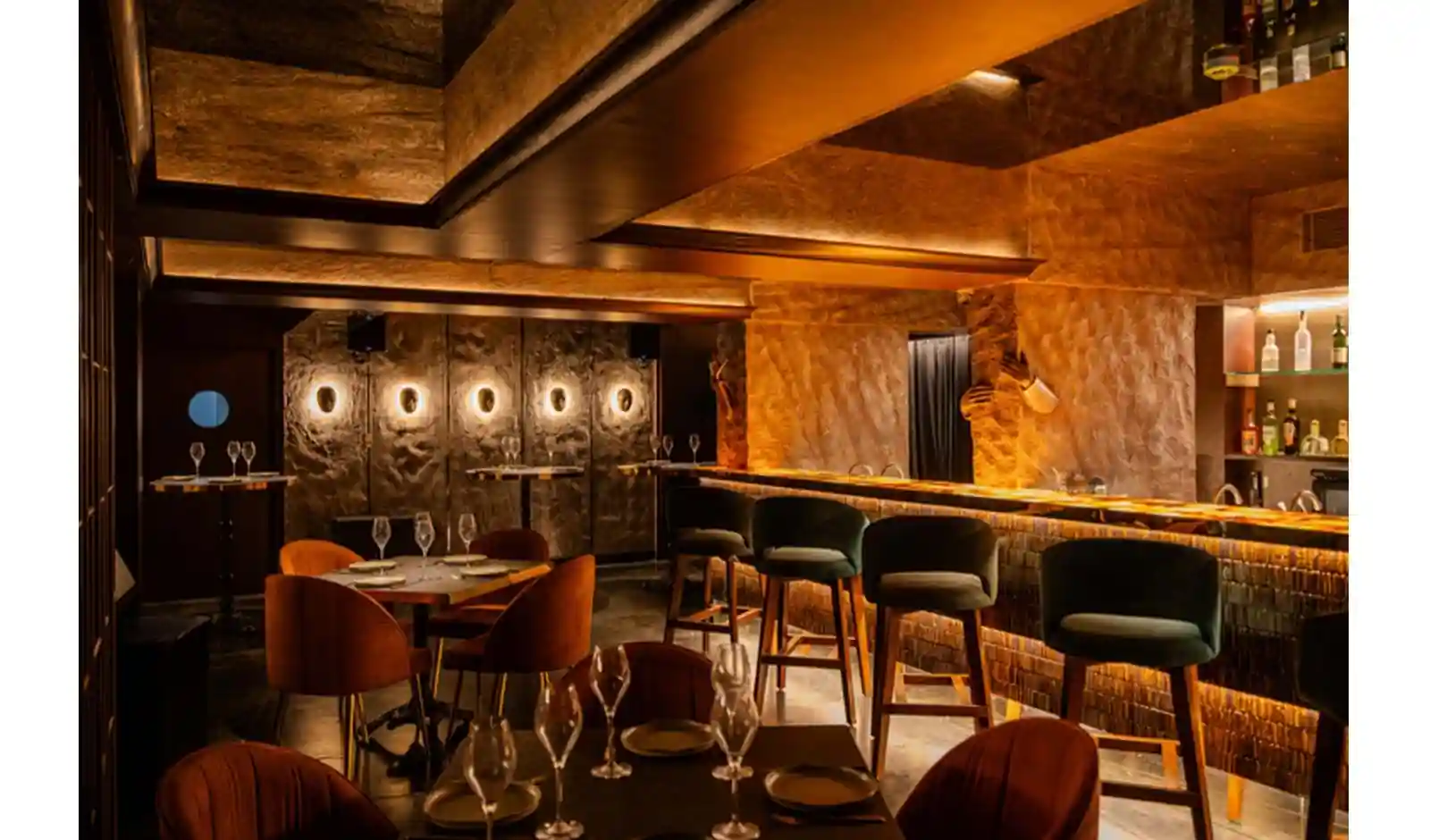
By 2026, restaurant design in India is poised to shift decisively toward high-end, luxury-led concepts, marked by clearer category differentiation. As global benchmarks such as Michelin recognition gain greater relevance within the Indian market, the rise of chef-driven, experience-centric restaurants will demand equally sophisticated and intentional spatial narratives. Industry reports indicate that nearly 60% of audience engagement is driven by visually compelling design and strategic marketing, reinforcing design as a critical business lever rather than a mere aesthetic choice.
What to look for
Biophilic design, open kitchens & transparency, sustainability & localism, bold & playful aesthetics, flexible & multi-functional spaces, wellness-focused design, technology integration, heritage & global fusion, minimalism & warm palettes are rising in restaurant designs.
“Design will increasingly reflect exclusivity, precision, and a deeper alignment with culinary identity, especially as international chefs and restaurant extensions enter the Indian market,” said Khozema Chitalwala, Founder & Principal Architect, Designers Group.
Explaining his views, Keith Menon, Founder of Spiro Spero said, “Restaurant design in 2026 will move towards human-centric, flexible and experience-led spaces. Sustainability will be practical rather than symbolic.”
There will be increased focus on long-lasting materials, energy efficiency and easy maintenance. Modular layouts, adaptable furniture and lighting-led transformations will allow restaurants to shift between day parts and formats without major structural changes. “Technology will be integrated subtly to improve comfort and service flow without overpowering the physical experience,” added Menon.
The Speakeasy Effect
The new trend for all restauranteurs is speakeasy bars which originated from Berlin and Europe and then it went to New York.
Adding his views, Sumessh Menon, Founder of Sumessh Menon & Associates said, “Restaurants and speakeasy bars which are open afterhours. That is the trend; it’s not more than a 50-seater. It has curated music and a story to it.”
He also pointed that this is going to be big in all the places with very limited access; by invitation. “People are willing to spend on those places. Speakeasy is also known as secret room. Other than that, there are experiential places which are trending. Size will be a killer,” he added.
Design to tell the core concept
In premium and luxury restaurants, storytelling is no longer limited to interiors alone. Design works as part of a holistic narrative, extending from spatial planning to food presentation, tableware, cutlery, and even napkin choices.
For Chitalwala, it’s the story that unfolds through the way food is plated, served, and experienced. This immersive approach ensures that guests don’t just see the concept; they experience it across every touch point.
“Restaurants today use design as a narrative tool rather than just an aesthetic layer. Effective storytelling relies on restraint and clarity. Rather than explaining everything, design leaves room for interpretation through sensory cues and curated moments,” Keith mentioned.
Design Aligned with F&B
Aligning design with food and beverage is a collaborative effort, not the responsibility of the designer alone. It involves close coordination between owners, chefs, service teams, and designers.
“From open kitchens and live cooking experiences to the choreography of food service and table plating, every detail contributes to the overall experience. The success of a restaurant today lies in how seamlessly design supports and enhances the culinary journey,” shared Chitalwala.
Bars have transformed into standalone experiential destinations rather than secondary elements within restaurants. Today’s bar design focuses on energy, interaction, and engagement—driven by evolving lifestyles, experimental cocktails, and social culture. Whether as a bar-lounge, club, or independent F&B concept, the bar is now designed to offer a distinct identity.
While Keith highlighted, “Service counters, tasting areas and chef-led interactions become part of the spatial experience, reinforcing the brand story. Long counters, clear sightlines, layered lighting and curated backbars turn the bar into a stage.” Programming such as guest shifts, cocktail workshops and late-night music further strengthens the bar’s identity as a destination, not just a supporting element.
Flexible layouts
Flexibility is most evident in casual and mid-scale restaurants where layouts can adapt to changing group sizes, day-to-night transitions, and varied dining experiences. Designers incorporate movable furniture, adaptable lighting, and modular seating to enable this shift.
However, in fine-dining and luxury restaurants, flexibility is intentionally limited. Chitalwala mentioned, “These spaces rely on controlled lighting, fixed layouts, and curated atmospheres, often supported by private dining rooms (PDRs) for larger groups. Ultimately, flexibility is designed in response to the target audience, food format, and service style ensuring the spatial experience remains aligned with the restaurant’s core concept."
What works best is simplicity and planning. Lighting scenes, acoustic solutions and documented layout configurations help teams adapt quickly without disrupting service. Successful flexible spaces are those where guest circulation remains intuitive, staff workflows stay efficient and the experience feels intentional rather than improvised. With this, one thing is evident that design plays an important element in restaurant spaces.
 This article was originally published by the Restaurantindia.in. To read the full version, visit here


