


 46
/
4
Min Read
46
/
4
Min Read


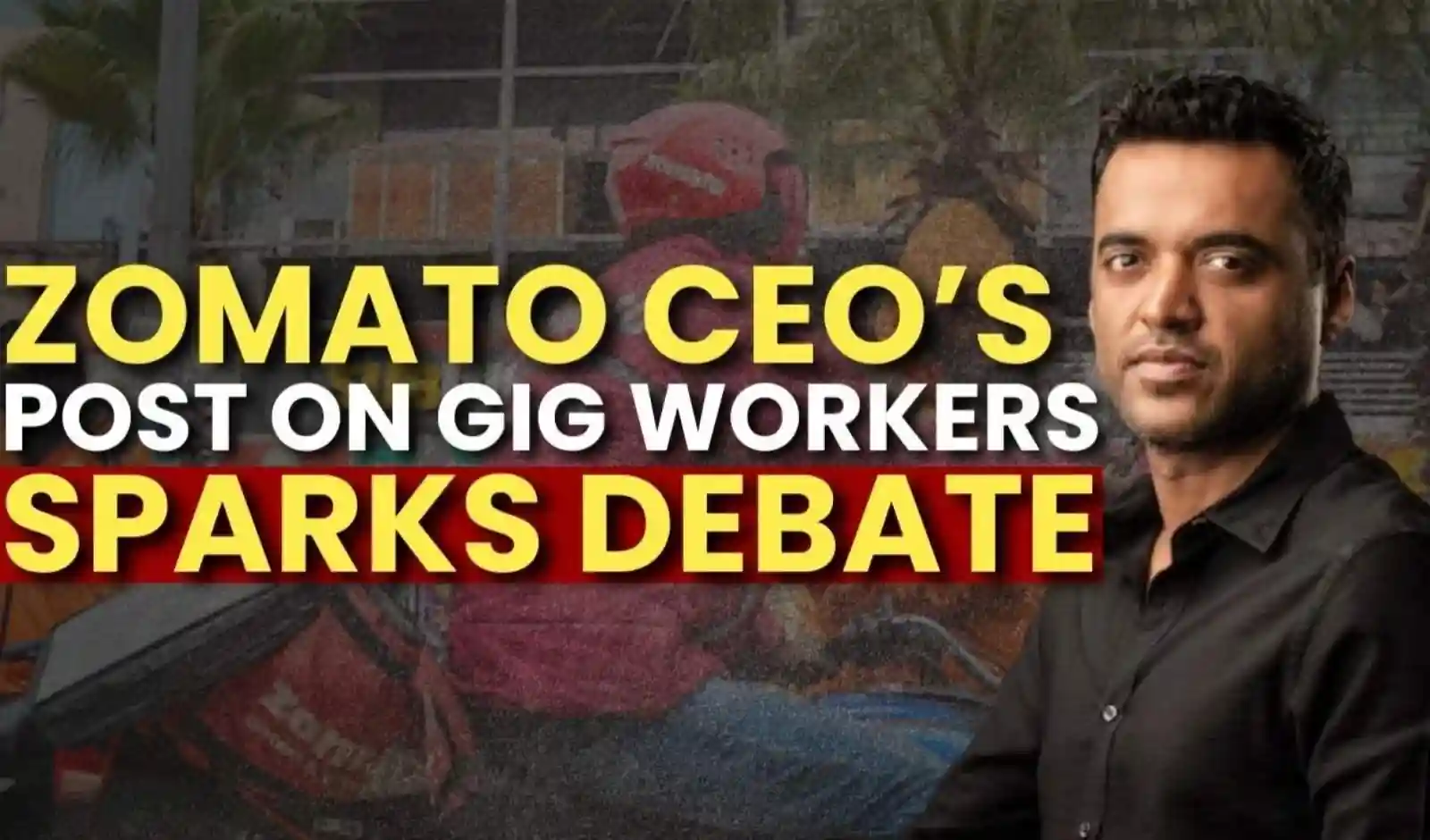
The disclosure comes at a time when gig worker compensation, benefits and working conditions in India’s food delivery and quick commerce sectors are facing heightened public and regulatory scrutiny.
The company clarified that earnings per hour are calculated based on total logged-in time, including periods when delivery partners are waiting for orders, and not limited to active or busy delivery hours. Based on the 2025 earnings per hour figure a delivery partner working 10 hours a day for 26 days a month would earn approximately Rs 26,500 in gross monthly income. After accounting for estimated fuel and vehicle maintenance expenses of around 20 percent, net monthly earnings would be close to Rs 21,000, according to Goyal’s post.
The Telangana Gig and Platform Workers Union (TGPWU) challenged this assessment, stating that the calculation effectively translates to about Rs 81 per hour over nearly 260 working hours per month. The union argued that such income levels do not qualify as “decent work” particularly when gig workers lack social security, paid leave, or comprehensive accident cover, raising concerns about the long-term viability of platform-based work as a primary livelihood.
Goyal also stated that delivery partners receive 100 percent of customer tips without any deductions. According to the data shared, average tips per hour increased to Rs 2.6 in 2025 from Rs 2.4 in 2024. However, the union countered that tipping penetration remains low with only about 5 percent of Zomato orders and 2.5 percent of Blinkit orders including tips, limiting their overall contribution to earnings.
The factsheet further indicated that most delivery partners are not engaged full-time. In 2025, the average partner worked 38 days during the year with an average of seven hours per working day. Only 2.3 percent of delivery partners worked for more than 250 days in the year. Goyal reiterated that gig work on Zomato and Blinkit is positioned as a flexible, supplementary income option rather than a long-term employment model with flexibility described as a core feature of the platform.
According to Goyal, delivery partners are not assigned fixed shifts or geographies and have the freedom to log in and out and choose their work areas independently. Addressing concerns around road safety and delivery speed, Blinkit has introduced a dashboard displaying store distance from a user’s location, along with a disclaimer indicating that shorter distances enable quicker deliveries.
Goyal stated that 10-minute deliveries are enabled by the proximity of stores to consumers rather than increased riding speed. He shared that in 2025, Blinkit’s average delivery distance was 2.03 km with an average driving time of about eight minutes, implying an average speed of nearly 16 km/h. On Zomato, average delivery speeds were around 21 km/h despite longer delivery durations. He added that road safety is a shared responsibility across the logistics ecosystem.
TGPWU disputed this interpretation, arguing that delivery speed data does not eliminate pressure on workers, as incentives, penalties, ratings and the risk of losing orders continue to influence rider behaviour. The union further stated that low average participation reflects earnings that are insufficient to depend on, while workers who stay longer on platforms remain without formal welfare protections.
The debate also drew reactions from policymakers. G20 Sherpa and former NITI Aayog CEO Amitabh Kant publicly supported the Eternal CEO, stating, “Don't sabotage innovation for political ends” in reference to remarks by Aam Aadmi Party leaders, including Rajya Sabha MP Raghav Chadha. Kant cited data from 75 lakh orders placed on Blinkit on December 31, noting strong consumer demand for speed and convenience. He added that gig jobs are projected to increase from 7.7 million at present to 23.5 million by 2030.
In subsequent posts, Goyal said that Zomato and Blinkit provide welfare support to delivery partners. In 2025, the platforms reportedly spent over Rs 100 crore on insurance coverage, including accident, medical, maternity, and loss-of-pay insurance. Other initiatives include paid rest days for women delivery partners, income tax filing assistance, access to a gig-focused National Pension Scheme, and SOS emergency services.
The union, however, maintained that such measures remain inadequate, stating that insurance and voluntary programs cannot replace provident fund coverage, pensions, paid leave, or guaranteed income. It described the benefits as piecemeal and non-enforceable, concluding that “Secondary income should not mean secondary rights.”
 This article was originally
published by the Restaurantindia.in. To read the full version,
visit here
This article was originally
published by the Restaurantindia.in. To read the full version,
visit here 


