



 377
/
7
Min Read
377
/
7
Min Read


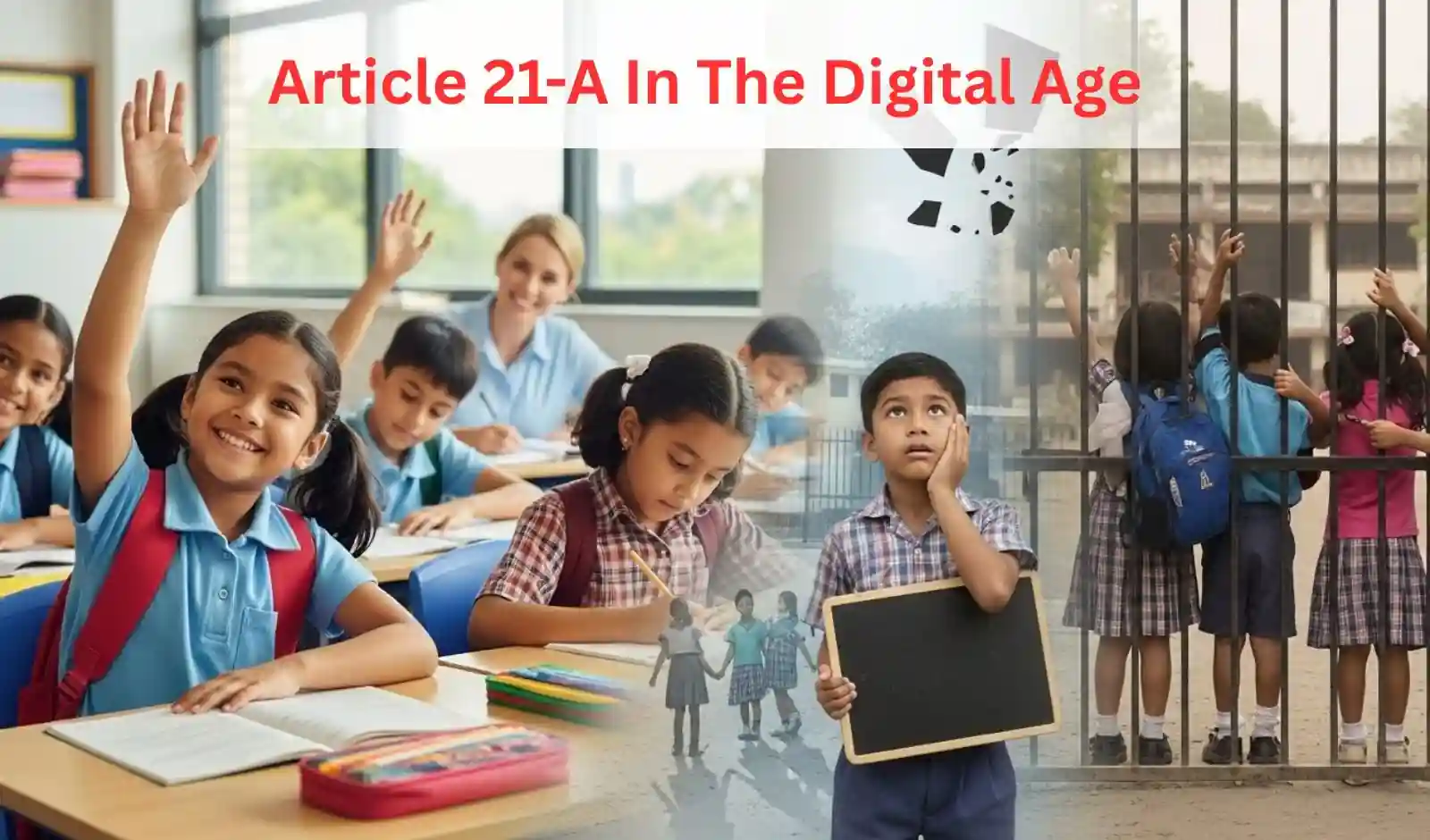
Article 21A clearly states that it is the duty of the State to provide free and compulsory education to all children between the ages of six and fourteen years. This means that every child born in India, regardless of whether they come from a wealthy or poor family, has an equal right to education. The Right to Education plays a vital role in a child’s overall development, active participation in society and future employment opportunities.
The Changing Nature of Education in the Digital Age
The importance of Article 21A has increased significantly in the digital age. Today, technology such as computers, the internet, smartphones and tablets has expanded education beyond the traditional classroom. Children can now learn from home through online platforms, video lectures and digital learning applications. This not only speeds up the learning process but also allows students to explore subjects based on their individual interests.
However, the benefits of digital education can only be realised when all children have equal access to opportunities and resources. Children who lack internet connectivity, computers or digital devices risk being left behind. Therefore, it is essential for both the government and society to work together to ensure that children from urban and rural areas, as well as from economically strong and weak backgrounds, have equal access to modern technology.
Role of the 86th Constitutional Amendment Act, 2002 in the Right to Education
The 86th Constitutional Amendment Act, 2002, was a landmark step toward ensuring education for every child in India. This amendment made education a fundamental right for children.
Incorporation of Article 21A: Article 21A was added to the Constitution through the 86th Amendment. It made the State responsible for providing free and compulsory education to all children aged 6 to 14 years, ensuring that no child is denied education due to economic or social reasons.
Establishment of State Responsibility: The amendment placed a legal obligation on the government to establish adequate schools, appoint qualified teachers and provide necessary educational facilities. After this amendment, education became not just a policy goal but a constitutional duty of the State.
Protection of Children’s Rights: The 86th Amendment guaranteed children the right to school admission, free education and protection from being forced to drop out. This significantly helped in reducing child labour and school dropout rates.
Parental Responsibility (Article 51A): The amendment added Article 51A (k), which places a duty on parents or guardians to provide education to children between the ages of 6 and 14 years. This strengthened the role of families and society in supporting education.
Equality and Social Justice: The law aimed to reduce educational disparities between rich and poor, urban and rural populations and to ensure educational access for girls and disadvantaged sections of society.
In conclusion, the 86th Constitutional Amendment Act, 2002, forms the foundation of the Right to Education in India. Building on this, the Right to Education Act, 2009 (RTE Act) was later enacted. By making education a fundamental right, this amendment has laid the groundwork for building an empowered, educated and self-reliant India.
Experts’ Opinions on the Changing Nature of Education
Education experts do not view Article 21A merely as a legal provision; rather, they consider it the foundation of a bright future for children. As one expert aptly stated “Article 21A is not just a right written on paper; it is the cornerstone of a child’s future.”
Education today extends far beyond textbooks and classrooms. It equips children with essential skills such as creative thinking, decision-making and active participation in society. Digital media has further strengthened this process by giving children access to diverse sources of knowledge, online courses and interactive learning opportunities.
Government’s Role in Providing Educational Facilities
Under Article 21A, the government bears the responsibility of ensuring that every child has access to essential educational resources. This includes the availability of schools, trained and qualified teachers and digital learning platforms. The government must also ensure access to the internet and digital devices, as well as provide financial assistance and scholarships to children from economically disadvantaged backgrounds.
These efforts are crucial to ensuring that no child is denied education and that the Right to Education remains protected as a fundamental constitutional guarantee.
Impact of Digital Media on Learning
Digital media has significantly transformed the learning process. Earlier, education relied mainly on textbooks and classroom teaching. Today, children can learn through online classes, video lectures, e-books and digital assessments. This has made education more accessible, engaging and interactive.
As one academician observed, “While digital technology expands learning opportunities, Article 21A ensures that the right to education remains permanent and cannot be taken away.” This highlights that although technology supports learning, the Right to Education must remain constant and inviolable.
Social Importance of Education in the Present Era
Education is essential not only for individual growth but also for the progress of society and the nation as a whole. When all children are educated, they become aware of their rights and responsibilities and are better equipped to contribute to positive social change.
In the digital age, education enables children to access global knowledge, engage in cultural exchange and acquire modern skills through online platforms, thereby broadening their overall development and preparing them for the future.
Challenges and Solutions in Digital Learning
While digital education offers numerous advantages, it also presents several challenges. Many children in rural and remote areas of India still lack access to digital devices and reliable internet connectivity. As a result, there is a risk of unequal learning opportunities. To address this issue, the government, non-governmental organisations and the private sector must work together to ensure inclusive and equitable access to digital education for all children.
Several measures can be adopted to overcome these challenges. These include providing digital devices and internet connectivity in every school, offering training and technical support for online educators, distributing tablets and smartphones to children from economically disadvantaged backgrounds and developing digital learning applications in regional and local languages.
Conclusion
In conclusion, Article 21A not only grants children a legal right to education but also establishes a strong foundation for ensuring equal opportunities, quality education and access to modern resources in the digital age. As education continues to evolve through digital platforms, online classrooms, e-learning tools, and artificial intelligence, this right plays a vital role in empowering children with technological skills and preparing them for global competition.
However, the effective implementation of this right depends on reducing the digital divide. This requires the government to ensure universal access to the internet, digital devices and basic educational infrastructure. At the same time, teachers must be trained to use new technologies effectively, parents and society must actively support children’s learning. Bridging the educational gap between rural and urban areas is also essential for the successful realization of this right.
Article 21A forms the foundation of a bright, inclusive and empowered future for children. To strengthen it in the digital era a balanced and responsible use of technology, resources and policies is essential. Only through collective efforts by the government, educators, parents and society can every child receive quality education and contribute to the nation’s development as an informed, self-reliant and responsible citizen.


