


 103
/
5
Min Read
103
/
5
Min Read


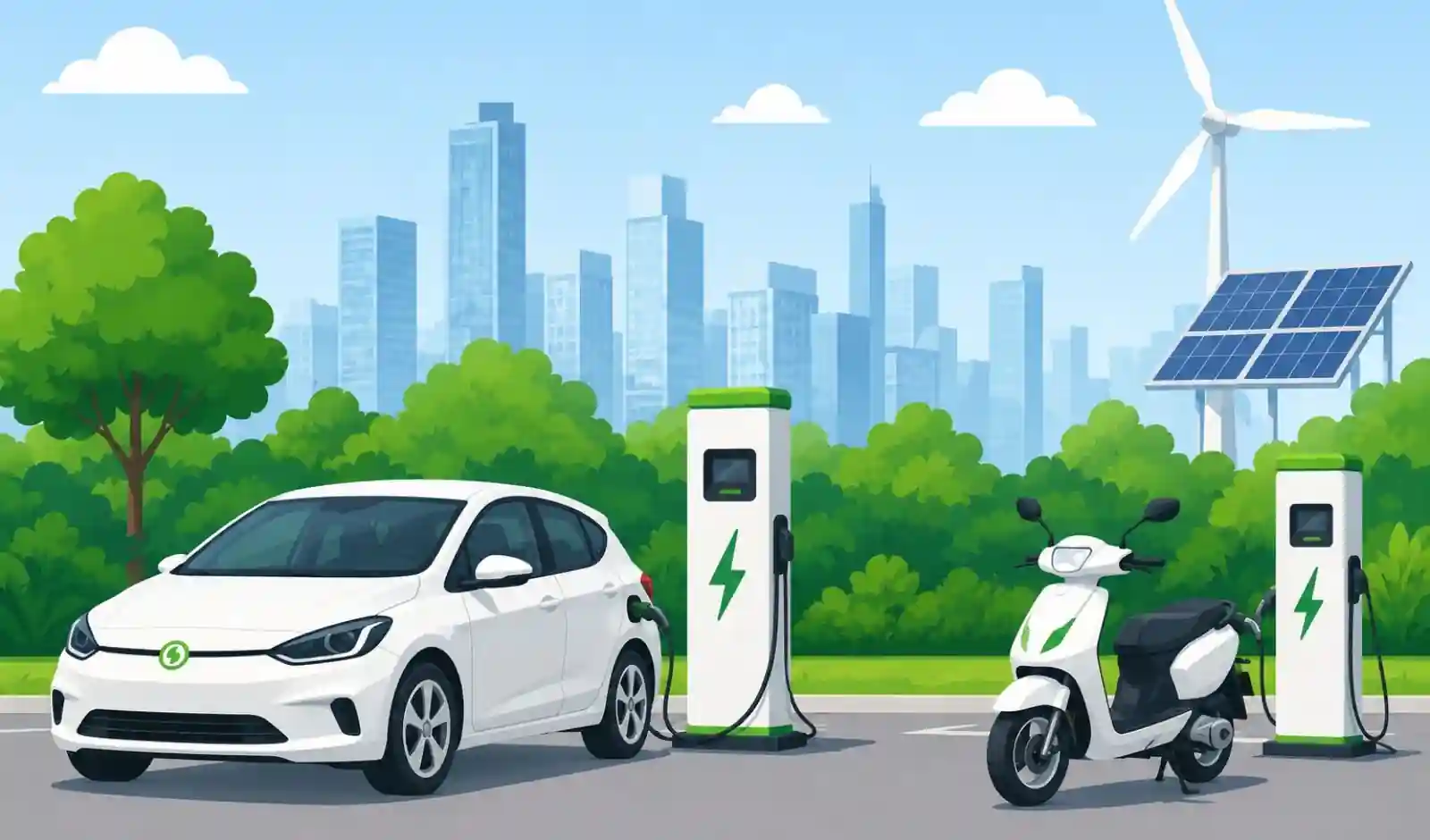
The Delhi Government has approved EV Policy 2.0, under which ₹15,000 crore will be invested over the next four years to accelerate electric mobility. Effective from July 1, the policy aims to promote the adoption of electric vehicles (EVs) in the national capital through subsidies, scrappage incentives, and revised vehicle registration norms.
Chief Minister Rekha Gupta announced that the government has set a target of ensuring that 95% of all new vehicle registrations in Delhi are electric by 2027. Under the new policy, only electric auto-rickshaws will be registered in Delhi from January 1, 2027, while the registration of new two-wheelers will be limited to electric models from April 1, 2028.
To make EVs more affordable, the government will offer a subsidy of ₹30,000 for electric two-wheelers and ₹50,000 for electric three-wheelers during the first year of the policy. In addition, owners replacing BS-IV four-wheelers with cleaner alternatives will receive a ₹1 lakh scrappage incentive.
Although the draft policy had proposed a 50% road tax waiver for hybrid vehicles priced up to ₹30 lakh, the final EV Policy 2.0 does not include any subsidy or tax benefits for hybrid vehicles.
The government believes the policy will play a crucial role in promoting clean transportation, reducing vehicular pollution, and strengthening Delhi’s position as a leader in electric mobility.
Industry Reactions
Akshit Bansal, Founder and CEO of Statiq, said the proposed ban on ICE two-wheelers from 2028 is a significant step towards cleaner air, but its success will depend on the rapid expansion of charging infrastructure. He noted that Delhi currently has around 10,000 charging stations, while EV charging demand has already increased nearly nine-fold, placing an additional 227 MW load on the power grid.
He added that if Delhi’s entire vehicle fleet becomes electric, the city’s annual incremental electricity demand could reach 26,000–28,000 GWh, with peak demand adding 1,500–5,000 MW of load to the grid. He said Statiq is addressing this challenge by deploying smart chargers across residential areas, malls, and highways while introducing time-of-use pricing to reduce grid stress.
Bansal further stated that the policy will also encourage faster adoption of electric four-wheelers, reflecting the government's clear commitment to a renewable and electric mobility future. He emphasized that challenges such as land availability and transformer upgrades must be addressed quickly. With ₹7,000 crore allocated for incentives and ₹1,000 crore for charging infrastructure, the government has demonstrated serious intent. If charging becomes affordable, convenient, and reliable, Delhi could emerge as a global model for urban electric mobility.
Suyash Gupta, Director General of the Indian Auto LPG Coalition, described the government's decision to ban petrol and diesel two-wheelers from 2028 as a bold step toward cleaner air. However, he stressed that the transition must remain inclusive, as two-wheelers continue to be the most affordable mode of transport for millions of Delhi residents. An EV-only approach, he said, could create challenges for people unable to bear the high upfront cost of electric vehicles.
He suggested that Auto LPG can serve as a practical and immediate transition solution. He highlighted that KR Fuels introduced India’s first Auto LPG retrofit kit for BS-IV two-wheelers in June 2024 at a price of around ₹15,500. According to him, Auto LPG retrofit kits can reduce particulate emissions by up to 90% compared to petrol, cut NOx emissions by nearly 60% compared to diesel, and lower running costs by almost 50%, enabling annual savings of ₹30,000–40,000 for households and small businesses. He recommended a diversified clean mobility strategy where EVs, Auto LPG, and other clean fuels coexist.
Hemant Kabra, Founder of BGauss, said the Delhi Government’s ₹15,000-crore EV Policy is a visionary initiative that will accelerate electric mobility adoption in India. According to him, financial incentives, tax exemptions, and a clearly defined roadmap for phasing out conventional vehicles will strengthen consumer confidence and make EV ownership more accessible.
He added that the battery capacity-linked subsidy structure for electric two-wheelers will significantly reduce the entry barrier for first-time EV buyers. In his view, the policy will help transition electric mobility from an early-adopter market to mainstream consumer acceptance. He also expressed hope that other states would introduce similar policies to accelerate EV adoption across the country.
Sriram Kannan, Founder and CEO of RouteMatic, said Delhi’s EV Policy 2.0 will accelerate EV adoption not only among individual buyers but also across corporate fleets. He noted that exemptions on road tax and registration fees, scrappage incentives, and investments in charging infrastructure will improve the economics of fleet electrification. He added that targeted incentives for organized employee transportation would help businesses modernize their fleets while significantly reducing carbon emissions.
Vasudha Madhavan, Founder and CEO of Ostara Advisors, said the most significant aspect of the policy is not the size of the subsidy but the policy certainty it provides. She said that over ₹7,000 crore in incentives, direct benefit transfers (DBT), and clearly defined implementation timelines will boost investor confidence.
She further noted that Delhi already leads India in EV adoption and has the highest share of electric buses in the country. A clear roadmap through 2030 will enable charging operators, fleet financiers, and component manufacturers to make long-term investment decisions with confidence. According to her, this certainty will help transform clean mobility from a policy-driven initiative into a truly investable market.
Conclusion
Delhi EV Policy 2.0 marks a significant step toward building a cleaner and more sustainable urban transport ecosystem. The government's clear roadmap, financial incentives, and investment in charging infrastructure are expected to accelerate EV adoption across segments. However, the long-term success of the policy will depend on the rapid expansion of charging networks, strengthening the power infrastructure, and ensuring affordable and inclusive mobility solutions for all sections of society.


