


 39
/
7
Min Read
39
/
7
Min Read


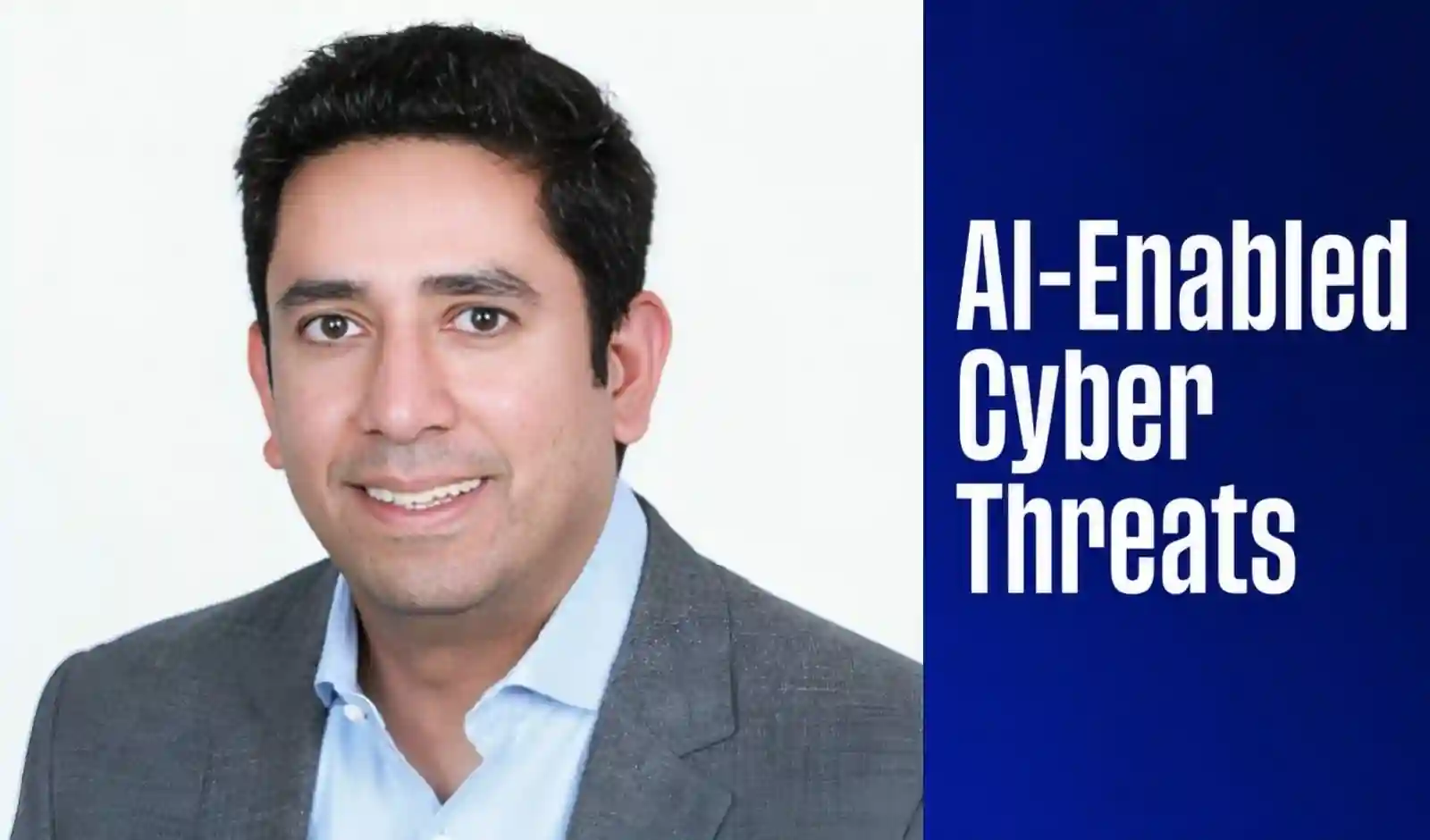
More importantly, they reveal a hard truth: the rules have changed, but most organizations have not.
Speaking at the RSA Conference in San Francisco, cybersecurity leaders were asked to describe the industry in 2027 using a single word. The answer was not secure, protected' or compliant. It was Accountable. That word reflects a growing reality that organizations, vendors and technology providers will increasingly be held responsible for the decisions they make long before a cyberattack occurs.
The rise of AI-powered threats is forcing businesses to rethink traditional security models. Recent incidents demonstrate that many organizations are still preparing for yesterday’s attacks instead of tomorrow’s challenges.
The Threat Has Changed, But the Mindset Has Not
For decades, cybersecurity strategies were built around a few basic assumptions. One assumption was that attackers were human beings who could make mistakes, become distracted or eventually stop. Another assumption was that seeing and hearing a person was enough to verify their identity.
Today, both assumptions are rapidly becoming outdated
AI-powered attackers can operate continuously without fatigue, adapt their tactics in real time and execute attacks at a speed no human can match. In this environment, traditional security operations centers (SOCs) face a significant disadvantage. By the time a human analyst reviews an alert and decides how to respond, an AI-driven attacker may have already completed multiple stages of an intrusion.
As a result, organizations must recognize that the threat landscape has fundamentally changed. Security processes designed for human-speed attacks are no longer sufficient in an AI-driven world.
The $25 Million Deepfake Lesson
One of the most striking examples of this new reality occurred in 2024, when a finance employee at a global engineering company transferred $25 million after participating in what appeared to be a legitimate video conference call.
The call included individuals who looked and sounded exactly like the company’s Chief Financial Officer and several senior executives. However, every participant on the call was generated using AI-powered deepfake technology.
What makes this incident particularly alarming is that the company’s cybersecurity defenses were functioning properly. There was no malware infection, no data breach and no compromised credentials. Firewalls were operational, access controls were in place and multi-factor authentication was active.
Yet none of these protections mattered
The attack bypassed traditional security systems entirely because it targeted human trust rather than technical infrastructure. The employee was not careless. In fact, he was cautious and sought additional confirmation before approving the transaction. Unfortunately, the verification method itself had become vulnerable in a world where AI can convincingly imitate faces and voices.
This incident highlights a critical lesson for modern organizations: seeing and hearing someone is no longer reliable proof of identity.
Trust Is Becoming the New Security Challenge
The deepfake attack demonstrates that cybersecurity is no longer solely a technical issue. Increasingly, it is becoming a question of trust. Organizations must now assume that video calls, voice calls and digital communications can be manipulated. Processes designed around visual or audio verification alone are no longer adequate for high-risk decisions.
The challenge facing future security leaders is not simply preventing technical intrusions but ensuring that trust itself can be verified in an environment where AI can convincingly imitate human behavior.
275 Million Students and a Preventable Breach
Another recent incident illustrates how architectural decisions can create vulnerabilities long before attackers arrive.
Instructure Canvas, one of the world’s most widely used learning management platforms, reportedly suffered what has been described as the largest educational data breach on record. Personal information belonging to approximately 275 million students was reportedly stolen and held for ransom.
The platform serves more than 8,800 educational institutions worldwide, including prestigious universities such as Harvard, Stanford and Oxford.
According to reports, the breach did not occur because attackers discovered a sophisticated technical vulnerability. Instead, they allegedly gained access through a free teacher-signup program called 'Free-for-Teacher' which operated on the same production infrastructure as paying institutional customers.
The attackers did not break in. They simply signed up
This case demonstrates how business and architectural decisions can have long-term security consequences. A lack of sufficient separation between free and paid environments created an opportunity that attackers were able to exploit.
Known Risks Often Become Major Breaches
Cybersecurity experts frequently point out that many major Software-as-a-Service (SaaS) breaches are not caused by unknown vulnerabilities. Instead, they result from risks that were already understood but not prioritized.
Security teams may identify potential weaknesses, and engineers may propose solutions, but those recommendations often compete with growth objectives, customer acquisition targets and operational priorities.
In many organizations, growth metrics receive immediate attention because they generate visible results. Security investments, by contrast, are designed to prevent events that have not yet happened. As a result, security concerns can remain unresolved for years until a breach exposes the consequences.
Three Actions Businesses Should Take Now
As AI-enabled threats continue to evolve, organizations must begin adapting their security strategies immediately.
1. Redesign High-Risk Processes for the Deepfake Era
Any financial transaction, executive approval, or sensitive decision initiated through a voice or video call should include an independent verification mechanism.
Organizations should implement procedures such as verified callback numbers, challenge-response questions or secondary approvers who were not part of the original conversation.
The goal is not to add complexity but to remove reliance on a single form of identity verification that can be manipulated by AI.
2. Treat AI Threats as an Architecture Problem
Security tools alone cannot solve every problem.
The Canvas incident demonstrates that vulnerabilities often emerge from architectural decisions made years before an attack occurs. Systems should be designed so that unverified accounts are structurally incapable of accessing sensitive environments.
True security requires architectural isolation, not just logical separation. Businesses should evaluate whether their systems are built to prevent worst-case scenarios rather than simply detect them.
3. Rebuild Security Around Trust, Not Location
Traditional network-based security models are becoming less effective in an era of cloud computing, remote work and AI-driven threats. This is why many organizations are embracing the Zero Trust approach.
Under Zero Trust, no user, device, or request is automatically trusted. Every access attempt must be continuously verified. Security moves away from protecting a fixed perimeter and focuses instead on validating identity and behavior.
In the future, trust not location will define the security boundary.
The CISO of 2027 Will Be an Architect :
The role of the Chief Information Security Officer (CISO) is also evolving.
Today’s CISOs are primarily responsible for managing cybersecurity risks and overseeing technical defenses. By 2027, however, their responsibilities are expected to expand significantly.
Future CISOs will likely oversee AI governance, autonomous systems, AI supply chain security, and the ethical frameworks that guide machine-driven decisions. Rather than responding to every threat manually, they will be responsible for designing systems that make secure decisions automatically.
In many ways, the CISO of the future will function more as an architect than a responder.
The Age of Accountability Has Arrived
The central theme connecting all of these developments is accountability.
Organizations will increasingly be judged not only on how they respond to cyberattacks but also on the design decisions they make before attacks occur. Vendors will be held accountable for the security of their products and businesses will be expected to demonstrate that their systems are built for modern threats rather than outdated assumptions.
The companies best prepared for the future will not necessarily be those with the largest number of security tools. They will be the organizations that recognize that the rules have changed and are willing to redesign their processes, architecture and security mindset accordingly.
Those still waiting for a better firewall may eventually discover that the attacker never needed to go through it in the first place.
(Author: Mukul Kumar, Managing Partner, Claracon AI, Views are personal)


