


 72
/
5
Min Read
72
/
5
Min Read


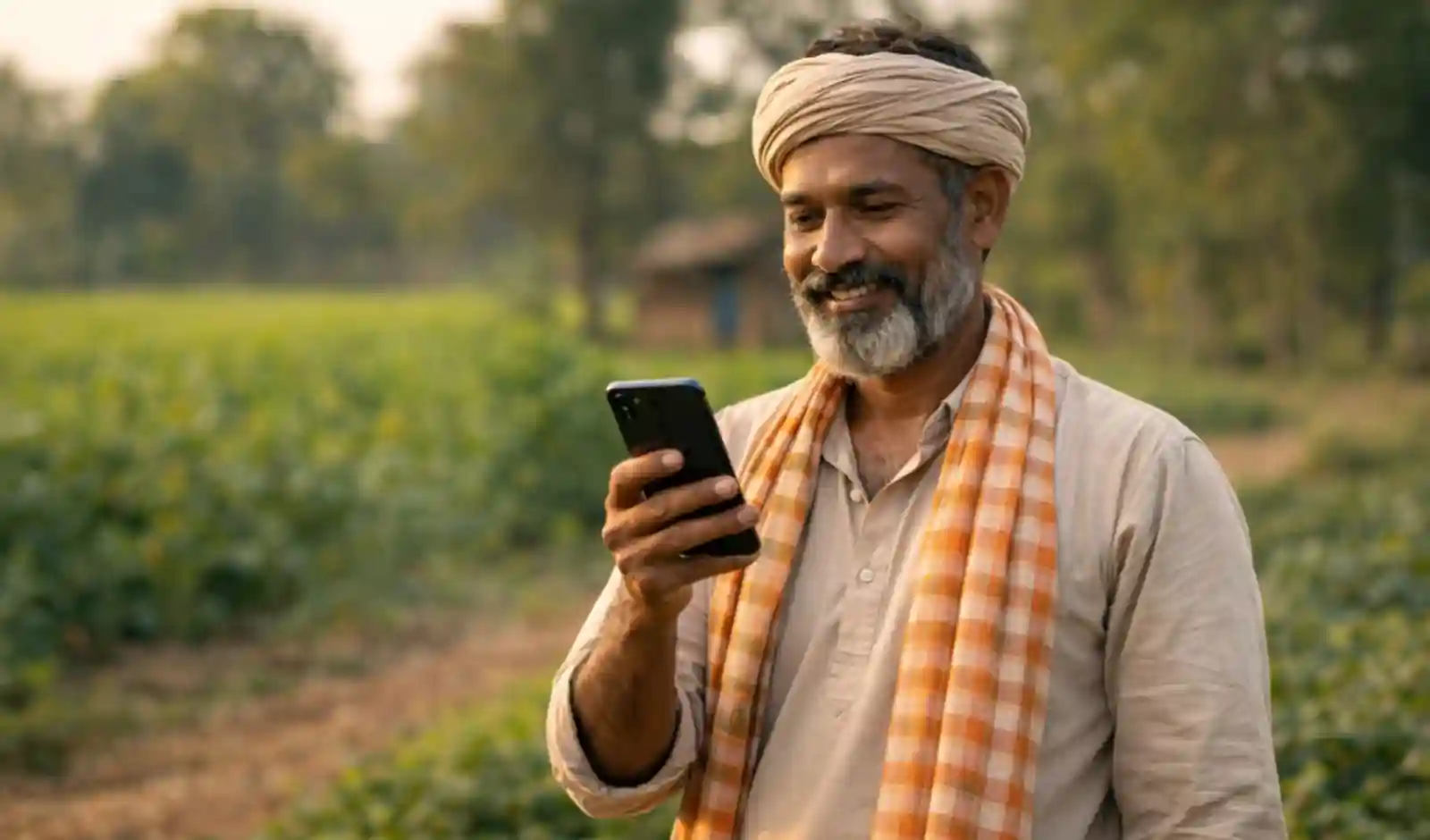
India’s internet story is increasingly being shaped not by the metros but by what lies beyond. While the country has crossed an estimated 958 million internet users, according to Kantar’s Internet in India report 2025, penetration remains uneven across states.
Large markets such as Uttar Pradesh, Madhya Pradesh, and Chhattisgarh continue to record close to 50 per cent penetration, with a meager 7 per cent rise in UP, 8 per cent in Bihar, and 0.5 per cent rise in Madhya Pradesh. Yet, as the report suggests, this lag is not a constraint, but points to where the next phase of startup-led growth is likely to emerge.
“Accessing OTT video and music content, online communication (such as chat, email, and calls), and social media are among the most democratized internet activities across both urban and rural areas,” said the report.
According to Biswapriya Bhattacharjee of Kantar, the opportunity in these lower-penetration states begins with understanding their economic structure. “If you look at these states in particular, these are agrarian states, large rural population, so the first opportunity definitely is to focus on startups that are rural-oriented, rural jobs-oriented, agri-oriented, and so on,” he told Entrepreneur India.
As connectivity spreads deeper into rural India, platforms that create livelihood opportunities, from agri-market linkages to rural employment and skilling solutions, are likely to find both scale and relevance. With agriculture still employing nearly half of India’s workforce, even modest improvements in access to markets, information, and services can translate into meaningful economic impact.
Beyond livelihoods, entertainment has emerged as one of the most powerful drivers of internet adoption in non-metro India.
Bhattacharjee noted that content consumption patterns shift sharply as one moves away from urban centres. “The growth of entertainment is becoming very, very significant across all states, but also more importantly as you go into the rural parts of the country,” he said, adding that this creates a major opening for OTT platforms and digital media companies.
“That’s an opportunity for a lot of the entertainment OTT players to come up with regional content, very localized content, hyper-local content,” said Bhattacharjee.
With India now home to over 600 million OTT users and the majority of consumption happening in Indic languages, the next wave of digital entertainment is increasingly being shaped by local stories, dialects, and cultural references rather than national, one-size-fits-all programming.
Commerce, however, may be where the impact of deeper internet penetration is already most visible. Bhattacharjee described this as a two-way opportunity. “The third opportunity is in terms of commerce, right, now both inward and outward. Commerce where you can get sellers to sell their products from those states to outside… but also commerce into those states, right, so how do you get more and more customers to come in on the e-commerce bandwagon.”
Importantly, he pointed out that this shift is no longer limited to large horizontal marketplaces. “We are seeing a lot of e-commerce, which is happening through social commerce, and that’s a huge opportunity for a lot of D2C players.”
This trend is already playing out on platforms like IndiaMART. Founder and CEO Dinesh Agarwal highlighted how dramatically the geographic mix of suppliers has changed over time.
“Tier 1 at some point in time accounted for 100 per cent of the e-commerce business. Today at IndiaMART, the metro cities account only for 55 per cent of the overall supplier business that we get,” Agarwal told Entrepreneur India.
According to Agarwal, Tier 2 cities now contribute another 20-25 per cent, while “almost 20-25% of the business now comes from the Tier 3 and beyond.” He also noted that beyond metro, it’s almost half and half.
Agarwal attributes this shift not to demand moving out of metros, but to new participants entering the system for the first time. “It is the newer inclusion that is happening that was never included,” he said, pointing out that until about 2015, many small-town businesses lacked reliable access to computers, the internet, and electricity.
“Now with the smartphones, everything changed. UPI, NEFT, and logistics infrastructure are there. Also with GST, you can do some kind of verification of businesses,” he explained, adding that platforms like IndiaMART help formalise and de-risk transactions for small sellers.
The pandemic, too, acted as an inflection point. “Post 2020 with COVID, a lot of people went online compulsorily. A lot of people realized that this is a compulsion to go online, which actually educated a lot of people.” The forced adoption has since turned into sustained behaviour, particularly in smaller towns where online channels are now seen as essential rather than optional.
Running parallel to these shifts is a more subtle but equally important change in how Indians engage with technology.
Bhattacharjee pointed to the rapid spread of AI usage as one of the most surprising findings from recent research. “The fact that almost 50 per cent of India uses some form of AI, and of that more than two-thirds of them use some form of generative AI, is revealing, that it is not really an urban phenomenon… it is across. No longer is India or a majority of India using a single device for access.”
For investors, this evolution sharpens the focus on outcomes. Saravanan Nattanmani, Partner at Premji Invest, said, “At the second and third level, you can always go into detailing and see what adaptation of AI or a particular kind of company’s products has translated into a meaningful outcome. Once it adds up, then the job of investors is easy.”
 This article was originally
published by the
This article was originally
published by the 


