


 92
/
7
Min Read
92
/
7
Min Read


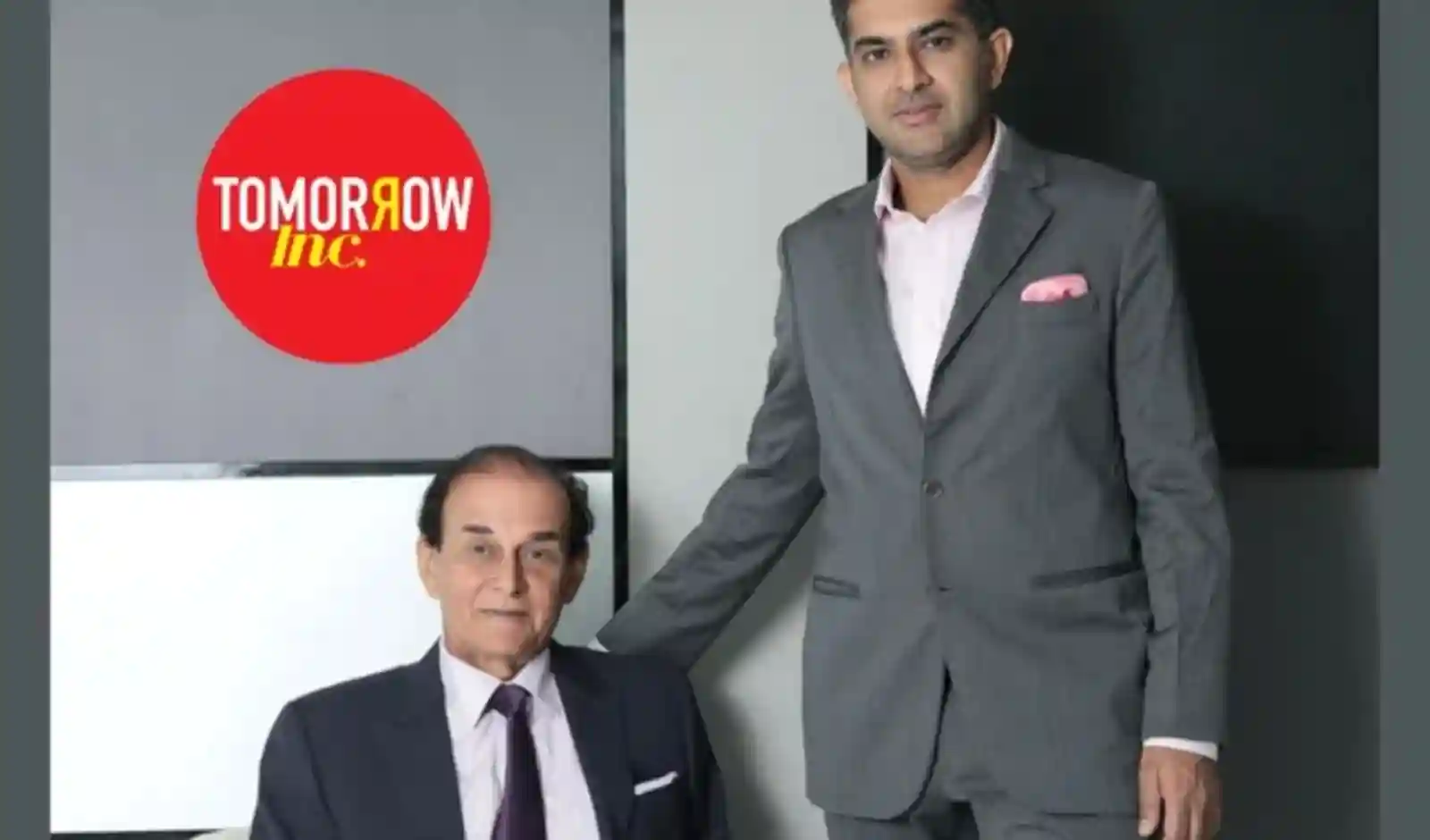
He is father is a paragon of consumer business. He aspires to create something as big as his father!
In 1987, determined to script history, Harsh Mariwala, stepped away from the family-run Bombay Oil Industries Ltd and founded Marico. Today Marico is valued at approximately $8.5 billion.
As many as 28 years later, Rishabh Mariwala created Sharrp Ventures, the investment office of the Harsh Mariwala family, in 2015.
Rishabh Mariwala says his long term vision with Sharrp Ventures is to create an AUM (asset under management) equivalent to Marico's valuation.
Currently, the AUM is $500 million and Marico is valued around INR 95,000 crore. How close is he to turning vision into reality? Perhaps, on the right trajectory! … because it's the third season of Sharrp!
Sharrp Ventures 3.0, the investment office of the Mariwala family, stepped into its latest course in FY26. With almost ten-plus years of experience, Rishabh Mariwala says he is now more disciplined in his approach to investing, compared with when he began.
"Our investment thesis has been sharpened over the years. Our depth of diligence has increased, we've got an investment committee, our systems and processes are much better in terms of capturing deals. We're a lot more structured in exits. These are the big shifts I've seen strategically, as well as team-wise," says Rishabh Mariwala, founding and managing partner, Sharrp Ventures.
In its 3.0, the office is stage agnostic, but sector-specific: Only consumer sector with a barbell investment approach.
Sharrp is a multi-asset class investment firm with exposure across listed equities, unlisted companies, and private equity funds primarily in India and USA.
Currently the investments in listed companies are around 60 per cent, 25 per cent is in non-listed and almost 15 per cent in treasury. In the early days of the investment office, the ratio between the listed and unlisted investments would be 90 per cent to 10 per cent.
His investment strategy is a function of risk and return, "And the question we ask as a family is, what is our appetite for risk?" he quips. His investment office has backed game-changers such as Mamaearth, Nykaa, SleepyCat, and mCaffeine. Mariwala's focus on high-risk, high-reward opportunities has led to significant growth in private markets and public markets.
"In terms of overall quantum, around 20 per cent will be a very high risk portfolio," he says. From the high risk portfolio, the office expects an IRR (annualized rate of return) of 25 per cent.
A high-risk portfolio in investments is defined as a strategy focused on maximizing returns by primarily allocating funds to volatile assets that offer a high potential for substantial growth, but also carry a significant chance of losing some or all of the invested capital.
Sharrp partners with entrepreneurs who have a grand vision and the execution acumen to tackle tough problems in scaling a business. The collaborative approach and unique insights from its ecosystem and networks gives founders an edge in today's world.
Carrying the legacy of Harsh Mariwala, Rishabh Mariwala understands founders' sentiment and knows what it takes to build businesses.
Although he started as an entrepreneur, he enjoys investing more. His learning from venture capital funds as an LP (limited partner) has mentored in shaping his investment approach. "I think I'm a better investor, if someone can be good at being an investor and an entrepreneur, then inevitably the person would be a good mentor," he shares.
"We at Sharrp love exchanging notes with funds, there's so much to learn from them, there's potential to collaborate, to support companies, or help them wherever required. There is potential to co-invest, but most importantly, the structure, the discipline, the analysis and the frameworks they follow, provides a depth of knowledge," he continues.
In 2010, Rishabh Mariwala embraced entrepreneurship to gain a holistic understanding of business management. He launched Soap Opera, a brand catering to the masstige and luxury consumer segment. His passion for innovative product formulations and deep consumer insights led to the creation of PureSense in 2016, a premium skincare line focused on luxury and sustainability.
The Indian entrepreneurial landscape is a vibrant and rapidly growing ecosystem, characterized by its status as the world's third-largest startup hub, supported by government initiatives like Startup India, a young and tech-savvy workforce, and increasing venture capital funding.
The year 2025 has been a feather on the entrepreneurial steak of the country as many startups got listed. At the beginning of 2025, markets were brimming with optimism about new-age IPOs. The IPO boom was within a wide range of sectors, from technology and finance to consumer goods and manufacturing, as companies sought to raise capital.
When asked about the optimism in the IPO ecosystem, he says, "IPOs are like oxygen for a business. There is rigor, governance, and an entire ripple effect as it unlocks the ability to create talent and wealth."
IPOs facilitate economic growth by channeling public and international capital into businesses, fostering a robust and dynamic financial market. "It creates more domestic capital and we need more domestic capital investing in startups rather than foreign capital," he adds, explaining the importance of businesses going public.
Amongst its current portfolio, Mariwala believes three of the startups it has invested in, are soon to be IPO-bound, "It's just a matter of time."
He is also bullish about the luxury landscape picking up in India, he says, "There is potential in the sector, it's in the nascent stage. I am interested in this, but too early to invest."
Talking about overseas investment, he explains that his primary geography is India. However, the office is open to cross-border investments which overlap with the Indian consumer, open to VC fund investments outside of the Indian subcontinent.
But he is also cautious, and shares that family offices investing overseas need to be watchful.
"You have to have domain expertise to be able to do overseas investments and underwrite those. Understand the market, overall business, the founders, basically everything… because this is outside of your country of origin. Know the consumers, every market reacts differently."
He emphasizes that family offices looking to expand into international markets should go with structuring investments through Overseas Direct Investment (ODI) or The Liberalised Remittance Scheme (LRS). LRS is an RBI policy that allows resident Indians to invest in overseas assets, subject to a limit of $250,000 per financial year.
With a wealth of experience in his sleeves, he credits the legacy of Marico as having forged the best in him. So, will he play an active role in Marico?
"It's already professionally driven; my father did a phenomenal job in creating a family-owned, professionally run business. I have no intention to change that, we'll continue to be the largest shareholders and let management and professionals run the business," he says, adding that he will continue his fiduciary responsibility of advising Marico in startup acquisitions.
About the learnings from Marico that have helped him in shaping Sharrp, he says, "The discipline. Marico always does a pilot of an initiative. When you do a prototype, you understand how it will work in a certain market. Similarly, when we started with venture capital, we followed the same procedure."
You make mistakes, you fail, and you fail fast! "That's where rigor and discipline comes into play. Not getting swayed by trends, for instance, everyone is investing in AI, I am sure I do not want to do that, I want to bet my capital on the consumer sector, what we understand and what we know."
His father too, echoes the same sentiment in business, "If you have to succeed in the marketplace, you have to offer something innovative or something which is pioneering or depending on the kind of business you are in, you need to identify what will create that differentiation in the marketplace. If you're in the service business, you can have some different types of service standards. Identify what is a critical differentiation you are bringing to the table." …And in this case, it's their expertise in the consumer sector, through which the father son duo is rewriting the narrative of consumer business in India.
 This article was originally
published by the
This article was originally
published by the 


