


 342
/
5
Min Read
342
/
5
Min Read


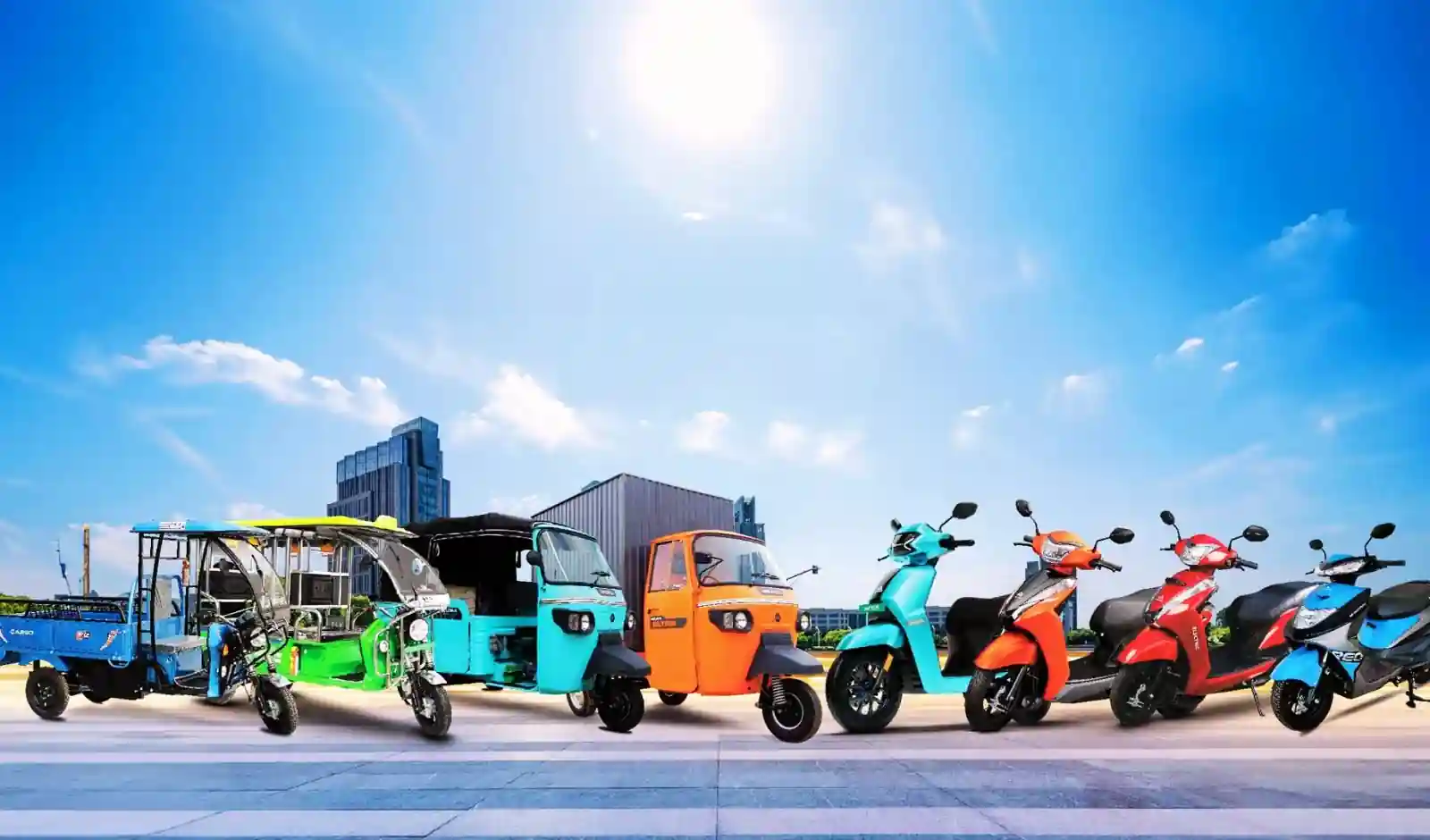
Rising disposable income, increasing struggle with air pollution, shifting consumer sentiment towards sustainable solutions are some of the factors shaping the narrative for electric vehicles. EVs provide an alternative mobility solution for the conscious consumer, with one out of three potential buyers considering an EV as their next purchase. While the industry has improved and scaled engineering bottlenecks (predictable range, fast charging, battery efficiency), one aspect for mass EV adoption still persists – creating a cohesive financing solution.
Simply put, while India’s EV future depends on innovation in the lab, more needs to be done on innovation in credit. Until financing becomes accessible, affordable, and risk-adjusted, EVs will continue to be aspirational purchases rather than mainstream mobility choices.
With improved tech play and battery innovation, EVs today have moved away from perception problems around performance to financial resistance. Strengthening the EV financing ecosystem is critical because high upfront costs, limited credit access for core user segments (especially e2w/e3w buyers) and cautious lending by financial institutions are now bigger barriers to EV penetration.
Even though two out of three EV buyers still purchase using credit, for financial lenders limited historical data, uncertainty about asset life and lack of standardised valuation methods continue to make EV lending riskier than ICE financing. This leads to higher interest rates, lower loan-to-value (LTV) ratios and eligibility norms based on ICE lending restricts conversion at the dealership level and thus, creates an uneven EV penetration.
Therefore, where financing is strong such as for e-rickshaw and commercial 3W segments, adoption is high; where it is weak for instance in 2Ws and small commercial fleets, adoption plateaus. Hence, finance support, in a way, is the engine for growth itself.
Additionally, batteries make up 40-50% of an EV’s total cost, creating an upfront price gap for traditional auto loans. Conventional auto financing treats an EV as a single asset, but the battery requires a differentiated approach. This is where the opportunity lies for innovative financing.
Innovative Financing = Mass EV Adoption
Consider the following, currently EV penetration in India is still in single digits. In Q2 FY25-26, EVs made up 8% of total auto sales, largely driven by over 3 lakh e2W and e3W volumes. Monthly sales data revealed e2W registrations crossing 1.4 lakh units in October 2025 and e3W (L5 plus e‑rickshaw/e‑cart) exceeded
65,000 units, underscoring that these segments will remain the primary growth engines for EV penetration this decade.
For India to expand EV mass adoption, the financing architecture needs to evolve. Also, India can strengthen its EV leasing solutions as well – improving affordability and allowing users to pay per kilometre or per month, without owning core asset.
Additionally, financing solution can be expanded to cover the entire value chain which can optimise the sector’s growth. Charging infrastructure developers require long-tenure, project-style financing similar to renewable energy assets, while battery-swapping operators need working capital structures that align with utilisation cycles. Tier 1 and 2 suppliers, especially those localising critical components under PLI-linked mandates, depend on reliable credit lines to scale capacity. At the same time, battery recycling and second-life operators face capital-intensive entry barriers that traditional lending models are not yet equipped to support. Building an integrated, ecosystem-wide financing framework is therefore essential, not just to lower costs, but to create a stable foundation on which India’s EV market can grow holistically.
Furthermore, from a policy lens, India needs to build secondary market to de-risk EV lending. This can have multiplier effect. For instance, without resale benchmarks, banks struggle to assess residual value which is needed to determine loan amounts and risk premiums. Creating a structured used-EV marketplace, providing battery health certifications using telematics or BMS data and standardising valuation methodologies for different EV categories can ease lending, open credit flow and even improve recyclability of materials, thus reducing import dependency.
Fleet Demand, Green Capital and Global Playbook
Addressing the winter air pollution and climate change, both Central and State-level governments are increasingly calling on green mobility for commercial usage. However, the credit requirements for players in this segment are fragmented, requiring innovative financial solutions such as micro-lending and platform integrated EMIs.
The rise of green finance and ESG-linked capital, offers India an unprecedented opportunity to structurally lower EV borrowing costs. Global climate funds are actively seeking scalable clean mobility exposure, and instruments such as green bonds, sustainability-linked loans and blended finance structures can channel this capital into India’s EV market at significantly lower risk premiums. This could help banks and NBFCs to extend long-tenure, low cost financing across vehicles, batteries, charging assets and fleet operators, bringing affordability closer to mass-market buyers.
Countries such as China, US and the EU have scaled EV adoption through financing innovations such as battery leasing, residual value guarantees, mature secondary markets, tax-credit linked lending and strong leasing drive. For India, it does not need to replicate these models wholesale, rather it can be oriented for an Indian environment where e2Ws and e3Ws dominate, informal income flows are common and affordability remains paramount. By adopting the best practises from these countries, India can accelerate EV penetration without heavily relying on manufacturing subsidies.
(Mr. Vikas Singh, Managing Director, Greaves Electric Mobility Views expressed are personal)


