


 40
/
11
Min Read
40
/
11
Min Read




The President of South Asian University (SAU) and a renowned educationist believes that if used cautiously, judiciously and responsibly, Artificial Intelligence (AI) is the future for many sectors.
Artificial Intelligence (AI) is moving rapidly from experimentation to mainstream adoption. The growing interest across sectors in embracing AI is encouraging and presents a future full of possibilities for businesses. While some industries are adopting the technology cautiously, others are moving ahead enthusiastically, driven by the fear of being left behind. However, the education sector presents a more complex picture. AI is not only transforming teaching, learning and administration on campuses but is also becoming part of classroom curricula.
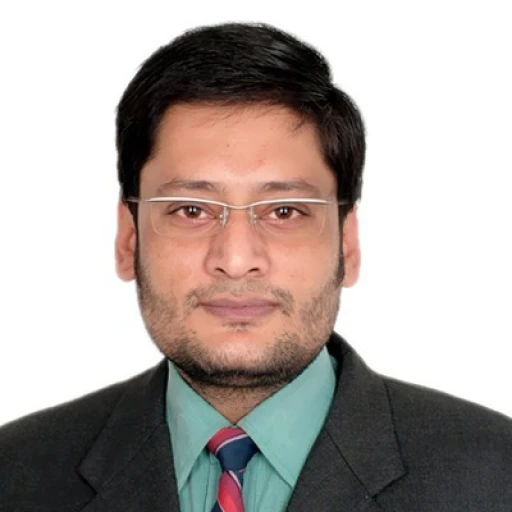
Amid this rapid adoption, a seasoned educationist has cautioned that the unrestrained, indiscriminate, and inappropriate use of AI could create serious challenges, with potentially far-reaching consequences in the years ahead. This warning carries particular significance coming from Prof. (Dr.) KK Aggarwal, a computer science expert and the current President of South Asian University (SAU), Delhi.
In his conversation with Sanjeev Kumar Jha, Editor, FranchiseIndia.com, Dr. Aggarwal discussed South Asian University’s expansion, international student participation, the growing influence of AI, and the need to balance research, knowledge creation, and employability in higher education. His extensive experience in academia and higher education administration includes serving as Chairman of the National Board of Accreditation (NBA), the founding Vice-Chancellor of Guru Gobind Singh Indraprastha University and a teacher and researcher at the National Institute of Technology, Kurukshetra, for nearly three decades.
Here are the excerpts:
Question: South Asian University was established through cooperation among SAARC countries, primarily for their students. To what extent has it achieved its original objective over the past 15-16 years and what is its vision for the next 10–12 years?
Prof. Aggarwal: It is not easy to measure the achievement of this objective in percentages or figures. However, it is a unique project in itself, through which SAARC countries are collectively contributing to education in particular.
The original idea was that developing expertise in certain subjects involves very high costs, while the demand for specialists in each country may be limited. For example, a small country may need only a few experts in fields such as nanotechnology, but developing the infrastructure required to train them can be very expensive. If a common institution is established for education and research in such fields, all participating countries can benefit.
The second objective was to promote mutual understanding and cooperation among South Asian countries. Students from neighbouring countries could study together, understand one another's cultures and work on shared challenges. India played a leading role in this initiative by providing land, buildings and financial support.
Today, the university has a campus developed on 100 acres of land provided by the Government of India. Approximately ₹1,200 crore has been invested in the construction of its buildings.
Question: The campus where we are currently speaking is the university's third campus. Some new subjects have also been introduced into the curriculum here. In your view, how frequently should a university review its curriculum?
Prof. Aggarwal: The university initially operated from the Jawaharlal Nehru University (JNU) campus for approximately two years. It subsequently functioned for several years from Akbar House at the Akbar Hotel complex, alongside certain government offices. The development of the permanent campus, where we are speaking today, created greater opportunities for expansion.
Initially, the university was primarily limited to postgraduate and PhD programmes. During its first decade, it enrolled approximately 600 students, including around 300 postgraduate students and 300 PhD scholars.
With the new campus, we realised that undergraduate programmes should also be introduced to strengthen the university's expertise and academic diversity. Subsequently, academic offerings were expanded at the undergraduate, postgraduate and PhD levels. Over the past approximately two-and-a-half years, the student population has increased nearly fourfold, exceeding 2,400. We have introduced programmes in several new fields. At the BTech level, the focus includes subjects such as AI, quantum technology, cybersecurity, data science and mathematics and computing.
In the field of law, we previously offered only an LLM programme. We have now introduced an LLB programme as well. Since the legal systems of the eight member countries share certain similarities but also have important differences, a group of experts studied the subject.
Similarly, a journalism-related programme was introduced this year. We are also focusing on areas such as climate change, green transition and sustainability, as these are important subjects connected to regional cooperation and future needs. Our objective is not merely to increase the number of programmes but to provide education in fields that require advanced academic facilities and research to develop specialised expertise.
Question: How has geopolitical instability in recent times affected the number of students coming to the university from outside India?
Prof. Aggarwal: Our model envisaged that approximately 40% of students would come from outside India. Initially, the number of international students was around 30–40. Today, international students account for approximately 15% of the total student population.
There are several reasons for this. In the case of students coming from certain countries, including Pakistan, visa and security-related procedures play an important role. Student participation from Bangladesh and Afghanistan is also affected by prevailing circumstances.
India contributes approximately 60% of the university's funding, while the remaining contribution is divided among the other member countries. However, the contributions from all countries are not always consistent. As a result, India's financial role in the university's operations and the share of Indian students tend to increase.
Increasing international student participation is important to the university's original regional objective. Improving academic cooperation among member countries and facilitating student mobility will be essential to achieving this goal.
Question: Compared with institutions such as JNU and Delhi University, South Asian University does not seem to receive the same level of recognition among students. What is the reason? Is limited emphasis on branding part of its strategy?
Prof. Aggarwal: The university was designed as a small, specialised institution. The maximum capacity of its current campus is approximately 4,500 students. In contrast, several large universities in Delhi have hundreds of thousands of students. Therefore, our need for mass branding and the approach we take towards it are different.
We believe that a university's identity should be built on its academic quality, research and student experience. Our model also differs from that of traditional universities because it operates through the cooperation of eight countries. The heads of higher education regulatory institutions from the member countries are represented on our governing board. The university's academic decision-making and accreditation framework are different from those of conventional national universities. Quality should be the primary foundation of our branding.
Question: Is South Asian University considering establishing campuses in other member countries? If so, when could new SAU campuses become operational in neighbouring countries?
Prof. Aggarwal: Discussions are underway in this direction. Possibilities have been explored in countries such as Sri Lanka and Nepal, but the plans have not yet been finalised.
Establishing a campus requires land, buildings and financial resources in the host country. The level of investment possible for a large country such as India may be difficult for smaller countries to undertake. Therefore, alternatives such as using a section of an existing university or institutional campus could be considered.
It will also be necessary to determine the contributions of India and the other member countries towards the development and operation of new campuses. In my opinion, programmes can be introduced according to the subjects and courses that are most needed in each country.
Question: How similar or different are South Asian University's courses compared with programmes offered by other Indian universities?
Prof. Aggarwal: Approximately 80% of our students are from India, and a large proportion of them will seek opportunities in the Indian job market. Therefore, we have tried to ensure that our courses remain broadly compatible with the National Education Policy (NEP) and the Indian higher education system.
Although our university operates under a distinct intergovernmental framework, we want to ensure that students do not face unnecessary difficulties when seeking employment or pursuing further studies. For this reason, the Indian academic system and the requirements of the employment market are taken into account while designing our curricula.
Question: There is considerable discussion about the skills gap between industry and academia. How is South Asian University addressing this challenge?
Prof. Aggarwal: When the university had approximately 600 students and around 200 students graduated each year, their employment record was good. Our alumni have secured opportunities in the United States, Australia and other parts of the world.
However, as the student population grows, placement challenges also increase. We have therefore initiated specific efforts to strengthen placements, particularly for undergraduate programmes. At this level, preparing students for employment and connecting them with industry requires a different strategy.
We have good faculty, infrastructure and the necessary facilities. What we now need are dedicated efforts to connect students with employment opportunities. Placements are important for the university, but their role cannot be limited to simply securing jobs for students.
Question: How is the university incorporating AI-related courses and using AI in its day-to-day operations?
Prof. Aggarwal: There are two aspects to this. The first is educating students about AI and the second is using it in administrative and academic operations.
AI has expanded very rapidly over the past few years. As a result, there is still some confusion about its impact, applications and limitations. Historically, no technology has brought only benefits or only disadvantages. For example, nuclear energy has been used both for destructive weapons and for electricity generation. In the case of AI, too, we must strike a balance between its positive and negative aspects.
In my opinion, it is important to take AI seriously. Institutions that completely ignore it may fall behind. However, this does not mean that AI should be used for every task. We must understand the actual benefit it offers for a particular activity. Using it without a genuine need is also inappropriate.
Today, enormous amounts of data are being collected. For example, a health application may provide daily information about the distance a person walks and the time spent walking. However, in many cases, it also collects more detailed data than may actually be necessary.
The question is whether collecting so much information is essential in every situation. Data centres require energy to store and process data. Therefore, we must understand which data is genuinely useful and how much information needs to be collected.
As AI develops, it is equally important to assess the usefulness of data, energy consumption and the practical benefits of the technology. I believe decisions about adopting AI should be based on actual needs and its impact, rather than simply on the fact that it has become a popular technology.
Question: Many experts believe that universities across the country are at a crossroads. On one hand, they face the immediate responsibility of preparing young people for employment. On the other, they must prepare more students to pursue higher education and contribute to society through research and development. Do you think universities are under excessive pressure to focus on employability?
Prof. Aggarwal: I agree that pressure on universities to demonstrate employability outcomes has increased. Particularly after the expansion of privatisation, the marketing aspect of education has become more prominent and placements are increasingly presented as a measure of institutional achievement.
However, education is not merely a means of securing short-term employment. It develops the ability to learn throughout life, think critically and progress. A university's success should not be measured solely by whether a student secures a first job. It should also be assessed by where that individual stands in their field 15–20 years later and whether they are capable of creating new opportunities for themselves.
Working on placements and employability is necessary, but these should not become the university's sole or highest objectives.
Question: Do you think excessive focus on employment could pose challenges to important higher education objectives such as research and academic inquiry in the future?
Prof. Aggarwal: This risk increases when institutions focus only on achievements that can be easily demonstrated or promoted. Student enrolment and placement figures may be important for a university, but it is equally necessary to understand the long-term impact of education.
I believe universities must maintain a balance between knowledge creation, research and employability. If the quality of education is good, industry should also benefit from its outcomes.
Ultimately, the purpose of a university is not merely to prepare students for jobs. It is to equip them with the knowledge, capabilities and understanding needed to continue learning, solve problems and contribute to their fields over the long term, even as circumstances change.


