


 102
/
7
Min Read
102
/
7
Min Read


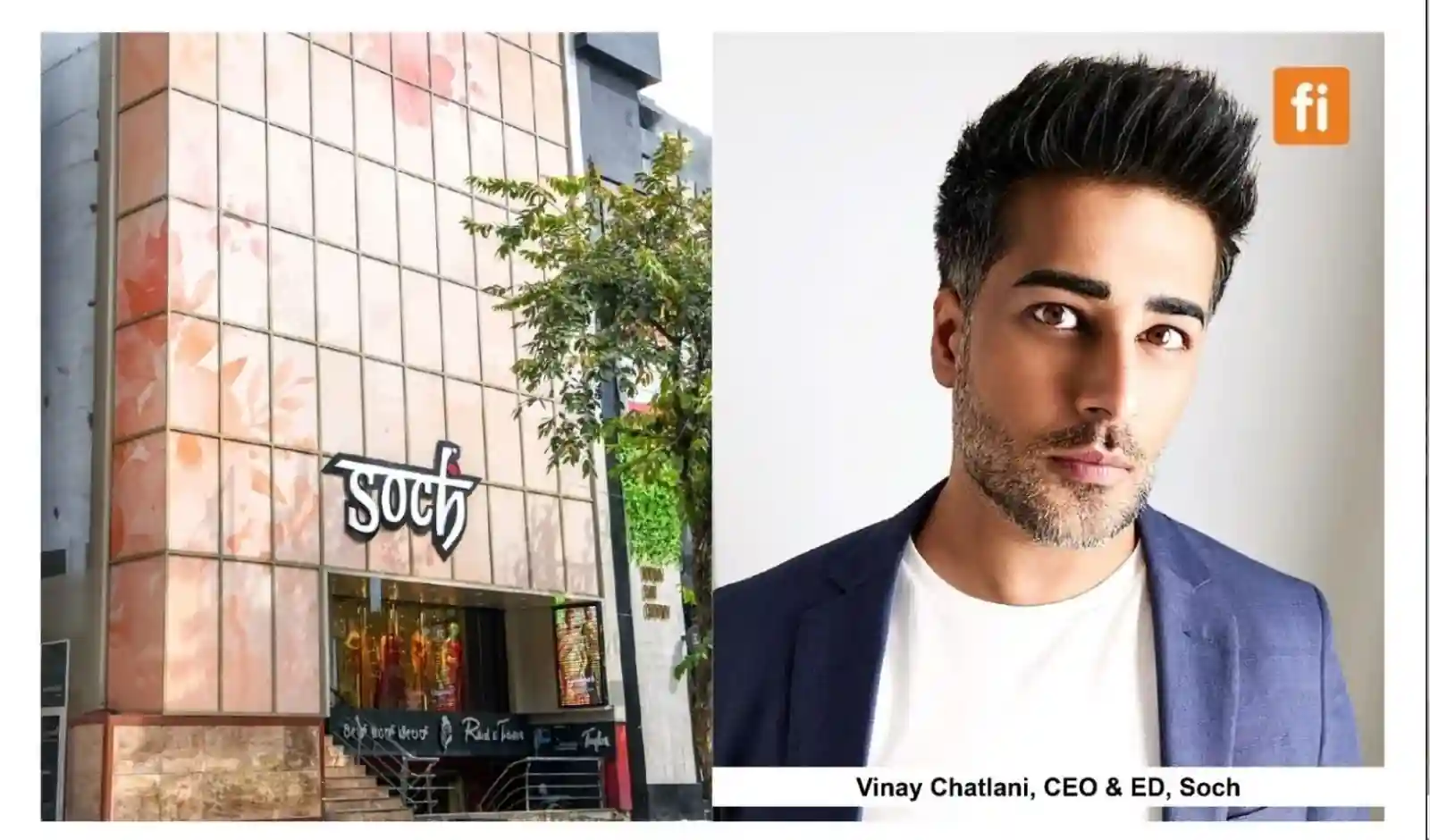
Tell us a bit about your entrepreneurial/professional journey?
My career has been firmly anchored in retail from the very beginning, shaped by early, firsthand exposure to the apparel business and a deep passion for building consumer-centric fashion brands. Over the years, I’ve had the opportunity to work across key functions such as merchandising, supply chain management, retail strategy and operational scaling, which has given me a holistic understanding of the business. Soch was built on this very foundation of hands-on learning and customer focus.
Our family has been part of the retail industry for over seven decades, bringing with it the strength, discipline, and insight of retail operations across three generations, which has strongly influenced my approach to leadership and brand-building.
When and how did Soch start? How has the experience been so far?
Soch began its journey in 2005 with a single store in Bangalore, born out of a clear gap I observed in the market. At the time, high-quality, well-designed ethnic wear was not easily accessible to the modern Indian woman. Consumers had to choose between premium couture at one end and mass-produced apparel at the other, with very little that balanced quality, design and affordability.
We started with a simple yet powerful vision: to create beautifully crafted ethnic wear that women could trust and feel confident wearing. What began as a curated boutique concept has today grown into a strong national brand. The journey has been incredibly rewarding we’ve expanded from one store to a robust Pan-India network, constantly innovating while staying true to our design roots and customer-centric ethos.
Over the years, we’ve evolved from being a predominantly offline retailer with a stronghold in South India to a truly omni-channel brand. What sets us apart is our robust ecosystem: a strong vendor network a well-established and successful EOSS marketing IP through the Red Dot Sale, and industry-leading operational efficiencies, with revenue per square foot averaging over ₹16,000.
We are among the pioneers and largest independent brands in the evening and occasion-wear space, offering one of the widest assortments in the mass-premium category. With nearly 65% repeat purchases, our loyal customer base continues to be our biggest strength. We were also early adopters of retail innovation, introducing digital signages across stores to enhance both experience and operational efficiency.
When did the brand start franchising? How has the journey been?
We began franchising in 2013, after establishing a strong operational foundation a loyal consumer base, and a proven, scalable retail model. Since then, the journey has been measured and highly strategic with a clear focus on sustainable growth rather than rapid expansion. Today, with nearly 70 franchise stores, many of our partners have gone on to open multiple outlets, which is a strong testament to the model’s viability and the confidence franchisees place in the brand.
While our franchise network is largely concentrated across Tier II and Tier III cities, we also selectively evaluate opportunities in Metro and Tier I markets based on individual business potential. Our franchise partners remain central to our growth story and the model continues to perform consistently across regions.
What is your management mantra?
My management mantra is simple: clarity, consistency, and customer-centricity.
A leader’s responsibility is to provide clarity of vision, ensure consistent execution across teams and keep the customer at the heart of every decision, no matter how complex the business becomes.
Talk us through some major challenges you face as a business leader?
As a leader in fashion retail, challenges come in many forms rapidly changing consumer preferences, maintaining efficient and resilient supply chains, and adapting to an increasingly digital-first retail environment. Balancing speed with sustainability and scale with personalization is an ongoing challenge. However, these very challenges also present opportunities to innovate, refine processes and keep the organisation evolving.
What are Soch’s expansion plans for FY26?
FY26 will be a year of accelerated yet carefully calibrated growth for Soch. With six stores already opened and 14 more planned for launch within this fiscal year, we will continue strengthening our Pan-India presence. Focusing on high-potential Tier I, II, and III markets, our footprint will keep expanding as we plan to add another 30-40 stores next year.
Following successful entries into Canada and Malaysia, we are also actively exploring additional global franchise opportunities in the coming year to serve the Indian diaspora.
Where do you see the brand five years from now?
Five years from now, I see Soch as India’s most loved and trusted ethnic wear brand, supported by a strong omni-channel ecosystem, deep penetration across emerging markets and a meaningful global presence. We aim to lead the category through continuous product innovation, design excellence and immersive experiential retail.
In your view, how has the ethnic apparel market evolved over the last five years?
The last five years have seen tremendous transformation in the ethnic apparel landscape. Post-COVID, there was a fundamental shift in purchase behaviour with customers prioritising comfort, value and longevity in their wardrobes. This accelerated the demand for versatile pieces that can transition seamlessly from everyday wear to smaller occasions.
Simultaneously, there has been a renewed appreciation for authenticity and regional craftsmanship with consumers seeking products that feel rooted yet contemporary. Digital discovery has become a major driver, with social media and e-commerce influencing buying decisions more than ever before. Overall, the category has become far more design-conscious, experience-driven and digitally enabled.
How will it evolve in the next five years?
Over the next five years, we will see deeper personalization, stronger integration of vernacular and regional design stories and a steady rise in premiumisation. Technology will play a central role from design forecasting and inventory planning to customer engagement. Consumers will increasingly expect ethically made, high-quality garments backed by a seamless and transparent shopping experience.
How have you integrated technology for the brand’s growth and expansion?
Technology is deeply embedded across our business and has been a key enabler of efficient scaling. We leverage ML-driven planning and forecasting tools, advanced CRM systems, and a unified ERP and data warehouse to support smarter decision-making and customer-centric execution.
Our omni-channel infrastructure including unified inventory, store-to-door delivery, endless aisle solutions and marketplace fulfilment ensures a seamless shopping experience across platforms. Integrated tools for task management, operations and analytics further streamline processes and improve agility across teams.
How do you plan to cater to the growing markets of Tier II and Tier III cities?
These markets are witnessing strong aspirational buying behaviour, and Soch is uniquely positioned to cater to them. We are expanding store presence, strengthening distribution and tailoring assortments to suit regional tastes and sensibilities. Our franchise model works particularly well here, as local partners bring invaluable market insights and on-ground understanding.
Three key trends according to you in the ethnic apparel industry right now.
- Fusion ethnic wear that blends contemporary silhouettes with traditional aesthetics.
- Premium daily wear, where customers seek comfort combined with elevated design.
- Revival of regional craftsmanship, with increased focus on handwork, artisanal prints and rooted storytelling.
How important has franchising been in the industry? How do you envisage it in the future?
Franchising has played a crucial role in enabling brands to scale sustainably while maintaining strong local relevance. In ethnic wear, it is particularly powerful as it allows deeper penetration into diverse and culturally distinct markets, while leveraging local entrepreneurship.
How does Soch support its franchisees?
We offer comprehensive operational and business support across the entire lifecycle, including location evaluation, store design, inventory planning, staff training and marketing. In addition, our CRM platform, internal and third-party mystery audits and centralised customer support team reinforce operational discipline and consistency. This ensures that every store delivers a seamless brand experience while maintaining healthy and sustainable margins.
How does the brand choose its franchisees?
We look for partners who understand retail, are aligned with our brand values and are genuinely committed to delivering exceptional consumer experiences. A strong local presence, sound business ethics and deep market knowledge are key parameters in our evaluation process.
 This article was originally
published by the Franchiseindia.com. To read the full version,
visit here
This article was originally
published by the Franchiseindia.com. To read the full version,
visit here 


