


 74
/
4
Min Read
74
/
4
Min Read


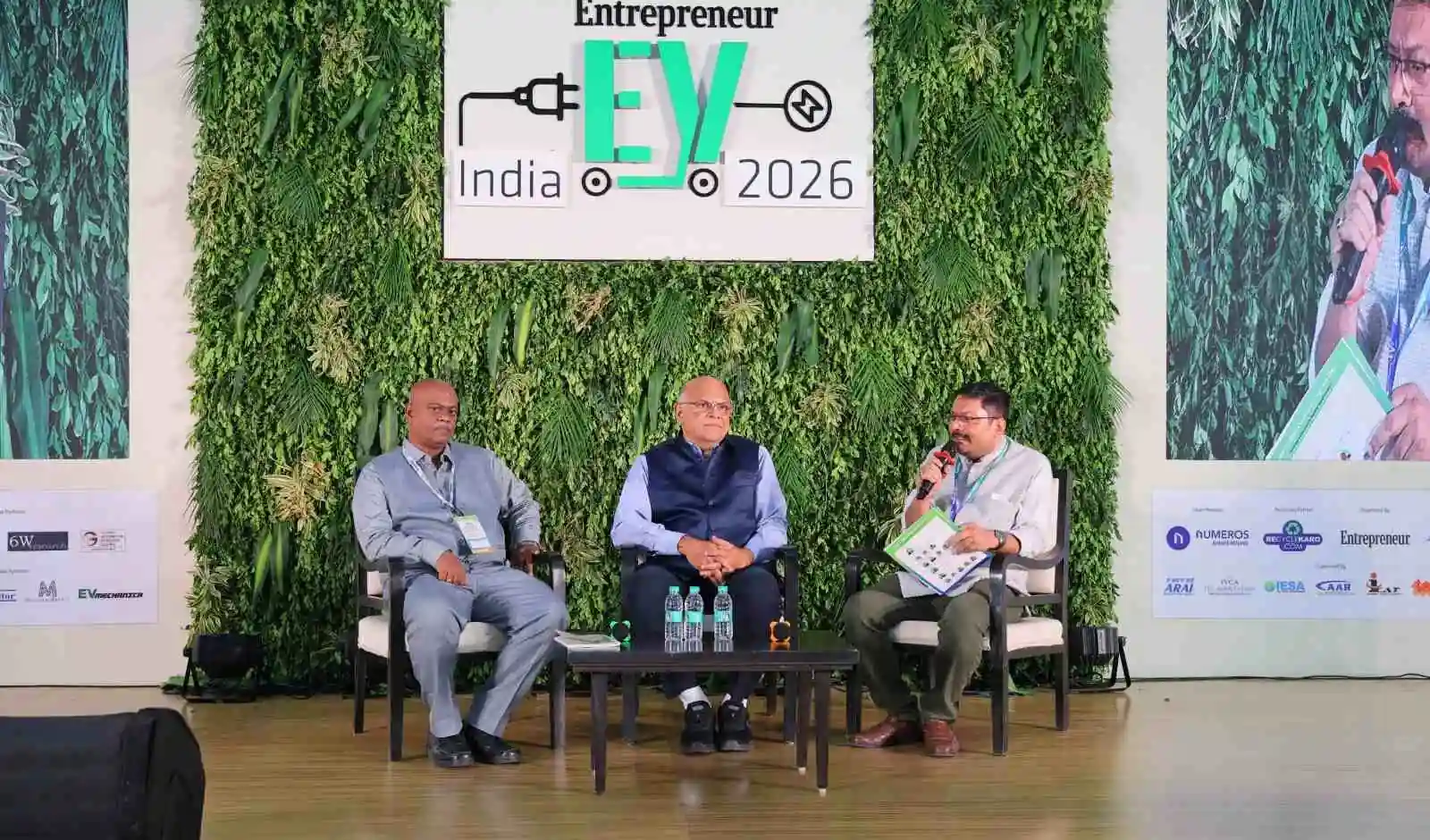
India electric vehicle (EV) industry is witnessing rapid growth, driven by supportive government policies, increasing investments, and technological advancements. As the sector continues to expand, building a skilled and future-ready workforce has become a key priority. Addressing this crucial topic, Entrepreneur India hosted a panel discussion titled "Skilling India – Building a Future-Ready EV Workforce," moderated by Sanjeev Kumar Jha, Editor, Entrepreneur India. The discussion featured Dr. Anand Lakshmanan, Senior Project Advisor, Advanced Automotive Technologies and Lead, CAAR, and Dr. A.S. Ramadhas, Director, GARC, who shared their insights on skill development, industry-academia collaboration, MSME challenges, upskilling, reskilling, and emerging technologies in the EV sector.
India EV industry is growing rapidly, but is the talent pool expanding at the same pace?
Dr. A.S. Ramadhas: The EV industry is growing much faster than before, supported by government initiatives such as the PLI scheme and the push for domestic manufacturing. However, the availability of skilled manpower has not yet caught up with this pace. Most universities still follow curricula focused on internal combustion (IC) engine technology, while EV technology has evolved rapidly in recent years. Since curriculum revisions in government institutions take time, graduates require additional industry-led training and upskilling before becoming job-ready.
If companies invest in training employees who later leave the organization, is skilling still worthwhile?
Dr. Anand Lakshmanan: Choosing not to invest in skilling is not an option. Employees do not leave solely because they acquire new skills; factors such as organizational culture, work environment, and career growth opportunities also influence their decisions. Companies that fail to train their workforce risk falling behind in a highly competitive industry. Therefore, HR teams should focus on building a positive work culture, while industry and academic institutions must collaborate to create skill development programs aligned with emerging technologies.
What are the biggest skilling challenges faced by MSMEs, and how can they be addressed?
Dr. A.S. Ramadhas: Large OEMs have sufficient resources to invest in training and R&D, but MSMEs often lack the financial capacity to establish advanced laboratories and training infrastructure. A practical solution is for the government, large industries, and MSMEs to jointly establish cluster-based training centres and shared testing laboratories, where engineers and technicians from smaller companies can receive hands-on training in the latest EV technologies.
How can companies keep pace with upskilling and reskilling in a rapidly evolving EV technology landscape?
Dr. A.S. Ramadhas: Technologies such as battery systems, Battery Management Systems (BMS), Over-the-Air (OTA) updates, Advanced Driver Assistance Systems (ADAS), and software-defined vehicles are evolving continuously. To stay competitive, industry, testing agencies, and academic institutions must jointly conduct regular short-term training programmes, workshops, and cluster-based learning initiatives that keep professionals updated with the latest technological developments.
What should companies do to build a strong talent pipeline for the EV sector?
Dr. Anand Lakshmanan: OEMs and MSMEs should work as partners rather than competitors. As new technologies emerge, OEMs should involve their MSME suppliers early in the learning process by providing technical exposure and training. Skill development should extend beyond classroom learning, with greater emphasis on practical experience through advanced laboratories and hands-on exposure to new technologies.
How can India overcome the shortage of semiconductor talent?
Dr. Anand Lakshmanan: Semiconductors require deep technical expertise that cannot be developed solely through reskilling. Building a strong semiconductor workforce demands foundational education, significant investments, and a robust industrial ecosystem. As India's semiconductor industry expands, skill development in this field will naturally accelerate.
Apart from EVs, which technologies are expected to shape the future of mobility?
Dr. A.S. Ramadhas: Software-Defined Vehicles (SDVs), Advanced Driver Assistance Systems (ADAS), and hydrogen fuel cell technologies are expected to play a significant role in the future of mobility. Government support for hydrogen-powered mobility, particularly in the heavy commercial vehicle segment, is likely to drive further technological advancements in the coming years.
Conclusion
The panel concluded that as India's EV industry continues to grow rapidly, skill development must progress at the same pace. Strong collaboration among industry, academia, government, and research institutions is essential to build a globally competitive EV workforce. Investments in practical training, advanced laboratories, continuous upskilling and reskilling programmes, and greater support for MSMEs will be crucial in preparing India's workforce for a cleaner, smarter, and more sustainable mobility future.


