


 96
/
3
Min Read
96
/
3
Min Read


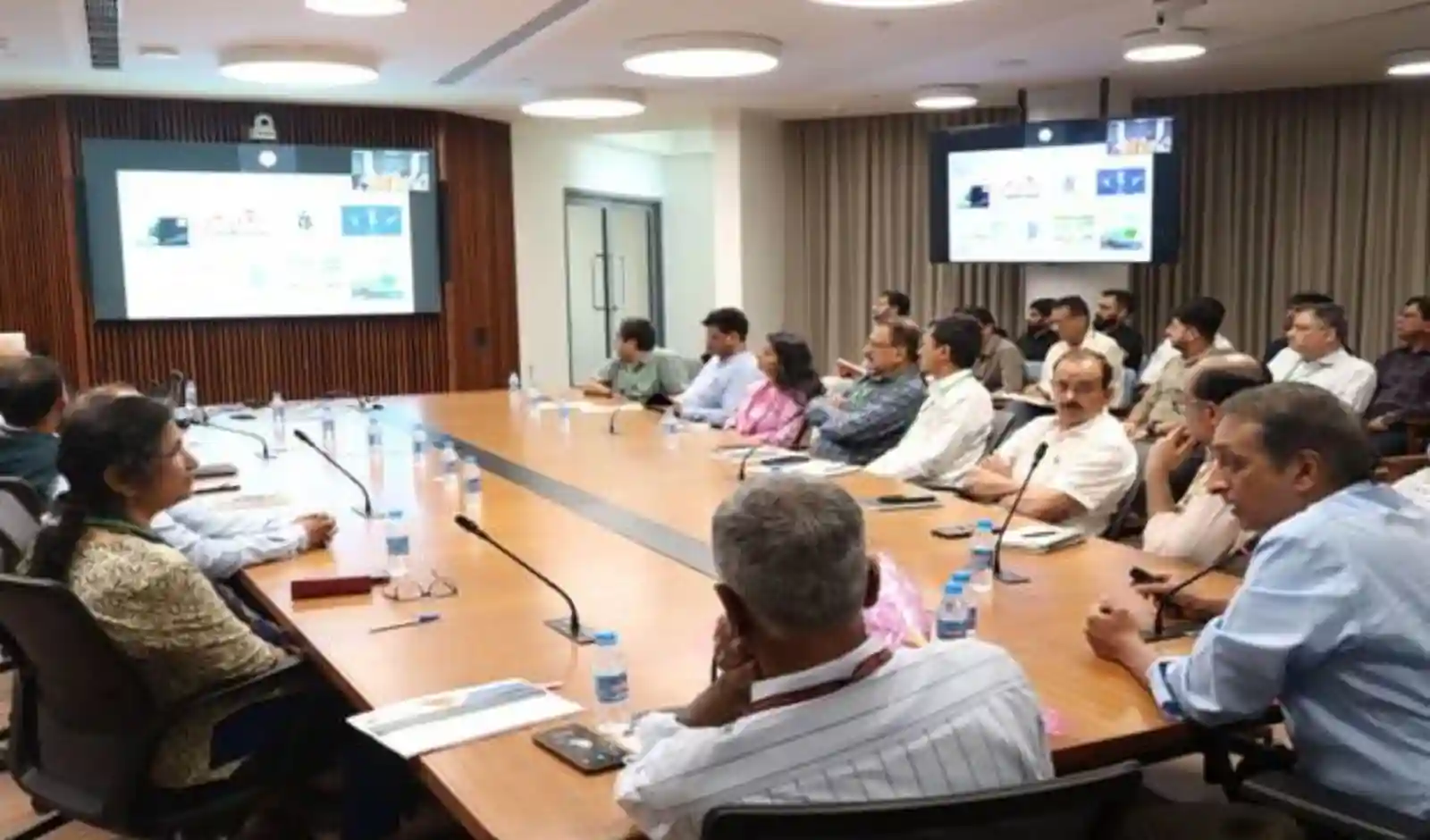
Through this programme, emphasis was laid on encouraging new ideas in education and administration -
The programme was organised to mark the Foundation Day of the Capacity Building Commission and the completion of five years of Mission Karmayogi. Its objective is to enhance the efficiency of government officials and institutions and prepare them according to modern requirements. Special focus was also given to strengthening digital learning and training systems.
Focus on integrating traditional knowledge with modern education
Several officials and experts participated in the session and discussed the relevance of Indian Knowledge Systems in the present time. The main focus of the discussion was how India’s traditional knowledge can be integrated into modern education, research, and governance. Experts highlighted that this knowledge system can help in solving current problems, fostering innovation and developing better policies.
At the beginning of the programme, Joint Secretary (Administration) Syed Ekram Rizvi delivered the welcome address. He highlighted the role of the Capacity Building Commission in making governance more effective and transparent through digital platforms and training programmes. He also noted that these efforts are helping improve the skills of officials and enabling them to perform better.
Experts emphasise multidisciplinary education
The keynote address was delivered by Mohan Raghavan, Associate Professor at IIT Hyderabad. Based on his experience, he explained the importance of integrating Indian Knowledge Systems across all fields of education. He stated that it should not be treated merely as a subject but as a framework that can strengthen areas like science, engineering, humanities and management.
Need to move beyond rote learning towards holistic education
Mohan Raghavan said that if Indian Knowledge Systems are integrated effectively, education will move beyond rote learning and evolve into a holistic model. This model will focus not only on knowledge but also on its application and ethical values, leading to the overall development of students and making them more useful to society.
Boost to new education policy and research
He further added that integrating Indian Knowledge Systems aligns with the ongoing educational reforms in the country. It will promote research, innovation and critical thinking rooted in India’s cultural heritage. This approach will help create students who are not only professionally skilled but also socially responsible.
At the end of the programme, an interactive question-and-answer session was conducted, where participants discussed ways to incorporate traditional knowledge into modern education and governance systems. Several valuable suggestions emerged, which could be useful for future policies and initiatives.
A step towards future-ready education system
The Ministry of Education stated that this initiative highlights the continued relevance of Indian Knowledge Systems and their important role in strengthening a future-ready education system. It also reflects the government’s broader efforts under Mission Karmayogi to build a knowledge-driven, adaptive and humane governance framework.
Senior officials from the Ministry of Education participated in the programme and reaffirmed their commitment to integrating traditional knowledge with modern policies and institutional practices. The event is considered an important step towards bringing positive changes in both education and governance sectors.


