


 99
/
4
Min Read
99
/
4
Min Read


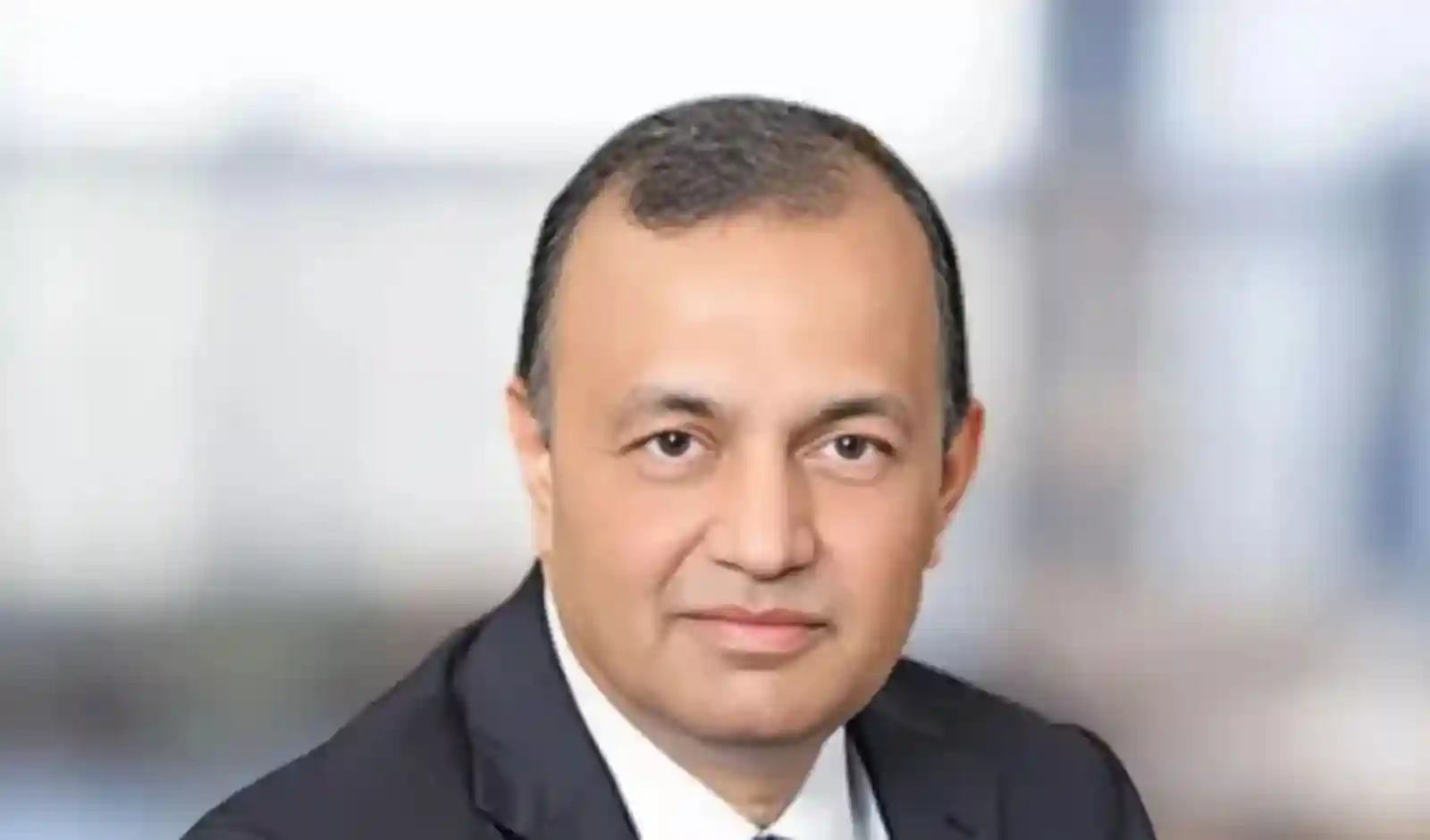
HFCL, a telecom and networking solutions provider, plans to invest INR 950 crore to expand its optical fibre business to meet growing data center demand. HFCL’s Data center business will soon outgrow its telecom vertical.
“With AI and quantum computing, there is a huge demand for data. Higher amounts of data can only be carried through fiber. Therefore, the demand for fiber optic cable is going to increase, particularly high count fiber cable, required by data centers. We are successfully able to design 7,000 fiber cables and now we are working on 14,000 fiber cables,” said Mahendra Nahata, MD, HFCL, adding that demand of optical fibers for data centers is going to be much higher than that of telcos, “In our business, demand will become 3:1.”
The company’s majority of revenue comes from exporting optical fiber cables which stands at 70 per cent of total business. In the next few years, demand for fibre optic cables is going to increase as North America, Europe and Asia will catch up. “Once the demand increase in these countries, orders for high-count fibre cables will go up.”
Out of the total investment of INR 950 crore, INR 580 crore will be spent on backward integration production of preforms the main raw material for fiber. Glass preforms are precursor structures of precise weight and shape often called gobs used as raw material for mass-producing high-precision optical components and vacuum-tight glass-to-metal seals. In telecommunications, they are large-diameter tubes used to draw optical fibers.
HFCL, currently imports preforms from Japan, and dependent upon the demand, proposed production will change. “At this moment it is going to be one-third of our total requirement. Two-third will still be imported and if we find production has gone in the right direction we may increase it further.”
Data center demand is rising globally and while no country has reached full maturity, the U.S. leads, with Europe, India, Southeast Asia and the Middle East trailing but catching up.
In FY26, HFCL reported a record consolidated revenue of INR 4,949.27 crore, driven by a structural upcycle in the global optical fiber industry. Export revenues surged to 41 per cent of total sales, backed by a landmark multi-year international optical fiber cable supply contract valued at $ 1.1 billion.
India is expanding rapidly, and within two years its capacity could rival other nations, so, if India catches up in data centers, will the export numbers change? “The 70 percent as a percentage may not change, but quantum may change. If the demand goes higher all over the world, one would have the tendency to increase the capacity. Our board may also look at that scenario,” he said.
As GPU clusters scale toward 100,000-GPU deployments, traditional networking infrastructure is facing mounting pressure from exponentially increasing bandwidth demands, tighter latency thresholds, growing fiber density requirements and the need for faster deployment cycles.
To navigate the challenges, the company also announced OptiQ AI as the unified brand identity for its integrated optical connectivity portfolio, comprising its existing range of optical fiber cables and accessories designed for AI, cloud and hyperscale data centre environments. With the launch of OptiQ AI, the company can go to a hyperscaler and offer an entire solution for inside data center connectivity.
Optical connectivity has moved from being a supporting layer of data centre infrastructure to becoming one of the defining foundations of the AI era. As AI clusters scale and bandwidth requirements rise sharply, there is a need for reliable, high-density and deployment-ready optical connectivity solutions.
McKinsey analysis indicates AI workloads have catapulted optical fiber and back-end networking optics demand to unprecedented levels. Hyperscalers are currently consuming cables at staggering rates, causing severe supply bottlenecks.
HFCL’s core telecom and cable operations are based in Hyderabad, Goa and Chennai. When asked about setting up more manufacturing units, Nahata said currently there are no plans.
For FY27, the company’s focus is on expanding fiber optic cable capacity through backward integration, strengthening connectivity solutions, rolling out self-designed defense products with successful army field trials, concluding ongoing defense projects to secure firm orders and driving global sales of cables, interconnect and optic AI solutions.
 This article was originally
published by the
This article was originally
published by the 


