


 64
/
4
Min Read
64
/
4
Min Read


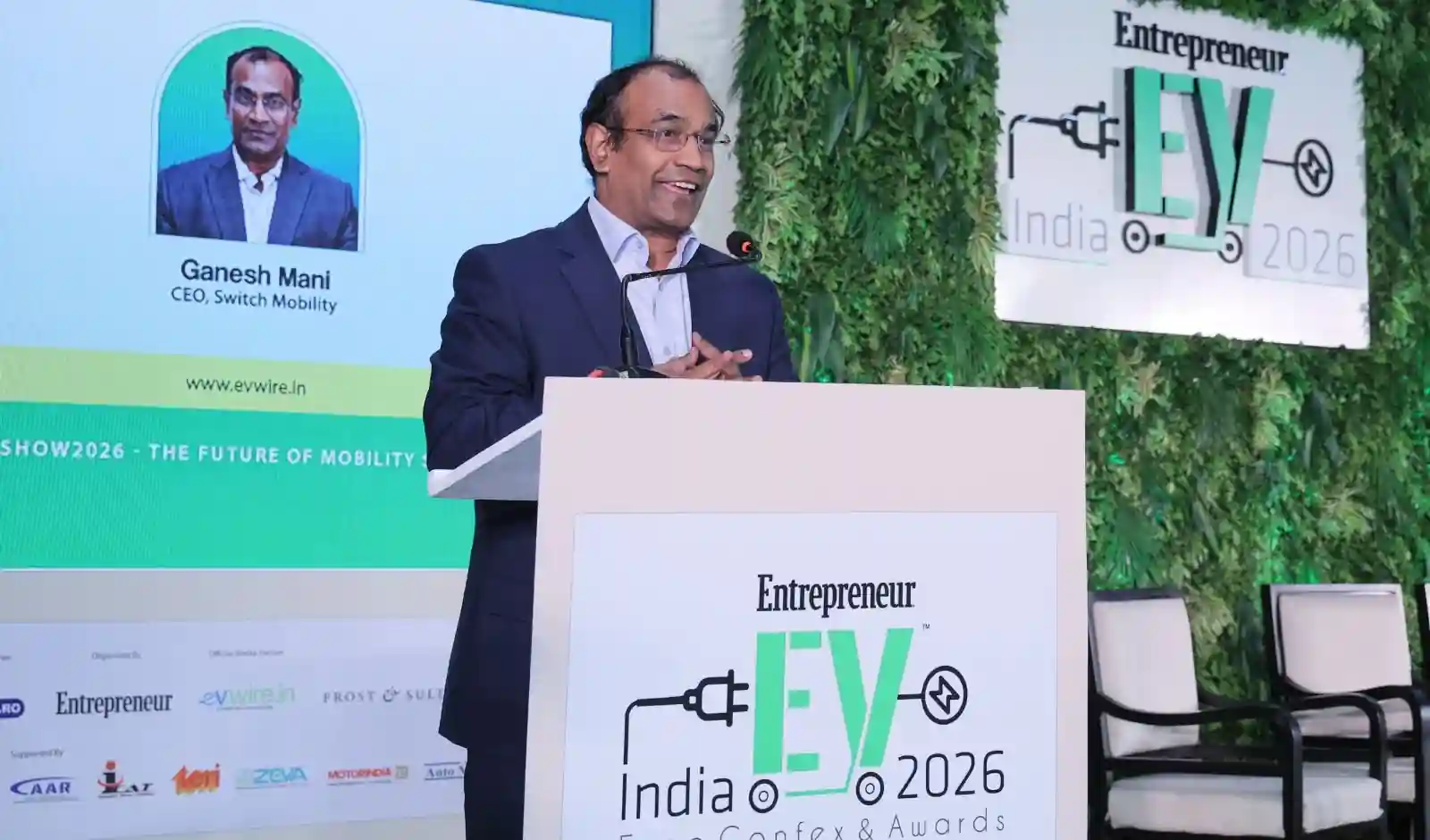
India electric vehicle (EV) industry is moving beyond its early experimentation phase and entering a new era of large-scale growth and sustainable profitability. However, success will depend not only on technological innovation but also on delivering greater customer value, building a resilient supply chain, leveraging data-driven decision-making, and maintaining a long-term vision. This was stated by Ganesh Mani, CEO of Switch Mobility, during his keynote session titled "Start-Up to Scale-Up: Signals of a Profitable EV Business in India."
He said India's electric mobility landscape has witnessed remarkable transformation over the past few years. While the viability of EVs was once questioned, electric buses, two-wheelers, and three-wheelers are now becoming increasingly common on Indian roads, demonstrating that the country is moving in the right direction.
Total Cost of Ownership Is the Key to a Profitable EV Business
Ganesh Mani emphasized that the Total Cost of Ownership (TCO) is the most important factor determining the success of any EV business. Customers are not simply purchasing new technology; they evaluate the total cost of owning and operating a vehicle throughout its lifecycle. Electric vehicles will achieve widespread adoption only when they prove to be more economical than conventional vehicles in terms of operating and maintenance costs.
He added that as the price gap between electric and conventional vehicles narrows, the EV market will witness rapid growth. This trend is already visible in India's electric two-wheeler and three-wheeler segments.
Government Policies Have Accelerated Industry Growth
Appreciating the government's policy initiatives, Ganesh Mani said schemes such as FAME, PM E-DRIVE, and other supportive policies have done much more than provide subsidies. They have played a crucial role in building the country's EV ecosystem by encouraging the growth of local suppliers, component manufacturers, and technology companies.
He noted that India is no longer limited to vehicle assembly but is steadily advancing in core manufacturing and technology development.
Data and Software Are Transforming the EV Industry
According to Ganesh Mani, modern electric vehicles are no longer just hardware products; they are increasingly becoming software and data-driven platforms. A commercial electric vehicle generates several gigabytes of operational data every day, which can be used to improve vehicle performance, enhance energy efficiency, and deliver better customer service.
He added that Indian engineers are not only manufacturing vehicles but are also developing intelligent software, advanced data analytics, and smart mobility solutions, which could become one of India's greatest competitive strengths.
Customer Retention Defines Real Success
Ganesh Mani stressed that the true measure of success for any EV company is not the first sale but whether customers return to purchase the same brand again. Repeat customers indicate that the company is delivering real value and meeting market expectations.
He shared that many Switch Mobility customers continue to expand their electric fleets, demonstrating growing confidence in the commercial viability of EVs.
Electric Buses Are Transforming Public Transport
Ganesh Mani said electric buses are not only contributing to environmental sustainability but are also making public transportation more economical and efficient. He revealed that electric buses operating in cities such as Chennai have reduced operating costs by 35–40% compared to diesel buses.
According to him, the wider adoption of electric public transport will strengthen the overall EV ecosystem while also increasing consumer confidence in electric mobility.
A Strong Ecosystem and High Quality Will Drive Future Growth
He emphasized that the EV industry depends on much more than vehicle manufacturers alone. Suppliers, component manufacturers, charging infrastructure providers, and technology partners all play equally important roles in building a successful ecosystem.
He also highlighted the importance of safety and quality, stating that India's EV industry must focus on producing world-class products that consistently earn customer trust.
India Has the Potential to Lead the Global EV Market
Concluding his keynote, Ganesh Mani said India's EV ambitions extend well beyond the domestic market. Emerging regions such as ASEAN, Africa, and other developing markets present significant export opportunities for Indian electric vehicles.
He concluded that with its strong engineering talent, expanding manufacturing ecosystem, and growing innovation capabilities, India is well-positioned to become a global leader in electric mobility. By continuing to focus on customer value, product quality, data-driven technologies, and cost efficiency, the Indian EV industry can successfully transition from the start-up phase to large-scale, profitable growth.


