


 64
/
3
Min Read
64
/
3
Min Read


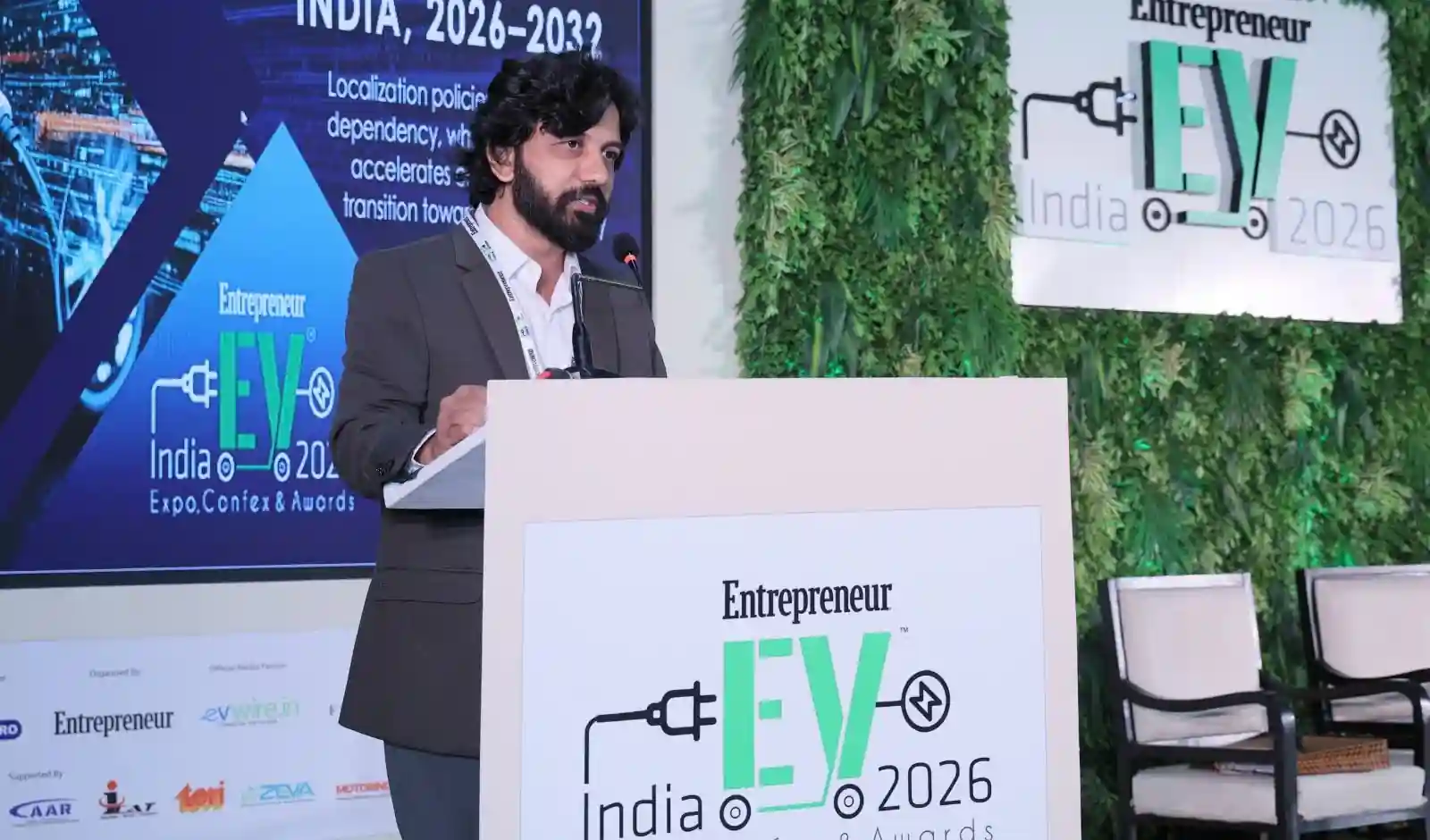
India electric vehicle (EV) market is poised for significant expansion over the next six years, with annual electric passenger vehicle sales expected to reach 1.5 million units by 2032. This projection was unveiled in a new report released by Frost & Sullivan, presented by Prajyot N. Sathe, Research Director, Frost & Sullivan. The report provides a comprehensive analysis of the current trends, future outlook, and key factors shaping both the Indian and global EV markets.
According to the report, 21.6 million electric passenger vehicles were sold globally in 2025, of which approximately 66% were Battery Electric Vehicles (BEVs) and 34% were Plug-in Hybrid Electric Vehicles (PHEVs). During the same period, global EV penetration increased from 21% to 25%, while the Asia-Pacific region remained the world's largest EV market with more than 35% penetration.
India EV Market Set for Rapid Growth
The report states that India recorded sales of approximately 178,000 electric passenger cars in 2025. This figure is expected to rise to around 278,000 units in 2026, representing an annual growth of nearly 56%. By 2032, India's annual EV passenger vehicle sales are projected to reach 1.5 million units.
The report emphasizes that this rapid growth will require a parallel expansion of the country's charging infrastructure to support the increasing number of electric vehicles on Indian roads.
Localization and Advanced Battery Technologies to Drive Growth
According to the report, the Indian government's localization initiatives have reduced import dependency while strengthening the domestic supply chain. Over the coming years, advanced battery technologies such as LFP (Lithium Iron Phosphate) and LMFP (Lithium Manganese Iron Phosphate), along with 800-volt architecture, 5-in-1 integrated e-axles, advanced thermal management systems, and faster charging technologies, are expected to become increasingly common.
The report also identifies Software-Defined Vehicles (SDVs), connected vehicle technologies, and AI-powered Battery Management Systems (BMS) as key trends that will shape the future of India's EV industry.
Charging Infrastructure Will Be a Major Focus Area
The report notes that India currently has around 29,000 public charging connectors, while nearly 500,000 electric passenger vehicles are already on the road. As EV adoption accelerates, both public and private charging networks will need to expand significantly.
It also highlights that charging infrastructure growth will not remain limited to metropolitan cities but will increasingly extend into Tier-2 and Tier-3 cities, supporting wider EV adoption across the country.
A Few States Continue to Lead EV Adoption
According to the report, Maharashtra, Delhi, Karnataka, Tamil Nadu, Telangana, and Kerala currently dominate India's electric passenger vehicle market. Together, these states accounted for nearly 60% of the country's electric car sales in 2025. However, as more states introduce favorable EV policies, adoption is expected to spread more evenly across India.
Three Key Findings of the Report
The report highlights three major conclusions:
- Localization initiatives will reduce import dependence, lower vehicle costs, and strengthen supply chain resilience.
- Expansion of public and private charging infrastructure will boost consumer confidence and accelerate EV adoption.
- Global geopolitical developments and fuel price volatility will further encourage the shift toward electric mobility.
Exports and Net-Zero Goals to Shape the Next Phase
According to the report, the period between 2028 and 2030 will see increased focus on battery ecosystem development, standardization, and manufacturing. Beyond 2030, net-zero targets, decarbonization strategies, and export-oriented EV hubs are expected to become key priorities for the Indian EV industry.
The report concludes that strong government policies, localized manufacturing, advanced battery technologies, expansion of charging infrastructure, and the growing adoption of digital technologies will position India among the world's fastest-growing electric vehicle markets in the coming years.


