


 245
/
3
Min Read
245
/
3
Min Read


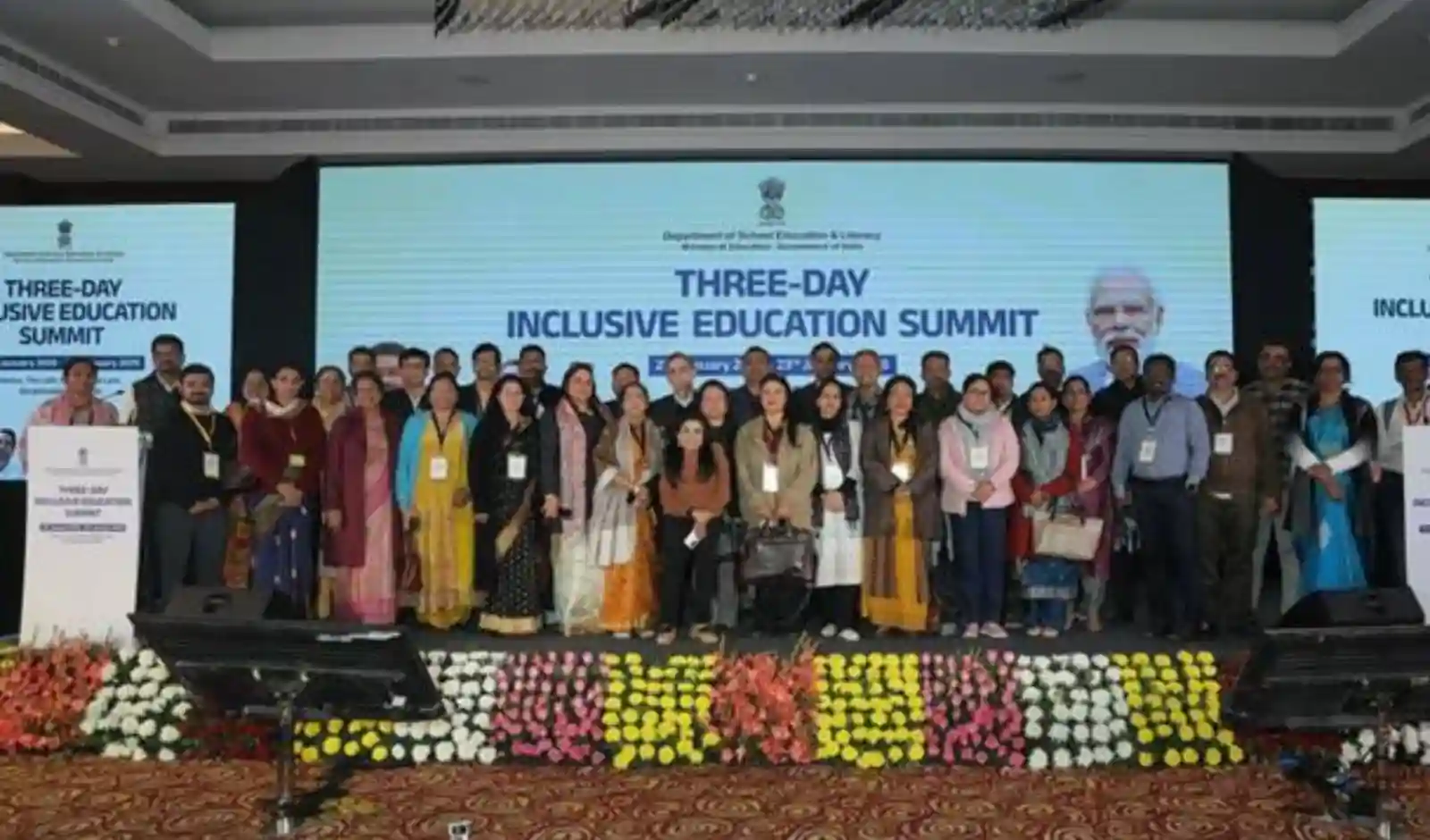
The second day of the Inclusive Education Summit 2026 continued discussions on strengthening inclusive education for children with special needs (CwSN). The summit is being held in line with the National Education Policy (NEP) 2020 and the Rights of Persons with Disabilities Act (RPwD), 2016, which aim to promote equitable, accessible and learner-centered education systems across the country.
The Department of School Education and Literacy (DoSEL), Ministry of Education, continued discussions on strengthening inclusive education for children with special needs (CwSN) on the second day of the Inclusive Education Summit 2026, held from January 21-23, 2026 at The Lalit Hotel in New Delhi. The Summit is being held in line with the National Education Policy (NEP) 2020 and the Rights of Persons with Disabilities Act (RPwD), 2016 which aim to promote equitable, accessible and learner-centered education systems across the country.
The second day of the Summit focused on “Inclusive Education Pathways” highlighting key national-level initiatives, digital tools, teacher capacity building frameworks and inter-sectoral collaborations to strengthen the inclusive education ecosystem.
Speakers included Shri Sanjay Kumar Secretary, Department of School Education and Literacy (DoSEL); A. Sreeja, Economic Advisor, Department of School Education and Literacy (DoSEL); Senior officials from the Ministry of Education, Department of School Education and Literacy (DoSEL) and representatives from national institutions, states/union territories, and partner organizations were present.
Technology and digital innovations were promoted at the Inclusive Education Summit
Ira Singhal, Deputy Secretary, Department of School Education and Literacy (DoSEL), opened with a contextual presentation, in which she explained PRASHAST 2.0 a revised disability screening tool. She stated that PRASHAST 2.0 is an important step towards ensuring early identification, systematic screening and timely support for children, enabling evidence-based planning and targeted interventions at the school level.
Professor (Dr.) Sharad Sinha, Head of the Department of Teacher Education, NCERT, presented an 8-module structured framework for mainstreaming inclusive pedagogy in teacher education programs, emphasizing transformation from entry to achievement for all learners. Prof. (Dr.) Sharad Sinha, President, National Institute of Open Schooling (NIOS), presented a comprehensive framework for mainstreaming inclusive pedagogy in teacher education programs. Akhilesh Mishra highlighted NIOS's initiatives towards universalizing school education through accessible e-content, flexible admission and examination systems and the Inclusive Education Policy (2022) for open schooling.
Amita Tandon, Education Specialist, UNICEF, underscored the importance of disability-inclusive language, stating that inclusive communication approaches play a crucial role in reducing stigma and enabling true inclusion. Prof. Bharti Kaushik from the Central Institute of Educational Technology, NCERT, highlighted the role of PM e-Vidya ISL Channel 31 in building an inclusive learning community and presented the "Kitaab Ek, Padhe Anek" initiative, developed based on Universal Learning Design (UDL), enabling multiple accessible learning paths from a single textbook.
Therefore, the discussions on the second day of the 'Inclusive Education Summit' further reinforced the objectives of strengthening policies and practice, promoting assistive technologies and digital innovations, building institutional preparedness and identifying future pathways that link education, play and employment for children with special needs.


