


 46
/
4
Min Read
46
/
4
Min Read


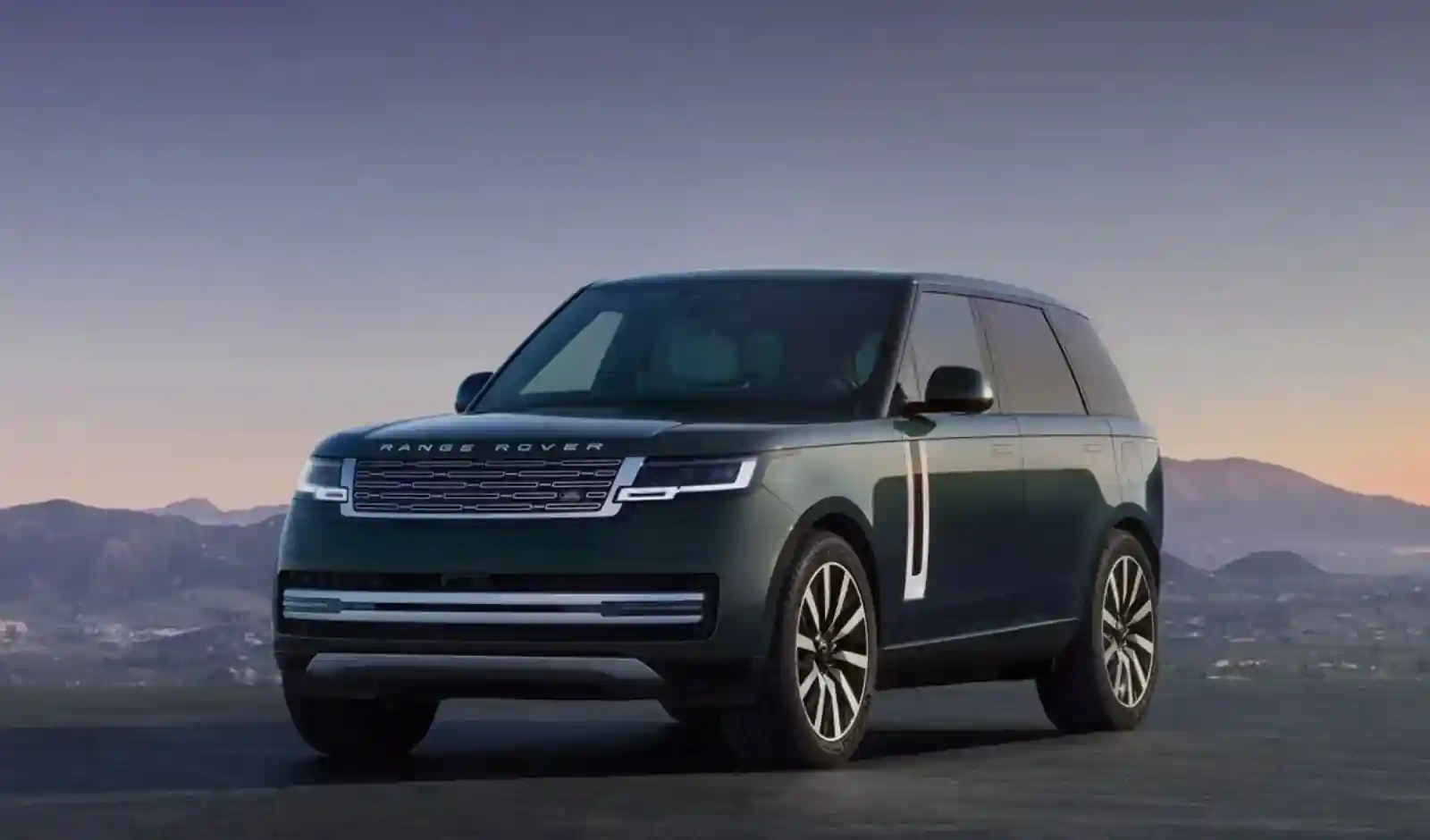
Jaguar Land Rover (JLR) has launched the Range Rover Electric in India, marking the brand's first fully battery-electric SUV. The launch represents a significant milestone for the company, as the Range Rover brand introduces its first model powered entirely by an electric powertrain after more than five decades of production. The new electric SUV has been positioned as a luxury EV offering power delivery comparable to a petrol V8.
The Range Rover Electric is equipped with two 260 kW permanent magnet electric motors, delivering a combined output of 405 kW and 850 Nm of torque. The SUV can accelerate from 0 to 100 km/h in just 4.5 seconds, while 80–120 km/h overtaking acceleration takes as little as 2.7 seconds.
The motors use silicon carbide semiconductors, which JLR says enable switching speeds measured in microseconds. This technology is designed to improve motor efficiency across different driving conditions.
The Range Rover Electric gets a 118.5 kWh lithium-ion double-stack battery pack comprising 344 prismatic cells. The battery operates on an 800-volt architecture.
According to JLR, the SUV offers up to 600 km of WLTP-rated range on a full charge, while its estimated real-world range under standardised conditions is around 535 km.
Using a 350 kW DC fast charger, the battery can be charged from 10 to 80 percent in approximately 22 minutes. The company claims that 10 minutes of charging can add around 220 km of range. The 800V system also supports split-charging capability, giving customers greater flexibility in managing charging.
The Range Rover Electric has been developed with a focus on both on-road performance and off-road capability. It features Integrated Traction Management (ITM), which controls motor response within 50 milliseconds.
The system works alongside Intelligent Driveline Dynamics (IDD), which can distribute rear torque between 100 percent and zero to help maintain traction across different surfaces.
The SUV can wade through up to 900 mm of water. Its single-pedal driving mode allows it to pull away smoothly on slopes of up to 33 degrees and complete rolling climbs on gradients of up to 45 degrees.
The Range Rover Electric also gets a twin-chamber air suspension system. A lower centre of gravity compared with previous Range Rover models is claimed to further contribute to improved handling and stability.
JLR has filed more than 300 patent applications related to the Range Rover Electric, the highest number associated with any Range Rover model in the company's history.
The SUV features the ThermAssist heat management system, designed to optimise range, charging speeds and battery performance across different temperature conditions. JLR says the system can provide up to 40 km of additional range and reduce heating energy consumption by up to 40 percent.
Each vehicle also features a Battery Digital Twin system that monitors more than 900 diagnostic data points. Combined with over-the-air software updates, the system is designed to identify potential maintenance requirements proactively, reducing the need for workshop visits.
Orders for the Range Rover Electric are open in India across multiple configurations. These include the short-wheelbase Autobiography and long-wheelbase variants such as SV, SV Ultra and SV Black.
The First Edition is also available in three exterior colours Belgravia Green, Santorini Black and Varesine Blue. It features a Light Cloud Ultrafabrics and Kvadrat interior.
Customers can further personalise the SUV through JLR's Bespoke commissioning service, which offers customised paint colours, materials, embroidery and other detailing options.
The Range Rover Electric is manufactured at JLR's Solihull plant in the UK, the same facility that has produced Range Rover models since 1970. To support the transition towards electric vehicle production, around 9,000 manufacturing employees at Solihull have been retrained in electrification processes.
Battery packs and electric drive units are produced at JLR's Electric Propulsion Manufacturing Centre in Wolverhampton. The facility uses AI-enabled scanning cameras for quality control, while each battery cell is individually performance-tested before assembly.
According to JLR, the Range Rover Electric underwent more than 1.5 million km of physical testing and over 250,000 hours of virtual testing before launch. Testing was conducted in locations including Arjeplog in Sweden, where temperatures fell as low as -40°C, the Dubai desert and JLR's Eastnor Castle facility in the UK.
The Range Rover Electric marks JLR move towards electrification for one of its most iconic SUV brands. The company aims to offer electric versions across the wider Range Rover family before 2030, including the Range Rover Sport, Velar and Evoque, alongside its existing internal combustion engine, mild-hybrid and plug-in hybrid models.


