


 58
/
3
Min Read
58
/
3
Min Read


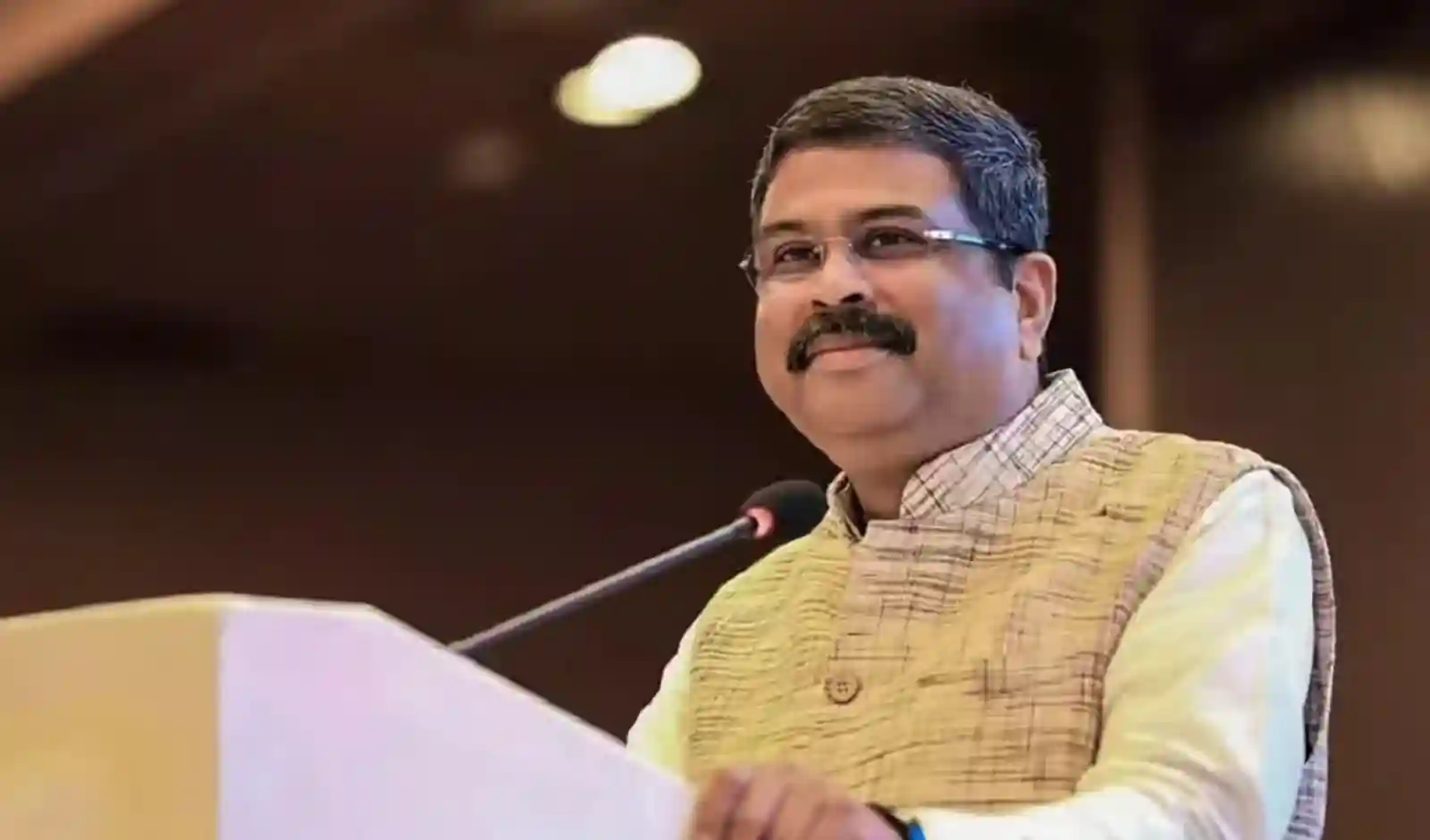
He emphasized that by 2047, when India completes 100 years of independence, the goal is to transform the nation into a developed country and education will be the most powerful instrument in achieving this vision.
Youth Power Is India’s Strength
The Education Minister said that India’s greatest strength lies in its young population. A large number of young people are pursuing higher education, generating new ideas and working with modern technologies to drive innovation.
He made these remarks while addressing the ‘Study in India Edu Diplomatic Enclave 2026’ event held in New Delhi, which was attended by diplomats from more than 50 countries.
The conference was organized at Sushma Swaraj Bhawan. Ambassadors, High Commissioners and representatives from various countries were present at the event. On this occasion, the minister elaborated on India’s education system and its future roadmap.
Foreign Universities to Open Campuses in India
The government aims to encourage leading global universities to establish their campuses in India. To facilitate this, the University Grants Commission (UGC) has developed a transparent and time-bound regulatory framework to make it easier for foreign institutions to operate in the country.
According to the Ministry of Education, applications from major institutions in Australia, Italy, United Kingdom and United States have been approved within a month. This will allow Indian students to access international-quality education without having to travel abroad.
Changing Nature of Education
Dharmendra Pradhan stated that after the introduction of NEP 2020, students are no longer restricted to a single discipline. They can now choose subjects across different streams based on their interests. There is also a strong emphasis on skill-based education to ensure that learning is not limited to earning a degree but also equips students with employable skills and promotes self-reliance.
Focus on Global Collaboration and New Technologies
The conference also discussed promoting India’s knowledge traditions globally, integrating Artificial Intelligence (AI) and emerging technologies into education, and aligning skill development with international standards. The minister highlighted that education serves as a bridge between nations and that research and knowledge exchange form the foundation of meaningful partnerships.
He urged representatives of participating countries to connect their students and institutions with India. He emphasized that India is no longer just a destination for education but is emerging as a major global education hub.
Key Courses Available for Students
Under the New Education Policy, several modern and career-oriented courses have been introduced in India, including:
- Data Science and Cybersecurity
- Skill-based vocational programs
- Startup and Entrepreneurship Studies
- Artificial Intelligence (AI) and Machine Learning
Indian Knowledge Systems and Cultural Studies
International-Level Courses and Opportunities With collaboration from foreign universities, India is now offering globally aligned courses in the following areas:
- Global Public Policy
- Advanced Technology and Robotics
- Health Sciences and Biotechnology
- International Business Management
- Green Energy and Sustainable Development
These initiatives clearly demonstrate that India is moving rapidly toward becoming self-reliant in education while also positioning itself as a global leader in the field.


