

 57
/
6
Min Read



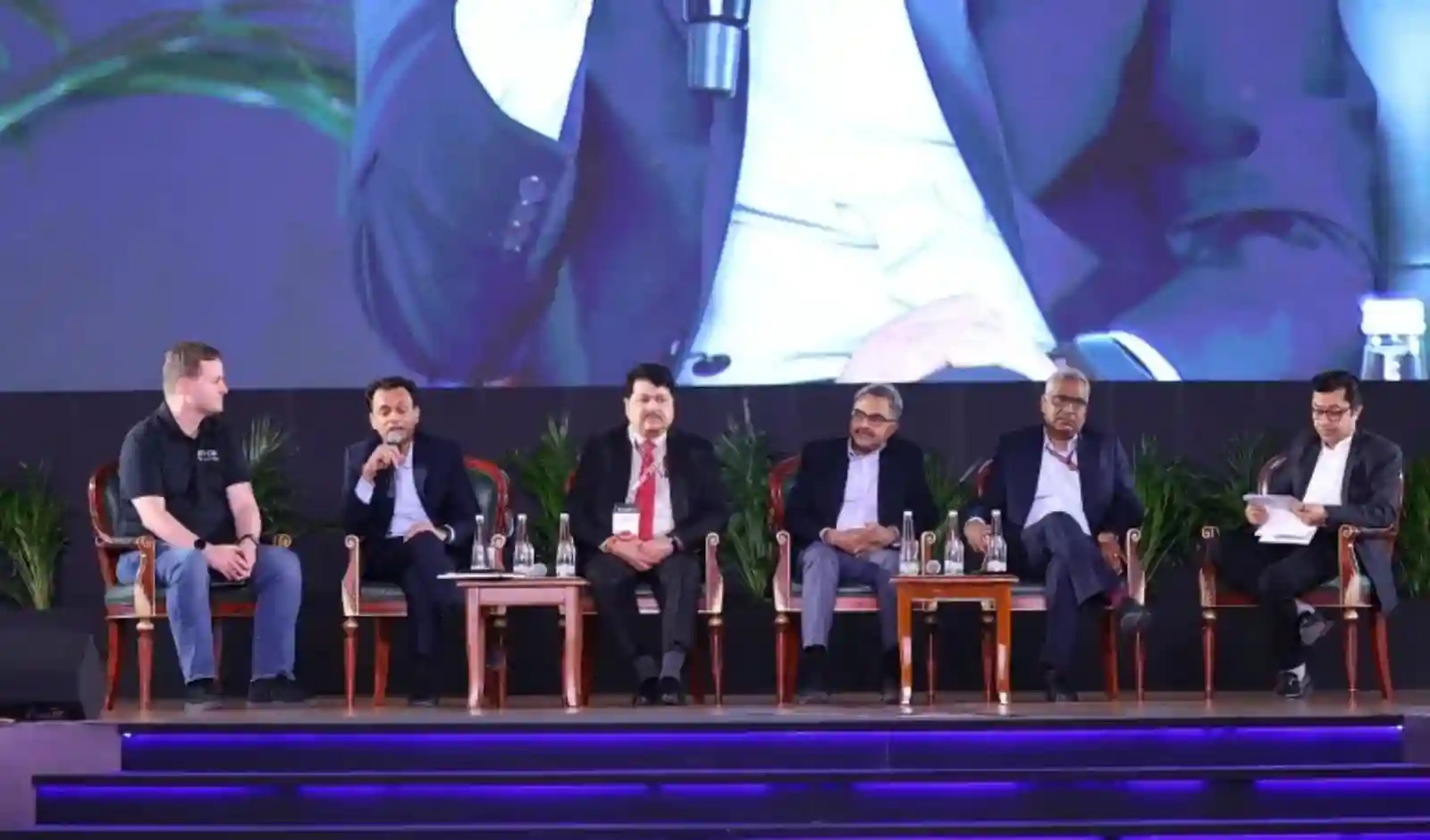
India’s startup and MSME ecosystem have reached a stage where the conversation is “no more access,” but acceleration, according to leaders speaking at a panel discussion on “Policy to Progress: Building an Entrepreneur-Friendly India” at the Entrepreneur 2026.
Sharing their views were Shri Arvind Kumar, Director General, Software Technology Parks of India (STPI); Dr. Paneerselvam Madanagopal, CEO, MeitY Startup Hub; Dr. Shubranshu Shekar Acharya, CMD, National Small Industries Corporation (NSIC); Vibhor Jain, Managing Director & CEO, Open Network for Digital Commerce (ONDC); and Nicolas Sauvage, President, TDK Ventures. The session was moderated by Sachin Marya, Editorial Director, Entrepreneur India & APAC.
Opening the discussion, the moderator said very little is spoken about government innovation, adding that agencies are today “doing much more than anywhere in the world I’ve seen.” On access and acceleration, he said, the government has taken a front seat and is leading from the front.
From Consumer Internet to Deep Tech
Arvind Kumar said STPI was established in 1991, when exports of IT and ITeS services stood at 52 crores. Today they are more than 20 lakh crores. STPI now runs 27 domain-specific centres of entrepreneurship, from blockchain and health tech to fintech, automation and AI, supporting more than 1,700 tech startups, with a focus on Tier 2 and Tier 3 cities and more than 40% women entrepreneurship. Its schemes include the Next Generation Incubation Scheme, which provides 25 lakhs to each startup and Leap Ahead, a co-investment model of around one crore.
Asked how technology infrastructure has expanded beyond startup hubs, Kumar said the first six to seven years of Startup India, launched in 2016, were focused on consumer internet. The ecosystem is now in a second phase centred on deep tech, with founders working on climate change, defence tech, space tech and enterprise AI. Under the AI Mission, the government is providing GPU support and datasets and creating more than 50 centres of entrepreneurship exclusively for AI. More than 50% of applications to open challenges now come from Tier 2 and Tier 3 cities, he said and investors are also thinking of a “longer gestation period.”
Dr. Paneerselvam Madanagopal, CEO, MeitY Startup Hub described the hub as a “younger cousin” of STPI, offering mentorship, market access and money to tech, deep tech and electronics design and manufacturing startups, in partnership with STPI and CDAC. He said India has gone from about 600 to 700 startups in 2016 to more than 200,000 today. The first horizon was building width, and “it’s now time to build depth.” He named AI/ML, blockchain, cybersecurity, quantum and manufacturing as key areas, backed by the India Semiconductor Mission, the India AI Mission and the National Quantum Mission. “We may have a million problems, but we have a billion minds to solve it.”
Closing the Gaps for MSMEs
Dr. Shubranshu Shekar Acharya, CMD (NSIC) said all startups are MSMEs and that registered MSMEs have crossed 95 million, providing almost 400 million jobs. He identified six gaps: credit, technology, market, capability, skill and scale. Credit, he said, is “no more an issue for the right kind of an enterprise.” What is needed is data-driven credit, and technology adoption rather than availability. NSIC is aggregating MSMEs’ raw-material demand to cut input costs by four to five percent and is working with ONDC to onboard 500,000 MSMEs, half of them women entrepreneurs.
Drawing on more than three decades at SIDBI, he said the Self-Reliant India Fund with 10,000 crores of sovereign capital and a mandate to raise four times that privately has raised seven times, creating a total of 50,000 crore for growth-oriented MSMEs, most of them micro-enterprises. “Startup India is past; we should have a Scale-up India mission now.”
Digital Rails and Level Playing Fields
Vibhor Jain, MD & CEO said ONDC exists to remove market friction that market forces are unable or not incentivised to solve. More than 500 ventures are building on it, the network enables about 500 transactions a minute, and it has crossed 500 million transactions. Like a new highway that spurs businesses in Tier 2, 3 and 4 towns, he said, ONDC gives every business shared digital rails.
He said digital public infrastructure changes the economics of participation through market access, operational efficiency, unit economics and innovation, citing Amazing India for Kisans and Karigars and DigiDukan, which helps small retailers unlock working capital and build a digital trail for credit. On whether platforms monopolise the market, he said fairness means discoverability for a small merchant, FPO or SHG in a Tier 4 city, low-cost access to technology and access to credit. “India has chosen a very different path to say can we leverage technology to drive fairness.”
Taking India to the World
On going global, Kumar said that of 15 startups taken to the US, 12 got leads and three got funding. Founders, he said, no longer want a small seed fund but a chance to test their pilots and governments should facilitate this. He urged startups to build agentic AI solutions, noting India holds 55% of the global IT and ITeS services market. “We have to think in terms of how we were able to replicate IT, ITS services.”
The MeitY representative called himself an “eternal optimist” but said “we have some ground to cover.” India must move from services to products, and “mediocrity will not drive you into the global market.” His advice to startups was not to go international until they have done 100 crores in India.
Nicolas Sauvage, whose firm manages 500 million USD across four funds and has backed 56 startups worldwide, said India is its second-biggest country with six investments and a seventh soon. Backed by TDK’s factories in India for more than 30 years, the firm invests on a thesis. “It is because we believe they are the king of the hill.” He cited Ultraviolet, now selling electric motorbikes in Europe a reusable-rocket startup leveraging India’s space engineers; and Exponent Energy, which grew from India’s fragmented three-wheeler market. He also revealed that TDK Ventures was already in talks with MeitY on a potential partnership.
Concluding the session, moderator Sachin Marya reiterated that on access and acceleration, the government has taken a front seat, “leading from the front to help all of the builders and entrepreneurs and even investors build better businesses, more thriving businesses.”
 This article was originally
published by the


