


 114
/
3
Min Read
114
/
3
Min Read


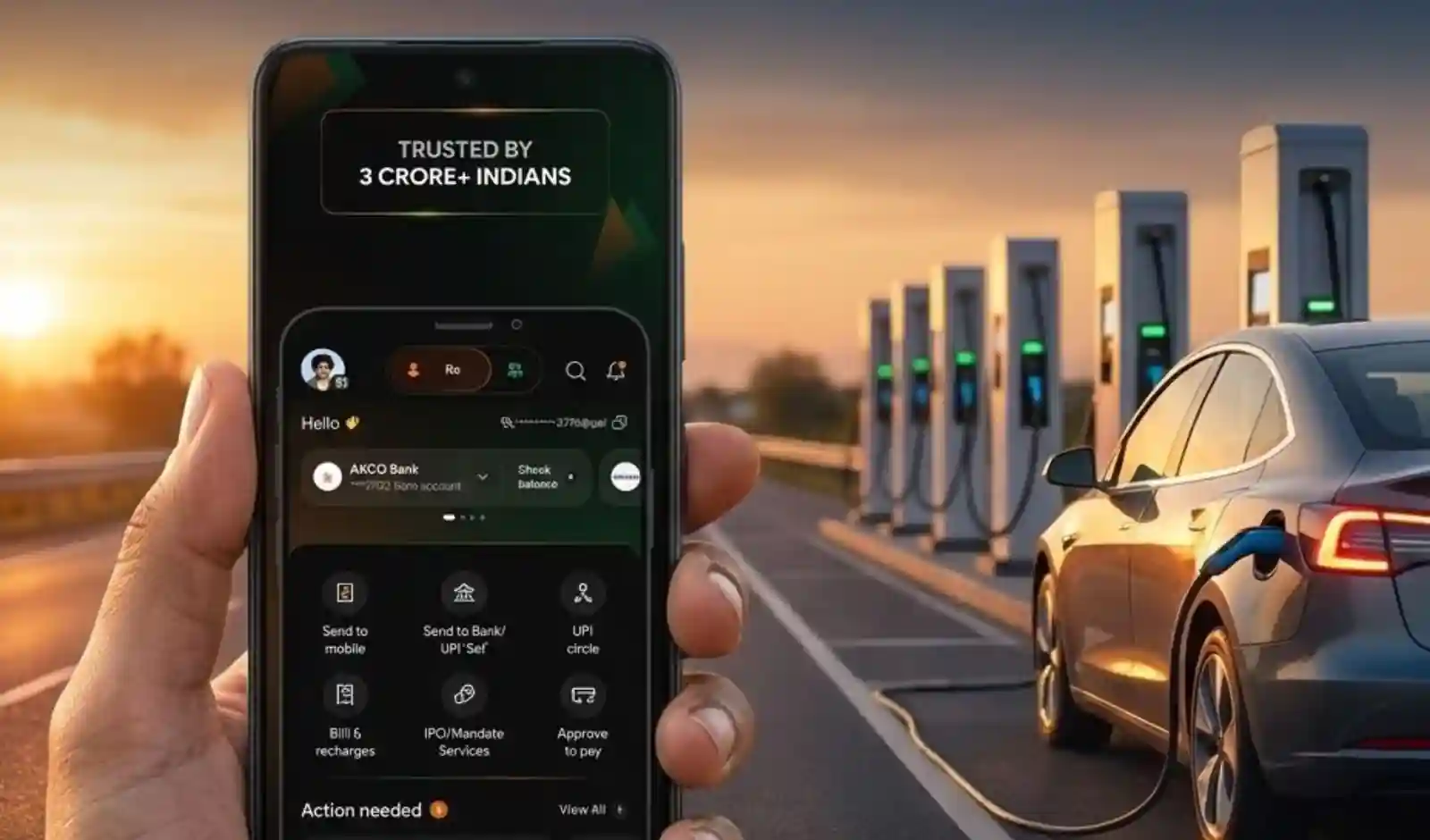
India-based EV charging technology company Pulse Energy has announced its participation as one of the first certified technology enablers for Unified Bharat eCharge (UBC). The nationwide interoperable EV charging network has been launched by the Ministry of Heavy Industries (MHI), Bharat Heavy Electricals Limited (BHEL), and the National Payments Corporation of India (NPCI).
Unified Bharat eCharge aims to address fragmentation in India’s EV charging ecosystem, where users often have to rely on different networks, applications and payment systems. Under UBC, EV users will be able to discover UBC-enabled charging stations through the BHIM app, scan the QR code and pay directly from their bank account using UPI. Users will not need to download separate operator apps, create multiple accounts or maintain prepaid charging wallets.
Access to Multiple Charging Points Through One Network
The initial rollout of Unified Bharat eCharge will be available through the BHIM app, with UBC-enabled charging points being added across cities and national highways. The network is also expected to be made available through other payment, mobility and automotive applications, allowing users to access charging stations through platforms they already use.
Pulse Energy will support these application providers in connecting to the UBC network. The company will also enable Charge Point Operators (CPOs) to integrate their existing charging infrastructure with UBC. This will allow operators to retain their existing hardware and brand identity while making their chargers accessible to a wider pool of EV users.
Network of Over 10,000 EV Chargers
Pulse Energy currently works with more than 100 charge point operator partners and has a connected network of over 10,000 EV chargers. As a technology enabler for UBC, the company will help charging operators integrate with the network and expand access to EV users.
Lalitha Nataraj, CEO, NPCI BHIM, said UBC aims to eliminate the need for multiple apps and wallet loading for EV charging. Users will be able to discover charging points through the BHIM app, charge their vehicles, make payments and continue their journey.
Akhil Jayaprakash, Co-founder and CEO, Pulse Energy, said EV drivers should not have to worry about which charging network they are using before plugging in. According to him, UBC aims to bring different networks onto a common infrastructure, making charging more accessible while enabling operators to serve users beyond their own applications.
Open Architecture for EV Charging
Unified Bharat eCharge has been developed as digital public infrastructure using the open Beckn protocol, with the underlying DPI developed by the Network for Humanity (NFH) team. Its open architecture is designed to connect charging operators, technology providers and consumer applications through a common ecosystem.
The Ministry of Heavy Industries is supporting the development of the National Unified Hub for EV charging, or Unified Bharat eCharge, to create a seamless, interoperable and consumer-friendly EV charging ecosystem across India. MHI has appointed BHEL as the Project Implementation Agency (PIA) for the initiative.


