



 43
/
5
Min Read
43
/
5
Min Read


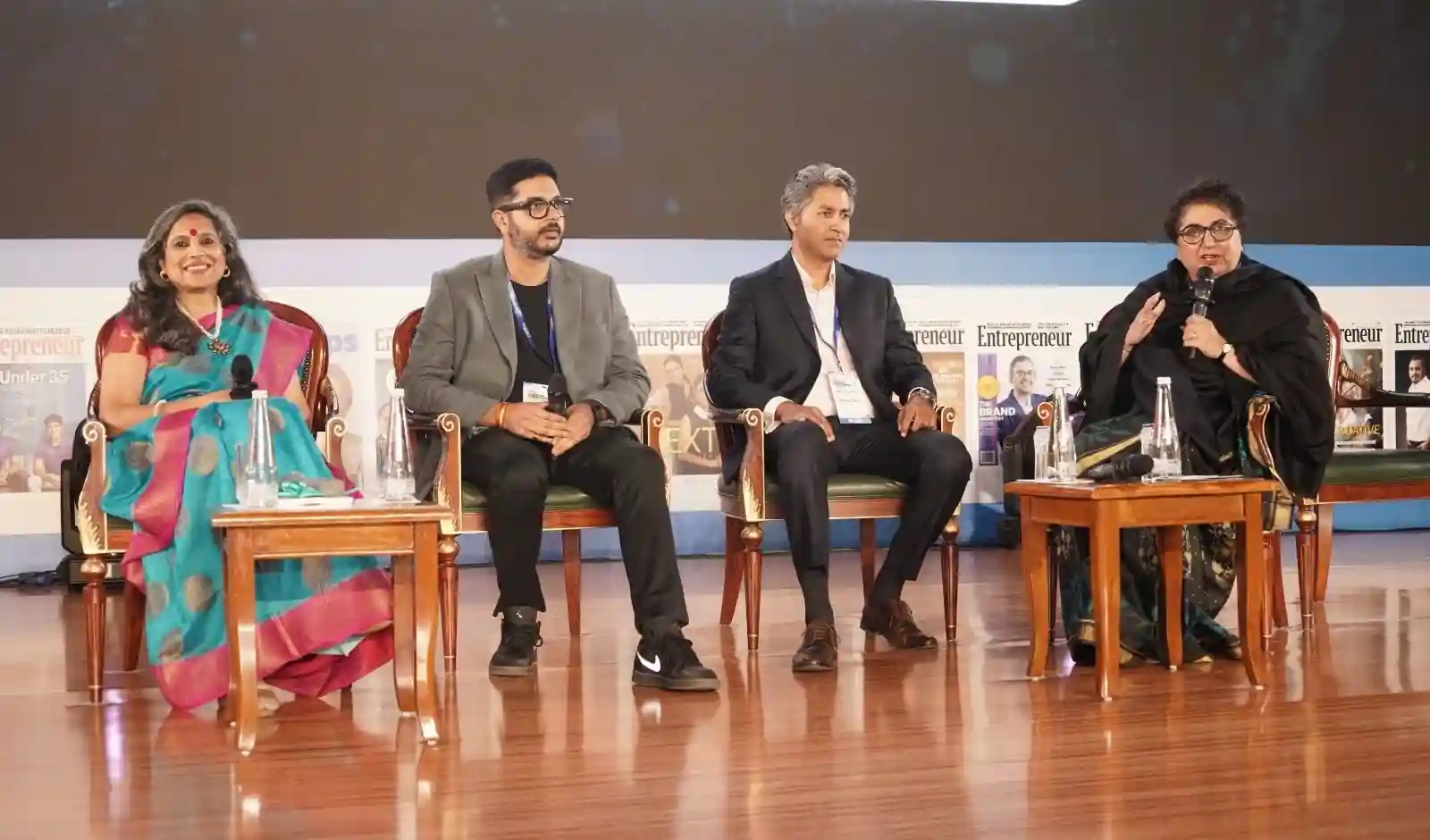
This year’s central theme, “Reimagining Classrooms and Empowering Educators: Pedagogy, Personalisation and Immersive Learning,” not only reflects the need of the hour but also highlights that education can no longer remain confined to books and traditional methods.
The event featured distinguished speakers including Aslesha Thakur (CEO- Lead Innovation), Prateek Shukla (Co-Founder & CEO- Masai), Mayank Pandey (Co- Founder, Just Procure) and Dr. Renu Singh (Country Director- Young Lives India). Each expert shared unique perspectives on the evolving education landscape, the role of technology and the importance of teachers, making the discussion both rich and well-balanced.
One of the most significant highlights of the event was the panel discussion that raised a critical question: Is technology truly transforming education or is it merely an enabling tool? This discussion not only encouraged deep reflection among attendees but also provided a clear direction for the future of education.
Opening the discussion, Aslesha Thakur emphasized that while the use of technology in education has grown rapidly, it cannot replace teachers. She stated that a teacher is not just a source of information but also a guide, motivator, and empathetic mentor who understands students beyond data. According to her, technology acts as a “mirror” that identifies learning gaps a “multiplier” that enhances teaching effectiveness and a “bridge” that enables personalized learning pathways.
However, she clearly pointed out that technology cannot compensate for weak teaching methods. In her words, “If pedagogy is weak, technology will only digitize boredom.” This highlights that real transformation in education comes not just from tools, but from mindset and teaching approaches.
On the other hand, Prateek Shukla highlighted the transformative potential of technology, particularly Artificial Intelligence (AI), in shaping the future of education. He explained that AI is enabling personalized learning at scale, allowing each student to learn according to their pace and capability. He also noted that technology is bridging the gap between urban and rural education, enabling students from remote areas to access high-quality learning.
According to him, “A student in a small village can now learn the same things as someone in top institutions.” This shift is making education more inclusive and equitable. He further added that in the future, AI will not only deliver content but also personalize the way learning happens.
At the same time, the discussion also addressed the limitations of technology. Dr. Renu Singh highlighted that education is not just about delivering content but is also a social and emotional process. She emphasized that interaction, empathy, teamwork and real-world experiences are essential for student development and these cannot be fully achieved through digital means alone.
She also raised concerns about inclusivity, especially for students with disabilities, stating that technology still needs to evolve to cater to diverse learning needs. According to her, “Technology must become more inclusive to ensure equal opportunities for all learners.”
Mayank Pandey brought a practical perspective to the discussion by describing technology as a “wild horse” that needs proper direction. He stated that if not guided correctly, technology can be counterproductive. He also pointed out that access to technology is no longer a major challenge in India, as internet connectivity and smart devices have reached even remote areas.
He emphasized that the real challenge lies in how effectively technology is used. “The focus today should not be on access, but on using technology in a way that delivers meaningful outcomes,” he said.
The overall conclusion of the discussion was clear technology alone is not a solution, but a powerful tool that must be used wisely. All speakers agreed that real transformation in education will only happen when technology is combined with strong pedagogy.
The event also highlighted that future classrooms will look significantly different. They will not be limited to lecture-based learning but will be more interactive, experiential, and skill-focused. Technologies like Virtual Reality (VR), Augmented Reality (AR) and AI will play a key role in enhancing understanding and engagement among students.
Alongside this transformation, the role of teachers will become even more important. They will evolve from traditional instructors to facilitators and mentors. For this transition, it is essential to equip teachers with the right training, tools and support systems so they can adapt to the changing landscape.
The congress also reinforced that the future of education does not depend solely on technological advancement, but on how effectively it is implemented. When used correctly, technology can make education more inclusive, efficient and accessible.
In conclusion, the event delivered a strong message if India aims to become a developed nation, it must strengthen and modernize its education system. This requires embracing technology while preserving the human essence of learning. The classroom of the future will be one where technology and humanity coexist in balance, where teachers and digital tools work together not just to impart knowledge, but to prepare students for life.


