


 145
/
4
Min Read
145
/
4
Min Read


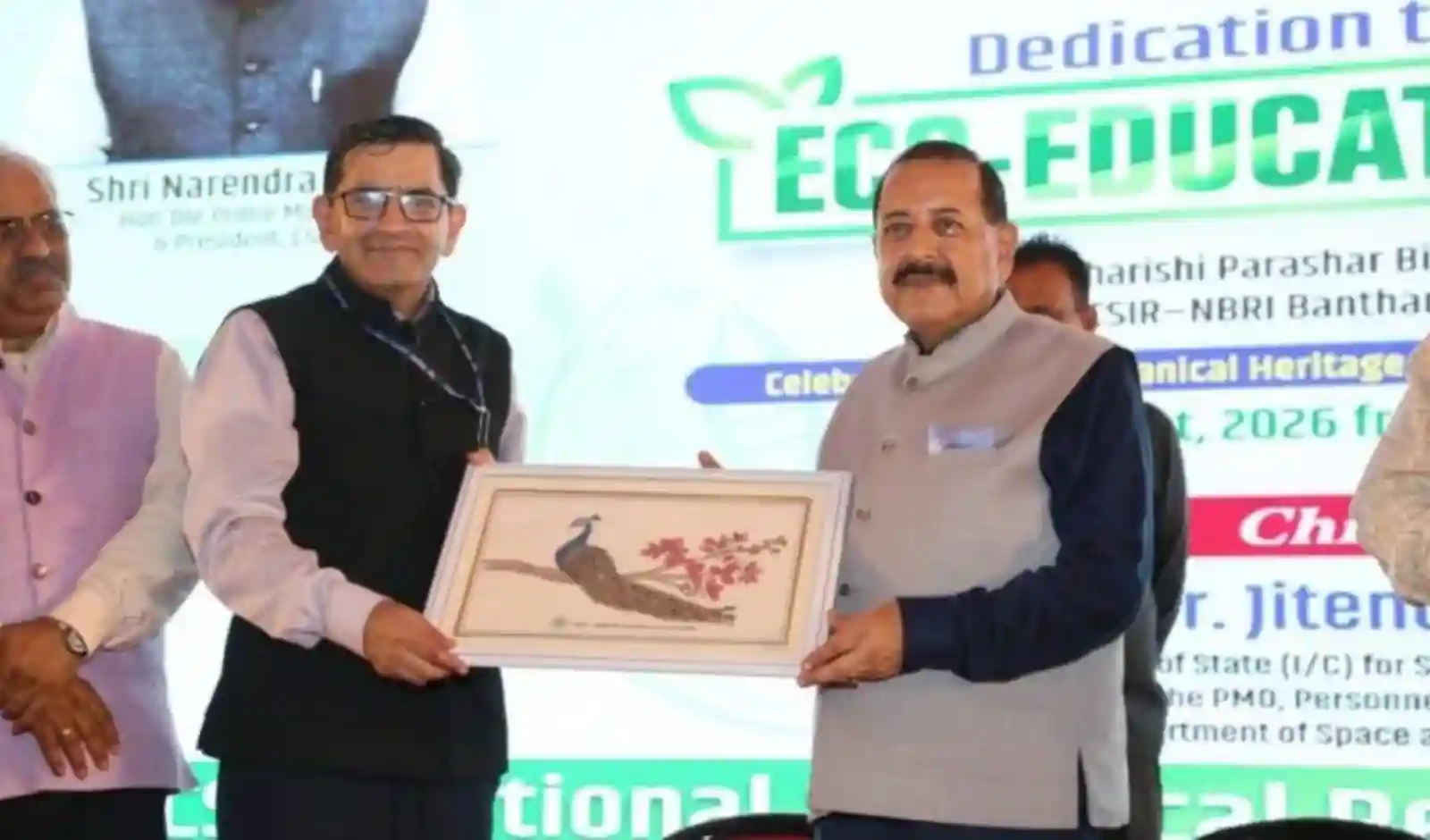
Lucknow: Union Minister of State for Science and Technology Dr Jitendra Singh inaugurated Prakriti Gyan Dham in Lucknow. Developed by the CSIR-National Botanical Research Institute (CSIR-NBRI), it is the institute’s first Eco-Educational Hub. The centre aims to promote biodiversity conservation, India’s botanical heritage, environmental education and experiential learning
The centre has been established at the Maharishi Parashar Bioresource Centre in Banthra, Lucknow. Prakriti Gyan Dham has been developed as a living educational space where students and researchers can learn about plants, biodiversity and the environment through direct observation and hands-on experiences. The initiative also focuses on connecting scientific research with society.
Experiential Learning Centre for Students and Researchers
CSIR-NBRI Director Dr Zabeer Ahmed said the Eco-Educational Hub has been conceived as a living repository of India’s botanical diversity. It will provide students, researchers, educators, nature enthusiasts and the general public an opportunity to engage directly with nature.
The centre brings together living plant collections, heritage trails, digital information and technology-based activities. This approach will help students understand environmental science and botany through real-world experiences while strengthening the connection between scientific institutions, society and nature.
PAaVan Path Showcases India’s Botanical Diversity
One of the key attractions at Prakriti Gyan Dham is the PAaVan Path (Plants and Associated Vegetations for Appreciating Nature). This heritage path showcases plant collections representing different ecological regions, plant species and vegetation types. The path can serve as an open-air learning space for students, allowing them to observe plants and understand their relationship with the surrounding environment.
Indian Heritage Garden Features Historic Trees
The Indian Heritage Garden is another major attraction at the centre. It showcases trees associated with historically significant places across India. These include the Bawan Imli Tamarind Tree from Fatehpur, the Mother Dussehri Mango Tree from Lucknow and the historic Patalpuri Banyan Tree from Prayagraj.
The Bawan Imli tree is associated with the historic sacrifice of 52 freedom fighters. The garden also includes descendants of trees associated with Mahatma Gandhi, including a descendant of the mango tree planted by Gandhi at Bhitiharwa in Champaran.
QR Codes Provide Digital Information About Trees
To integrate education with digital technology, Prakriti Gyan Dham also features QR-code digitalisation. QR codes have been placed on trees and exhibits across the centre. Visitors can scan these codes to read and listen to information about the history, scientific significance and environmental importance of the plants. The initiative is expected to make learning more interactive and engaging, particularly for students.
Bamboosteum Showcases 43 Bamboo Species
Another major attraction is Bamboosteum, which features 43 bamboo species. The facility also highlights the role of bamboo in environmental conservation, ecological restoration and carbon-related applications.
Focus on Linking Science, Industry and Livelihoods
During the programme, CSIR-NBRI also highlighted the transfer of several science-based technologies. Technologies related to Rudra Perfume and Herbal Nano Serum were transferred to the Kudumbashree State Poverty Eradication Mission in Kerala. The initiative aims to promote women-led entrepreneurship and create livelihood opportunities through science-based products.
In addition, the Design and Development of a Low-Cost Photobioreactor technology was transferred to Lucknow-based Witwake Solutions Pvt. Ltd. The move is aimed at strengthening the connection between scientific research and industrial applications.
Dr Jitendra Singh said technology transfers should not remain limited to individual projects. Such technologies should be systematically showcased so that potential users and stakeholders can identify scientific solutions that can contribute to livelihoods and create economic opportunities.
He also stressed the need for greater coordination among government departments, ministries and scientific institutions wherever their objectives overlap. The minister appreciated CSIR-NBRI’s efforts to convert plant science research into technologies and products for farmers, industry and the public.
Traditional Knowledge and Modern Science
Dr Jitendra Singh also highlighted the importance of combining traditional knowledge with modern scientific technologies to address environmental and climate-related challenges. During the programme, he released a documentary on India’s Heritage Gardens, highlighting the country’s botanical wealth and the historical, cultural and ecological significance associated with its plant diversity.
A New Platform for Science and Environmental Education
Prakriti Gyan Dham is emerging as a centre that brings together education, science, digital technology and environmental conservation. Its key strength lies in providing students and the public with opportunities to learn about nature not just through textbooks, but through direct observation, interaction and experience.
The initiative is expected to strengthen experiential learning, public engagement and scientific awareness, while creating a stronger connection between India’s botanical heritage and modern environmental education.


