


 72
/
4
Min Read
72
/
4
Min Read



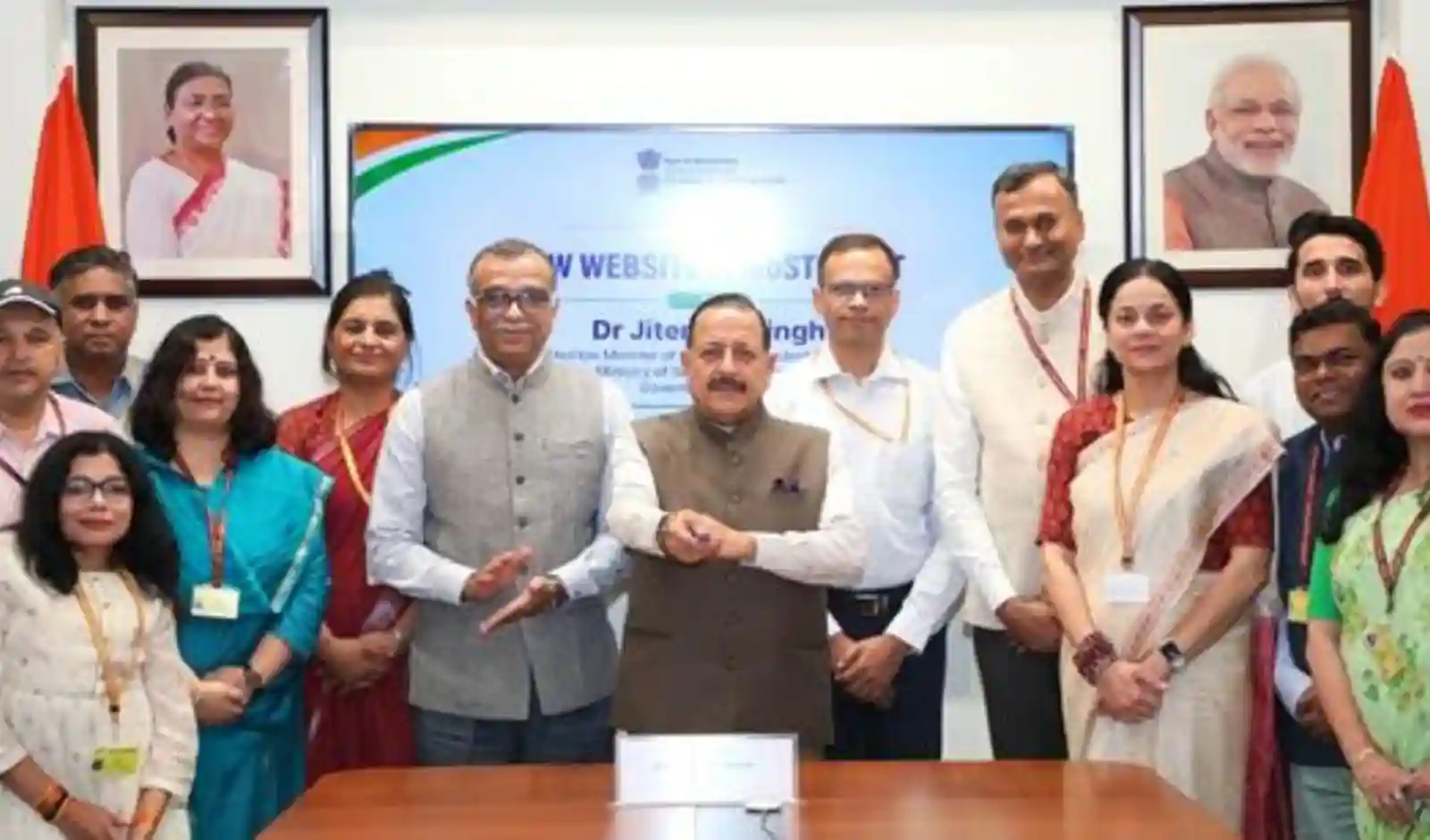
To make opportunities related to science, research and innovation more accessible to students and researchers, the Department of Science and Technology (DST) has launched its official website in a revamped format.
Union Minister of State (Independent Charge) for Science and Technology, Dr. Jitendra Singh, launched the DST website, www.dst.gov.in and the Ministry of Science and Technology’s website, www.most.gov.in, on October 9, 2026. The websites have been made multilingual, citizen-centric and more accessible, enabling students, research scholars, academic institutions, innovators and entrepreneurs across the country to access information about government science and technology programmes more easily.
Research Grants and Fellowships Available on One Platform
The new websites provide information on research grants, fellowships, scientific schemes and other opportunities for students, research fellows and researchers. Users can access eligibility criteria, application guidelines, calls for proposals, awards, results and official notifications.
The information architecture has been organised to reduce the time users spend searching for details across different departments and documents. Dedicated sections on schemes and opportunities provide information on funding for research and development, application forms and calls for proposals. In addition, a central document repository will host policy documents, guidelines, reports, notifications and administrative forms.
This arrangement could be particularly useful for students and researchers seeking financial assistance and institutional opportunities for higher education, scientific research or innovation projects.
Science and Technology Information Available in 22 Languages
One of the key features of the new websites is the integration of Bhashini, which enables content to be made available in 22 languages. The initiative aims to extend access to science and technology information to citizens from diverse linguistic backgrounds.
The websites also include tools for universal accessibility. Users can change font sizes, use high-contrast display modes, highlight links and adjust character and line spacing. Screen-reader-compatible features have also been incorporated to make the websites easier to use for people with diverse accessibility needs.
The responsive design allows users to access the websites on desktops, tablets and mobile phones. This can help students and researchers find information about government schemes, application deadlines and scientific programmes across different devices.
Useful for Startups and Innovators
The objective of the new websites extends beyond providing academic information. They also aim to connect the broader science and technology ecosystem through a common digital platform. The websites will offer useful information for academic institutions, innovators, startups, entrepreneurs and media professionals.
Information on DST’s various divisions, programmes, schemes, services and officials’ contact details has also been organised. A dedicated arrangement provides information on bilateral and multilateral science and technology cooperation for stakeholders interested in international collaboration. This could help research institutions and innovators identify relevant programmes and collaboration opportunities.
New Websites Aligned with Digital Governance Standards
According to Dr. Jitendra Singh, the new websites advance Prime Minister Narendra Modi’s vision of citizen-centric governance and the principle of “Science by the People, Science for the People.”
The websites have been developed in accordance with the Digital Brand Identity Manual (DBIM) 3.0 and the Guidelines for Indian Government Websites and Apps (GIGW) 3.0. They incorporate features such as a Modular Content Management System (CMS), SSL/TLS encryption and a Content Delivery Network (CDN), aimed at improving security, loading speed and website availability.
News, press releases, calls for proposals, results and announcements will also be organised on the new websites. This will make it easier for students, researchers and startups to access information about science and technology schemes, fellowships and grants. However, their usefulness will depend on regular updates and how easily users can access the information.


