


 86
/
4
Min Read
86
/
4
Min Read


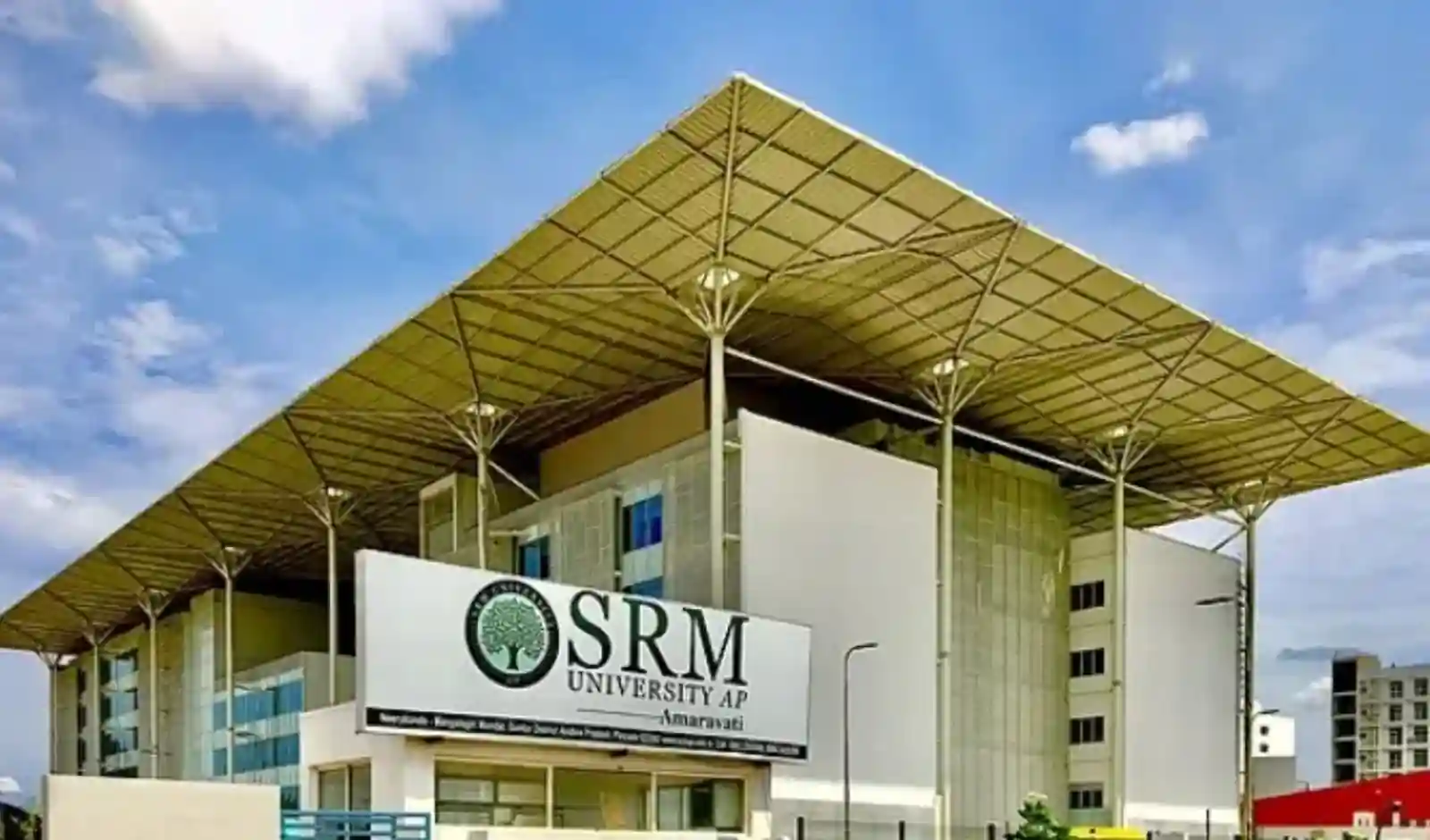
Through these programmes, students will be trained in advanced research, analytical and practical skills. Special emphasis will be placed on interdisciplinary learning, hands-on training and AI integration. Eligible students will also receive scholarships and fee concessions of up to 100 percent.
AI and Subject Knowledge Both Essential: Vice Chancellor
Speaking at the launch event, Vice Chancellor Ch Satish Kumar said that in today’s world, subject knowledge alone is not enough, and students must also understand emerging technologies and AI. He stated that the future belongs to those who can combine strong domain expertise with AI tools. According to him, AI is playing an increasingly important role in fields like economics and psychology for data analysis, prediction and decision-making. He added that SRM AP is among the early universities to integrate AI at this level in postgraduate education.
Dean of Easwari School of Liberal Arts Vishnupad said that in many institutions AI is taught only as an additional subject, but at ESLA it has been made a core part of the curriculum. He added that the programmes are designed in a way that AI enhances students’ understanding of their disciplines. He described it as a major milestone for the school, as these are ESLA’s first postgraduate programmes.
Focus on Data Science and AI in M.Sc. Economics
The M.Sc. Economics programme combines economic theories with AI-based tools and data science to help students better understand global economic challenges. It is considered one of India’s early AI-integrated Economics programmes. The course will focus on policy frameworks, computational methods and data analytics. Students will get opportunities to specialise in areas such as Finance and Data Science or Development and Policy. An optional dissertation pathway will also be available for students interested in research and academics. This information was shared by Assistant Professor Boddu Srujana from the Department of Economics.
Psychology Programme Includes Research and Machine Learning
The M.Sc. Psychology programme has been designed as a research-intensive degree to meet the growing demand for trained psychologists in technology-driven environments. The programme combines core psychological science with AI-based applications. The curriculum will focus on areas such as mental health, organisational behaviour and education. It will also include advanced research methods, psychometric assessment, machine learning-assisted analysis and simulation-based intervention planning. Bridge courses will also be offered for students without a psychology background. This information was shared by Assistant Professor and Head of the Department of Psychology Ayesha Parveen Haroon.
Students to Get Multiple Study Options
The programmes will offer multiple study pathways for students. Those with four-year undergraduate degrees can opt for a one-year track, while students with three-year undergraduate degrees can choose a two-year track. Graduates from diverse academic backgrounds, including B.Tech, will be eligible for admission.
The launch event was attended by Y Siva Sankar, Vandana Swami, Parag Jayant Waknis, Ubaid Mushtaq and Pankaj Belwariar along with several teachers and officials.
Focus on Preparing Future-Ready Experts
The objective of these new programmes is to develop future-ready economists and psychologists who possess scientific thinking, strong analytical skills and an understanding of modern technology, enabling them to make meaningful contributions to research, industry and society. The university believes that AI and data-driven decision-making will play a major role in every sector in the coming years, making it essential for students to combine traditional education with technological skills.
Through these programmes, students will gain not only theoretical knowledge but also the ability to understand real-world problems and develop practical solutions. They will receive hands-on experience through research projects, data analytics, machine learning tools and industry-oriented training. The university also aims to prepare professionals who can play impactful roles in areas such as education, healthcare, policy-making, the corporate sector and social development.


