



 243
/
6
Min Read
243
/
6
Min Read


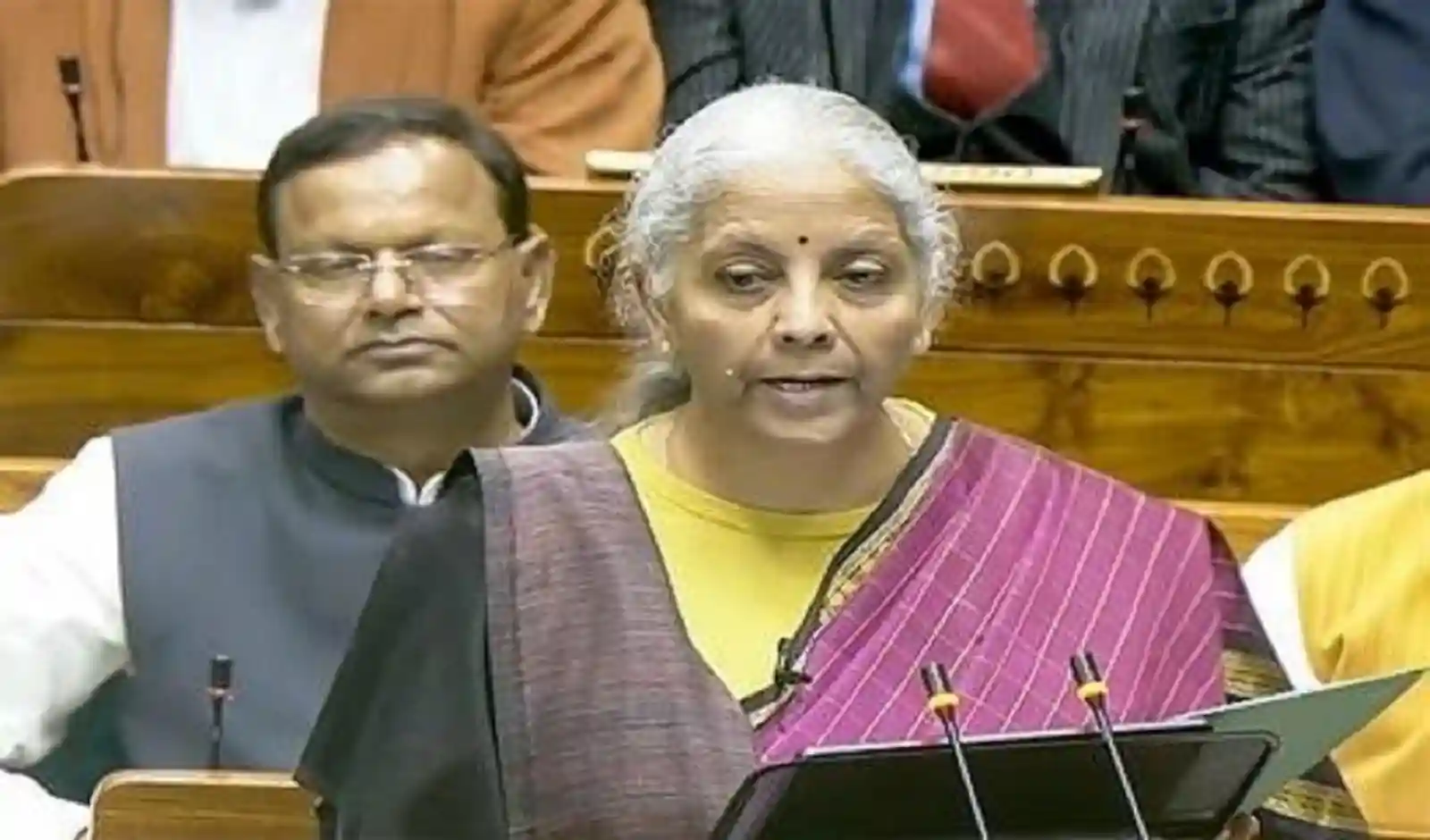
The Union Budget 2026–27 marks yet another affirmative shift from intent to execution of government, signalling how India’s journey towards Viksit Bharat is not merely a hyped slogan, but a structured national commitment. Framed around productivity, resilience and inclusion, Finance Minister Nirmala Sitharaman’s ninth and first ever Budget on Sunday firmly places rural infrastructure at the heart of India’s growth story - recognising villages not as beneficiaries of welfare alone, but as engines of economic momentum of the country.
At Rs. 12.2 Lakh Crore of record capital expenditure push for the financial year starting on April 1, 2026, the Finance Minister reinforced government’s belief that infrastructure is both a growth multiplier and a social equaliser in her nearly-one and half hour long speech. From MSMEs to hospitality, tourism to Ayurveda and logistics corridors to irrigation, storage and digital connectivity, the Budget underscores how last-mile infrastructure is critical to unlocking rural demand, improving farm productivity and integrating Bharat with India’s urban markets. Expanded support for rural housing, drinking water, renewable energy and agri-value chains further strengthens this foundation.
Setting the context and tone, the Finance Minister started her speech saying that since last 12 years after assuming the office in 2014, India’s economic trajectory has been marked by stability, fiscal discipline, sustained growth and moderate inflation. “This is the result of conscious choices we have made, even in times of heightened uncertainty and disruption. Our Government, led by Prime Minister Narendra Modi, has decisively and consistently chosen action over ambivalence, reform over rhetoric and people over populism,” she stated.
She also pointed towards the geopolitical challenges that the country has been going through saying, “Today we face an external environment in which trade and multilateralism are imperilled and access to resources and supply chains are disrupted. New technologies are transforming production systems while sharply increasing demands on water, energy and critical minerals. India will continue to take confident steps towards Viksit Bharat, balancing ambition with inclusion. As a growing economy with expanding trade and capital needs, India must also remain deeply integrated with global markets, exporting more and attracting stable long-term investment.”
Notably, the budget aligns government’s continuous commitment to rural development with manufacturing, MSMEs and employment generation across areas and sectors. Enhanced credit access, targeted MSME funds and logistics upgrades aim to help rural enterprises scale up, formalise and connect with national and global supply chains. The emphasis on skilling, agri-technology, fisheries, and allied activities reflects a move towards income diversification rather than subsistence support.
Fiscal prudence remains intact, but without compromising on growth aspirations. By empowering states through long-term interest-free loans and decentralised project execution, the Centre has reinforced cooperative federalism as a key pillar of development. In essence, Budget 2026–27 reframes rural India - from a policy priority to a strategic partner in India’s march towards a more balanced, inclusive and infrastructure-led Viksit Bharat.
However, the key indices of the share markets have reacted cautiously with little decline post-budget speech during the day.
Inspired by Kartavya
Delivering her first Union Budget that has been framed in newly built Kartavya Bhawan, Sitharaman said that the Budget is inspired by three Kartavyas of the government. They are:
- To accelerate and sustain economic growth, by enhancing productivity and competitiveness, and building resilience to volatile global dynamics.
- To fulfil aspirations of people and build their capacity, making them strong partners in India’s path to prosperity
- Aligned with vision of Sabka Sath, Sabka Vikas to ensure that every family, community, region and sector has access to resources, amenities and opportunities for meaningful participation.
Under first kartavya to accelerate and sustain economic growth, the government has proposed interventions six areas including scaling up manufacturing in 7 strategic and frontier sectors; rejuvenating legacy industrial sectors; creating champion MSMEs, delivering a powerful push to Infrastructure, ensuring long-term energy security and stability developing City Economic Regions.
Rejuvenating legacy industrial sectors
The government has announced a scheme to revive 200 legacy industrial clusters to improve their cost competitiveness and efficiency through infrastructure and technology upgradation. Under Creating “Champion SMEs, and supporting micro enterprises, the Finance Minister said that a dedicated ₹10,000 crore SME Growth Fund, to be introduced, to create future Champions, incentivizing enterprises based on select criteria. At the same time, self-Reliant India Fund to be allocated with additional ₹2,000 crore, to continue support to micro enterprises and maintain their access to risk capital. Government to facilitate Professional Institutions such as ICAI, ICSI, ICMAI to design short-term, modular courses and practical tools to develop a cadre of ‘Corporate Mitras’, especially in Tier-II and Tier-III towns.
Big Bet on Carbon Capture
Reacting on the budget, Rajeev Juneja, President, PHDCCI said that the Government has allocated ₹20,000 crore (~USD 2.4 billion) over the next five years specifically for carbon capture, utilisation, and storage (CCUS) technologies. These are incentives aimed at scaling deployment in heavy-emitting sectors like power,steel, cement, refineries, and chemicals. Key Features: The funds are intended to incentivise CCUS technology adoption and commercial readiness across multiple industrial sectors. This allocation is part of India’s broader climate strategy aligned with its net-zero by 2070.
Clarity of Direction
With no dramatic announcement, the Union Budget 2026–27 ultimately stands out not for the clarity of its direction. It reinforces the idea that India’s development challenge is no longer about choosing between growth and stability, welfare and investment, or urban and rural priorities. In fact, it is about sequencing and continuing reforms, sustaining momentum and ensuring that public spending translates into measurable outcomes on the ground.
The apparent strategy of infrastructure-led growth, productivity enhancement and fiscal discipline, the Budget signals confidence in India’s medium-term economic fundamentals. The continued thrust on capital expenditure, manufacturing competitiveness, MSME expansion and skills development suggests that the government sees infrastructure not as a cost, but as a catalyst for private investment and job creation. At the same time, targeted interventions in agriculture, rural livelihoods and social infrastructure indicate a conscious effort to broaden the base of growth.


