


 2211
/
4
Min Read
2211
/
4
Min Read


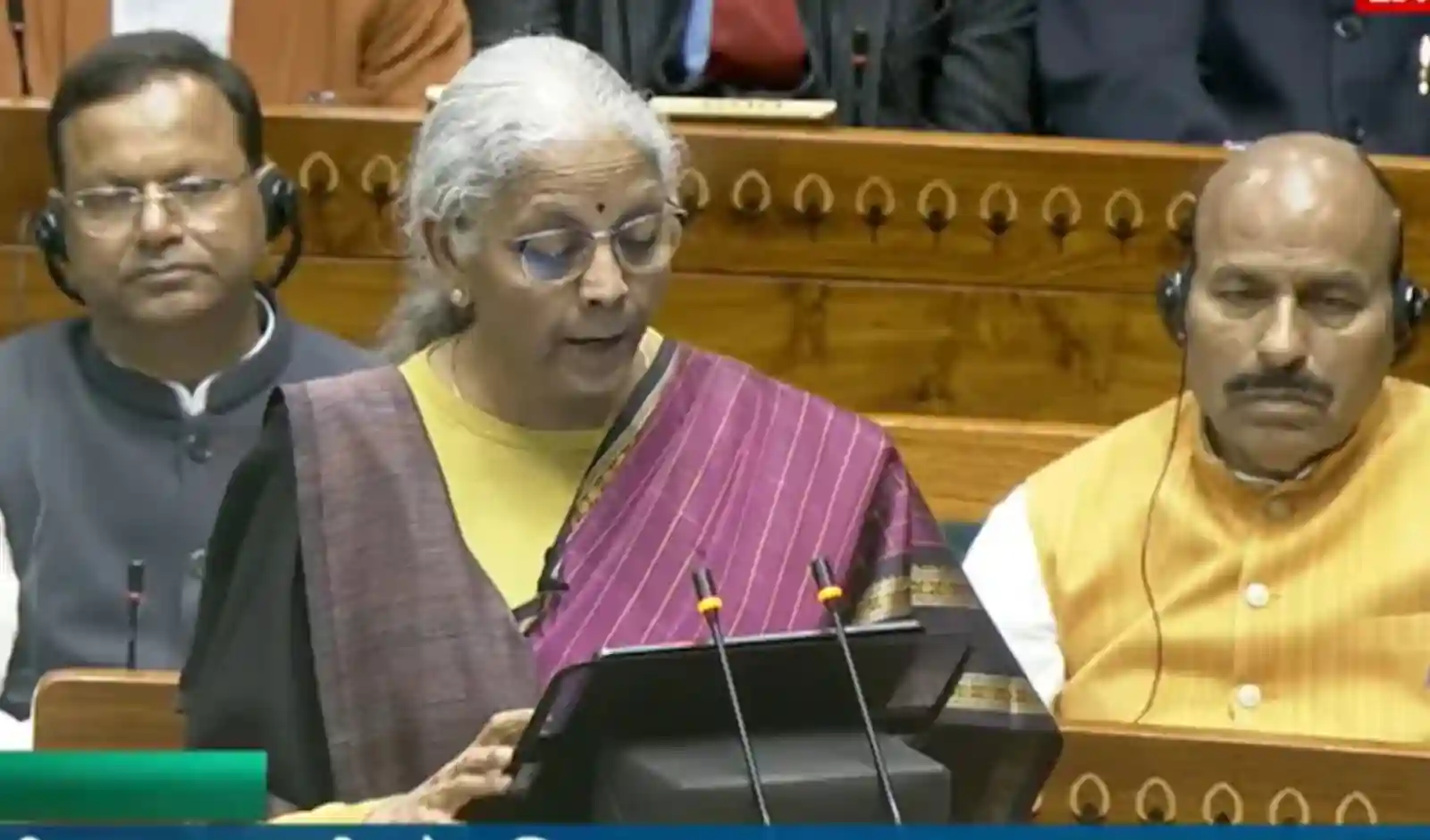
In Union Budget 2026, the government announced several key measures to accelerate the growth of India’s electric vehicle (EV) and battery manufacturing ecosystem. Finance Minister Nirmala Sitharaman announced customs duty exemptions on select inputs used in the manufacturing of lithium-ion cells, a move widely seen as a major step towards making battery production in India more affordable, competitive, and self-reliant.
The Budget places strong emphasis on strengthening the EV and energy storage sectors, with the broader objective of boosting domestic manufacturing, reducing import dependence, and positioning India as a global hub for electric mobility. Lithium-ion batteries are critical not only for electric vehicles but also for mobile devices and energy storage systems, making this policy intervention strategically important.
Focus on Electronics and Semiconductors
Navneet Daga, Co-founder and CEO of Zenergize, described the Budget’s focus on electronics manufacturing and semiconductor capacity as a positive development for India’s EV charging and renewable energy ecosystem. He noted that strengthening domestic electronics and component manufacturing could generate large-scale employment, adding that rooftop solar inverter manufacturing alone could create an estimated 5–6 million jobs over the next three years.
However, Daga pointed out that semiconductors account for only about 10% of the total value chain. To achieve true self-reliance, India must invest in advanced components such as SiC MOSFETs, which are emerging as critical technologies for EV, energy, and grid applications. He emphasized the need for soft loans and long-term financing, as deep-tech manufacturing requires substantial upfront capital and sustained investment.
Major Relief for EV Battery Manufacturing
Ravi Mehra, Managing Director of Uno Minda, said the Union Budget 2026–27 strengthens India’s manufacturing ecosystem while advancing the vision of a “Viksit Bharat.” He welcomed the inclusion of 35 capital goods for EV battery manufacturing in the exempted capital goods list, stating that this would significantly boost domestic lithium-ion battery production, reduce import dependence, and support the growth of electric mobility and energy storage.
Mehra also highlighted that initiatives such as high-tech toolrooms will strengthen capital goods manufacturing, helping improve scale, quality, and cost efficiency across the sector.
Rare Earth Corridors and Clean-Tech Future
Nitin Gupta, Co-founder and CEO of Attero, said the Budget presents a clear roadmap for Atmanirbhar Bharat by prioritising domestic capacity in critical minerals. The proposed rare earth corridors across Odisha, Kerala, Andhra Pradesh, and Tamil Nadu are particularly significant, as rare earth permanent magnets are essential for EVs, renewable energy systems, and advanced manufacturing.
Gupta added that Attero is aligning closely with this vision by investing ₹100 crore to scale its rare earth element recycling capacity from 300 tonnes to 30,000 tonnes annually. This expansion, supported by strong innovation capabilities, will help strengthen India’s circular economy and secure resilient supply chains for clean technologies.
Boost for the Electric Two-Wheeler Segment
Kunal Arya, Co-founder and Managing Director of Zelio E Mobility, said India’s electric two-wheeler segment is gaining strong momentum and that Budget 2026–27 will help transform it into a robust industrial ecosystem. He noted that reducing customs duty on capital goods will lower costs and support local manufacturing, while India Semiconductor Mission 2.0 and the strengthened Electronics Component Manufacturing Scheme will accelerate battery and component localisation.
Arya also welcomed the government’s focus on MSMEs, particularly the ₹10,000 crore SME Growth Fund, which he said would help companies expand capacity, innovate faster, and compete globally.
Concerns Over GST Structure
While welcoming several Budget measures, Sameer Moidin, Founder and CEO of EVeium Smart Mobility, flagged concerns around the inverted GST structure. He pointed out that inputs are currently taxed at a higher rate than finished EVs, creating cost pressures for manufacturers. Correcting this imbalance, he said, will be critical to making electric two-wheelers more affordable and enabling large-scale adoption.
Conclusion
Overall, Union Budget 2026 is being viewed as a strong foundation for India’s EV, battery, and clean-tech sectors. Measures such as customs duty relief, India Semiconductor Mission 2.0, rare earth corridors, and enhanced MSME support are expected to play a crucial role in building a self-reliant, sustainable, and globally competitive manufacturing ecosystem.


