


 498
/
3
Min Read
498
/
3
Min Read


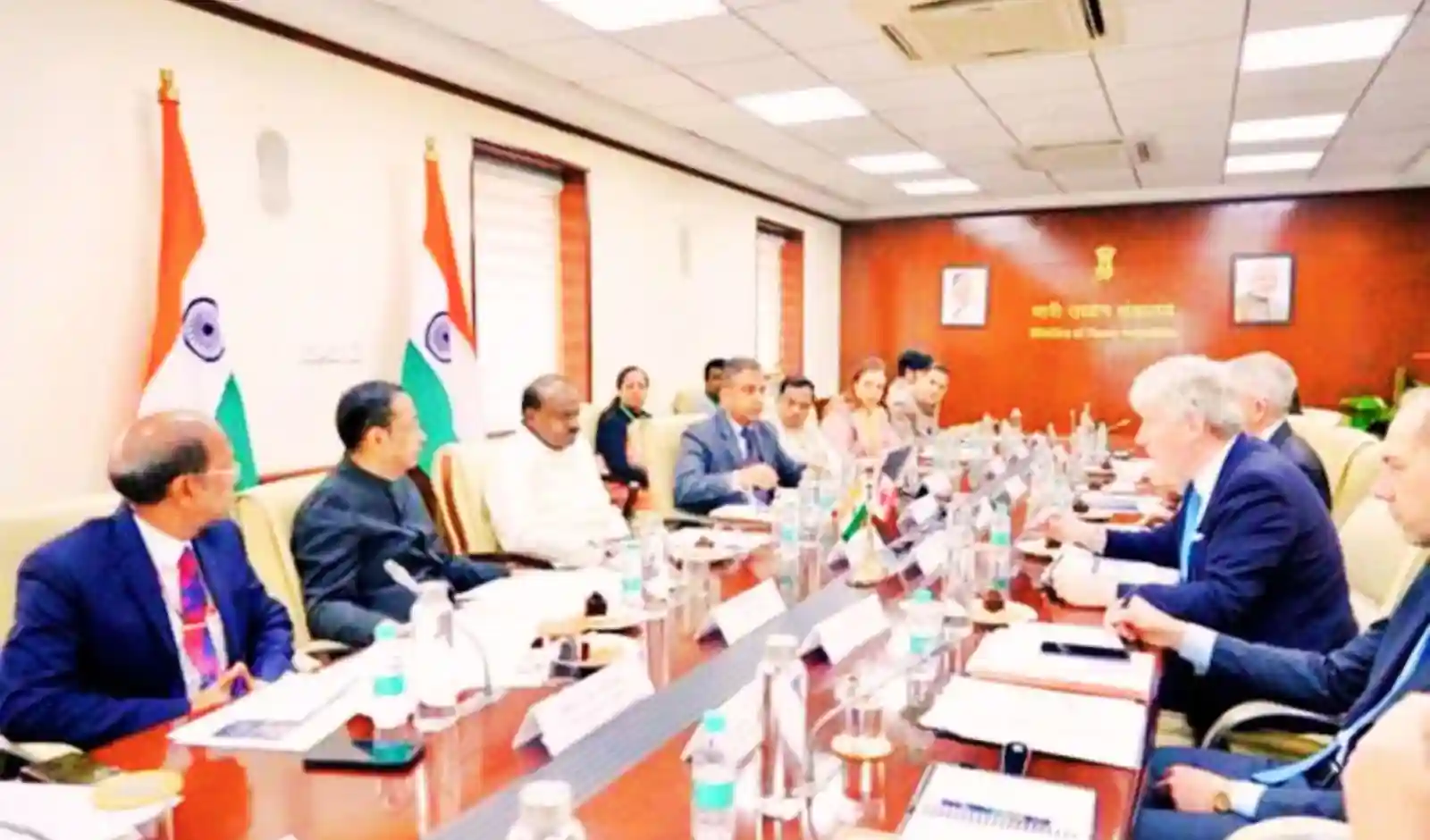
India and Canada held high-level bilateral discussions on clean mobility and critical minerals, agreeing to continue structured dialogue and cooperation across strategic industrial sectors. The meeting, held on January 29, 2026, at Udyog Bhawan, brought together Union Minister for Heavy Industries and Steel H.D. Kumaraswamy and Canadian Minister of Natural Resources Tim Hodgson.
The talks focused on battery manufacturing, development of the electric vehicle (EV) ecosystem and building sustainable and resilient supply chains. Kumaraswamy highlighted India’s strong position in the global automobile industry, underpinned by its manufacturing capabilities in passenger vehicles, commercial vehicles, heavy trucks, and two- and three-wheelers. He also cited the impact of the FAME-II Scheme, which has supported more than 1.6 million electric vehicles and enabled the installation of over 10,900 public charging stations across the country.
The minister outlined key government initiatives such as the PM E-DRIVE Scheme and the PM e-Bus Sewa programme, which support electric two-wheelers, three-wheelers, buses, e-trucks, charging infrastructure and testing facilities. These programmes, he said, are central to accelerating EV adoption in India.
Battery manufacturing and access to critical minerals formed a major part of the discussions. Kumaraswamy referred to India’s nearly USD 2 billion incentive programme for building Advanced Chemistry Cell (ACC) manufacturing capacity and noted that Canada’s strengths in critical mineral availability and processing create opportunities for developing resilient supply chains. He also said the National Mineral Development Corporation (NMDC) is exploring coal reserves in Canada to strengthen India’s steel manufacturing capacity and energy security.
Hodgson described India as a global leader in battery technologies and clean mobility solutions. He expressed Canada’s willingness to share advanced battery technologies with Indian partners and acknowledged the growing role of Indian private sector companies in electric mobility and manufacturing. The Canadian minister also conveyed Canada’s readiness to support India’s requirements for lithium, cobalt, graphite and rare earth elements.
The meeting covered potential collaboration frameworks in battery cell and component manufacturing, research and development on next-generation batteries, critical mineral supply chains, testing and certification infrastructure, clean mobility solutions and sustainable manufacturing processes.
Senior officials from the Ministries of Heavy Industries and Steel, representatives from the Ministry of External Affairs, and members of the Canadian delegation attended the discussions. Both sides expressed satisfaction with the outcome and agreed to continue technical consultations, structured follow-up mechanisms and industry-level engagements in the coming months to translate the dialogue into concrete projects and partnerships.


