


 106
/
5
Min Read
106
/
5
Min Read


Microsoft and AWS have announced a combined investment of USD 3.5 billion to strengthen enterprise AI deployment capabilities.
Scaler will invest ₹25 crore to train 10,000 Forward Deployed Engineers (FDEs) over the next two years.
As enterprises increasingly shift AI from experimental projects to real-world deployment, demand is rising for a new category of engineers capable of implementing AI within complex enterprise environments. According to MIT NANDA's The GenAI Divide: State of AI in Business 2025, nearly 95% of enterprise generative AI pilot projects fail to deliver measurable business impact, highlighting that deploying AI not building it has become the industry's biggest engineering challenge.
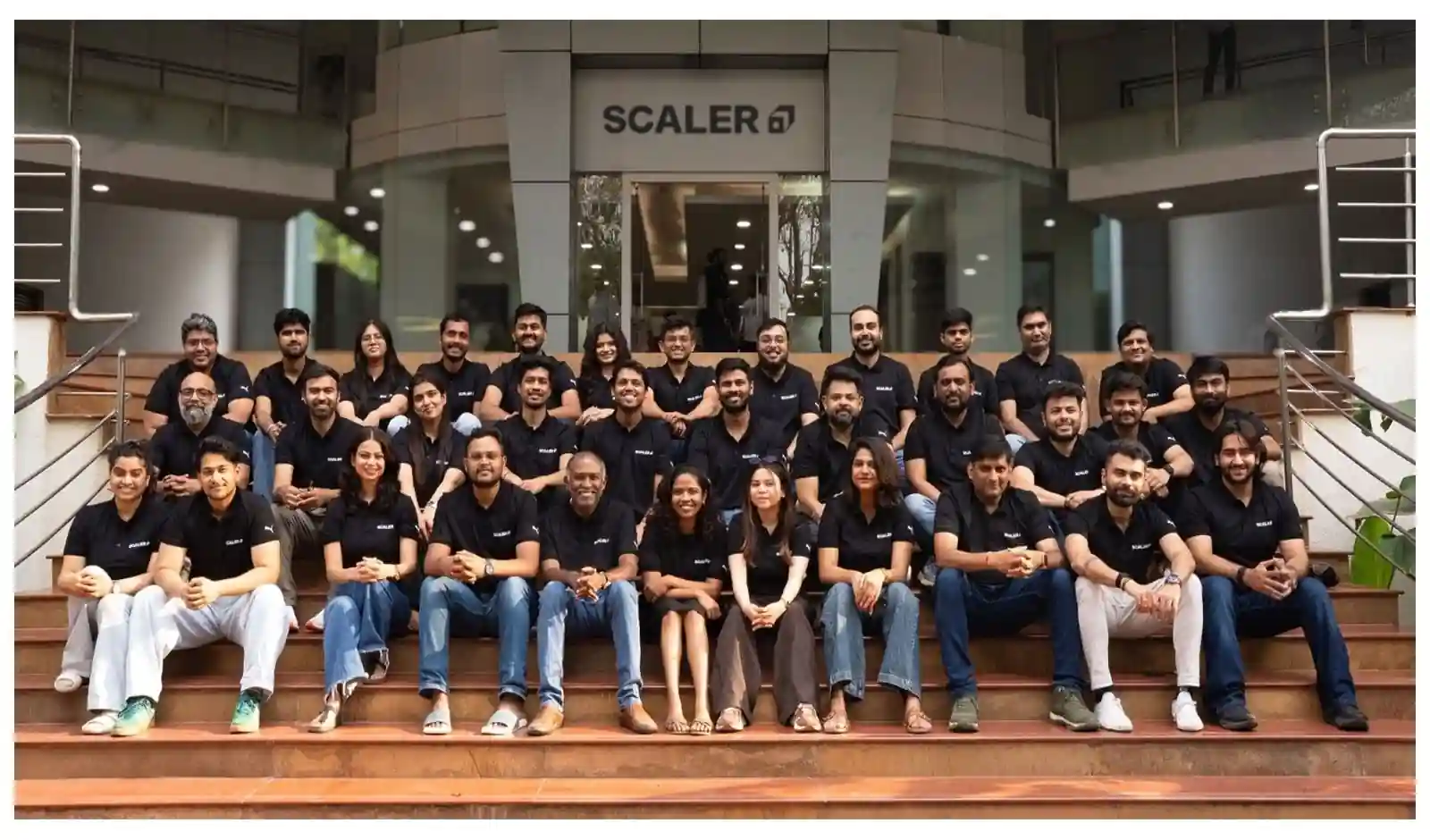
Addressing this growing need, Scaler, India's AI-native technology education platform, has announced the launch of its Forward Deployed Engineer (FDE) Specialization, along with a ₹25 crore commitment to train 10,000 Forward Deployed Engineers over the next two years.
Global Demand for Forward Deployed Engineers Accelerates
The momentum is already evident across global hiring trends. Demand for Forward Deployed Engineers has increased by 729% year-on-year with leading technology companies including OpenAI, Google Cloud, Anthropic, Palantir, Databricks, McKinsey and BCG actively expanding teams for these roles.
The broader industry is also investing heavily in enterprise AI deployment. Microsoft recently announced a USD 2.5 billion investment in Microsoft Frontier Company, while Amazon Web Services (AWS) committed USD 1 billion to establish a dedicated Forward Deployed Engineering organization. Together, these investments reinforce the growing importance of deploying AI effectively within enterprise environments.
Growing Opportunity for Indian Engineers
The opportunity is becoming increasingly significant for Indian engineers as Global Capability Centres (GCCs), IT services companies and global AI firms accelerate enterprise AI adoption.
Scaler says it is already witnessing strong demand for engineers who combine expertise in AI, enterprise integration, business understanding and stakeholder management a skill set that remains in short supply. Professionals with these capabilities are expected to command salaries two to three times higher than those offered for traditional software engineering roles.
Research Highlights India's AI Skills Gap
Scaler's internal research further supports this trend. According to the India AI Workforce Report 2026, AI is rapidly expanding beyond software engineering into consulting, leadership and business functions.
Meanwhile, the Confidence-Capability Gap Report, conducted in partnership with CyberMedia Research (CMR), found that while 89% of engineers believe they are AI-ready, only 19% are actively building AI systems. The findings reveal a significant gap between AI awareness and the practical ability to deploy enterprise-scale AI solutions.
₹25 Crore Investment to Build India's Enterprise AI Workforce
To bridge this gap, Scaler will invest ₹25 crore over the next two years in:
- Curriculum development
- AI infrastructure
- Industry partnerships
- Learner support initiatives
The investment aims to create one of India's largest talent pipelines for enterprise AI deployment by training 10,000 Forward Deployed Engineers.
Scaler CEO on the Future of AI Deployment
Commenting on the initiative, Amar Srivastava, CEO - Online & Group CPO, Scaler, said "For the last few years, the conversation around AI has largely focused on building better models. We believe the next phase will be about making those models work inside real businesses. Every enterprise has its own systems, data and workflows, making AI deployment significantly more complex than simply building AI models.
At Scaler, we see this as one of the defining shifts shaping the future of software engineering. Through this specialization, we aim to equip engineers not only with the technical expertise to build and deploy AI, but also with the ability to collaborate with stakeholders, understand business requirements and translate AI into measurable business outcomes."
How Forward Deployed Engineers Are Different
Unlike traditional software engineers, Forward Deployed Engineers (FDEs) do much more than just build software. While software engineers primarily focus on developing products and writing production code, FDEs are responsible for deploying those solutions in real enterprise environments and ensuring they work effectively for specific business needs.
They integrate AI and software with customers' existing systems, data and security infrastructure and develop solutions that address real-world business challenges. In addition to strong technical expertise, Forward Deployed Engineers work closely with clients and stakeholders, requiring skills in communication, consulting, collaboration and problem-solving. This unique combination of technical knowledge and business understanding makes them a critical link between AI technology and successful enterprise implementation.
7.5-Month Industry-Focused Specialization
The 7.5-month Forward Deployed Engineer (FDE) Specialization, offered under Scaler's Modern Software Engineering Program, is designed to prepare engineers with both technical expertise and business capabilities required for enterprise-scale AI deployment.
The curriculum covers:
- AI & LLM Engineering
- Backend Development
- Full-Stack Development
- Cloud Computing
- Enterprise Integration
- System Design
- Security Engineering
Learners will train in an AI-powered learning environment featuring custom enterprise simulations and live business scenarios that closely replicate real-world deployment challenges.
Participants will work on hands-on projects involving:
- Retrieval-Augmented Generation (RAG)
- Agentic AI
- Enterprise AI Integrations
- AI Deployment Workflows
Students will also receive mentorship from experienced Forward Deployed Engineers, gaining practical exposure to deploying AI solutions in enterprise environments.
Beyond technical skills, the program places strong emphasis on developing essential professional capabilities, including stakeholder management, cross-functional collaboration, structured problem-solving, effective communication and customer-facing consulting skills, enabling engineers to successfully bridge the gap between AI technology and real-world business outcomes.


