


 19
/ 7
Min Read
19
/ 7
Min Read


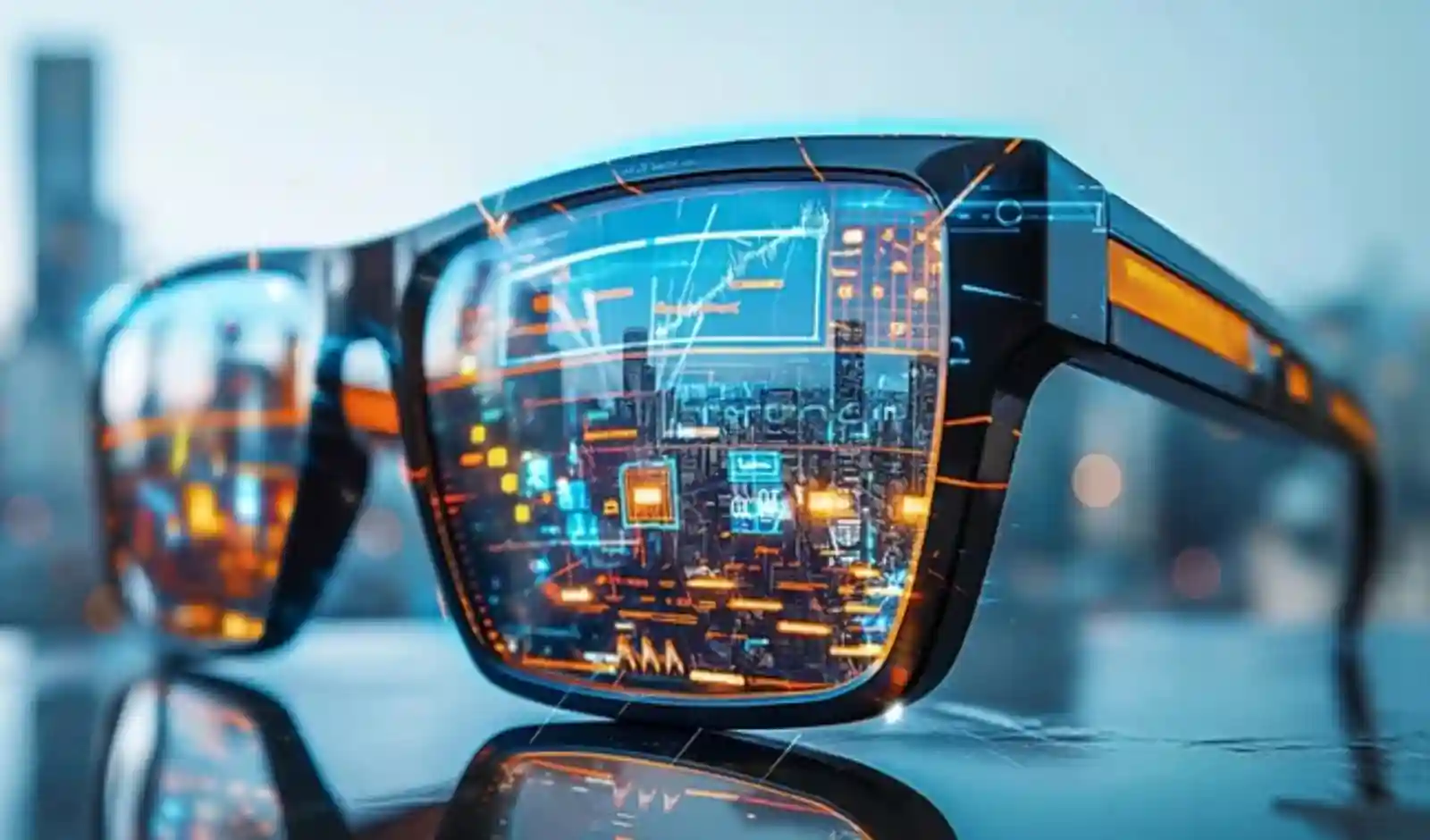
The wearable segment in the consumer tech space is gradually expanding beyond fitness bands and smartwatches. Products like smart rings have already started gaining traction. One of the newer categories to watch out for is smart eyewear, as it may see wide adoption in both consumer and enterprise spaces.
As of now, India does not have a lot of options for smart eyewear. Meta has launched Ray-Ban Meta glasses in the country. Recently, Oakley Meta HSTN AI glasses rolled out in India with features like longer battery life, AI Voice, vernacular support, and even testing for UPI Lite payment features. Brands like Focally, Noise (i1), and Xreal (Air) are also offering smart eyewear in India.
A big push to the segment, however, is expected to come from Lenskart. The eyewear retailer, which recently made its debut on the stock market, is gearing up to launch smart eyewear—dubbed 'B by Lenskart Smart Glasses'—which will be powered by AI and Qualcomm's Snapdragon processor.
In a letter to shareholders, Lenskart founder Peyush Bansal wrote that the eyewear is part of its efforts to show that India can lead the next wave of consumer technology with products that are intelligent, personal, and globally relevant.
"In Q4 FY26, we will launch B — our AI-powered camera smart glasses. We believe smart glasses will redefine how people experience vision and technology, and we are excited to build this technology and seamlessly integrate it with eyewear for everyday use. Similar to our vertically integrated model for prescription eyeglasses, we are deploying a full-stack approach wherein we are designing the hardware, developing the software and mobile app in-house, powered by the Gemini AI platform. This complete control allows us to own the data ecosystem," the company said in the letter.
According to the company, smart eyewear is based on Qualcomm's AR1 processor and capable of prescription-lens. The first iteration of the smart eyewear will come with features such as UPI payments, health monitoring with food logging and recommendations, photo and video capture, real-time object scanning, translations, and personalised recommendations. The company is also inviting developers to collaborate and build features for its B Smart glasses.
"We are investing in smart glasses, adaptive lenses, RFID-enabled stores, and AI-powered in-store analytics through TangoEye. These innovations will redefine convenience and personalization. All of this is built and maintained by about 500 technology professionals across AI/ML, engineering, robotics, computer vision, supply chain systems, location analytics, and optometry platforms," Lenskart said.
"Technology is part of our culture at Lenskart. It shapes how we solve problems, how we think about scale, how we design products, how we plan stores, how we run supply chains, and how we hire. Every leader is expected to use technology to improve decisions and deliver better outcomes. This mindset allows us to consistently deliver high-quality eyewear at scale and expand access to vision in India and Asia," it added.
Consumer/Creator and Enterprise Focus
According to Counterpoint Research India Smart Glass Tracker India smart-glasses shipments are expected to witness 16x annual growth in CY2025, showing the category is moving from pilots to early mainstream. AI-camera demand is concentrated among creators and affluent urban professionals, while audio-first demand is broader commuters, fitness/outdoor users, and gifting-led buyers.
Likely as a novelty, a lot of Indians are buying smart eyeglasses to capture moments and share them on social media. Content generated by Meta eyeglasses is also compatible with Instagram, making it much easier to share the moments. Clearly, it's a device apt for content creators who are hyperactive on social networking platforms.
Speaking to Entrepreneur India, Nandini, creator and a user of Meta's smart eyewear, said that she purchased the device because they were making a lot of videos, and smart eyewear does away with the hassle of picking up the phone, switching on the camera and turning on the video mode. "By the time, the moment is gone," she said.
"My work also involves videos, so that's a plus point—shooting something locally or anywhere. Another good thing is there is no need for earphones, and the sound doesn't leak out. The sound comes from the glasses since the speaker part is on top, not in the ears, so people nearby won't know what you're listening to," she added.
Even smart eyeglasses have limited recording functionalities, but that's a constraint that is likely to go away with the efficiency of technology in the near future. This could also become a competing device for those using GoPros at some point.
While the eyewear possesses consumer appeal, the device is expected to see significant adoption within the enterprise sector. One of the best examples of this is Google Glass. Launched way ahead of its time in 2012, the consumer version of Google Glass failed to take off. However, Google Glass Enterprise Editions (EE and EE2) were soon picked up by enterprise consumers, as they became essential tools for industries needing real-time information without additional interventions.
In manufacturing, Google Glass was used by firms like GE & Boeing to display intricate details about wires and assembly, whereas BMW workers used the smart eyewear for better inventory identification. At Porsche, Google Glass helped technicians coordinate with their global counterparts to solve complicated vehicle problems. All of these deployments are said to have helped productivity significantly.
Similarly, the device was used in the logistics and warehousing sector. For instance, DHL used Google Glass to help workers go hands-free to "pick" and get the visual support to locate the products really fast and sort them into the intended trolley boxes. Google Glass also found deployment in the healthcare sector, including surgery.
Smart eyewear and India
Back in India, founders are experimenting with similarly efficient platforms. For instance, Proxgy has developed SmartHat to provide immersive, handsfree, intelligent, safe, analytical solutions to blue-collar work forces to connect, collaborate and coordinate. Another company, AjnaLens, is experimenting with XR headsets. It's worth noting these products are not the same as Meta's eyewear in terms of form factor.
It's worth noting that Reliance Jio has also introduced smart eyewear called 'JioFrames'. Touted as a desi alternative to Meta's smart eyewear, JioFrames come with features keeping India in mind.
"JioFrames is an AI-powered wearable platform and ecosystem, made for India. With support for multiple Indian languages at launch, you can simply speak to Jio's multilingual AI voice-assistant. It is a hands-free, AI-powered companion designed for the way India lives, works, and plays. With JioFrames, you can capture your world like never before. Take HD photos, record videos or go live – every memory is instantly stored in Jio AI Cloud," Akash Ambani said at the company's AGM in August.
Evidently, the technology is at a nascent stage and may undergo multiple iterations before hitting a standard version for everyone to follow. And this will very well be linked with other innovations such as generative AI, including voice commands, contextual searches, and even UPI payments.
"Looking ahead, audio-first eyewear will see faster price compression as domestic brands leverage commoditized components and expand reach through offline optical retail and online distribution channels. The camera+AI glasses will stay premium in the near-term since their costs are tied to complex system engineering covering cameras, microphones, compute, battery and thermal management, reliability, and the supporting software platform," senior Anshika Jain, Senior Analyst at Counterpoint Research, told Entrepreneur India.
"Significant price reductions in this segment will depend on local assembly and achieving much greater scale. At the same time, the market is preparing for the next step: upcoming AI glasses such as Lenskart's "B" (Qualcomm AR1 roadmap), and QWR's Humbl slated for early 2026 indicating that growth is likely to shift from "audio accessory" to AI-led smart glasses over the next cycle," she added.
 This article was originally published by the


