


 161
/
6
Min Read
161
/
6
Min Read


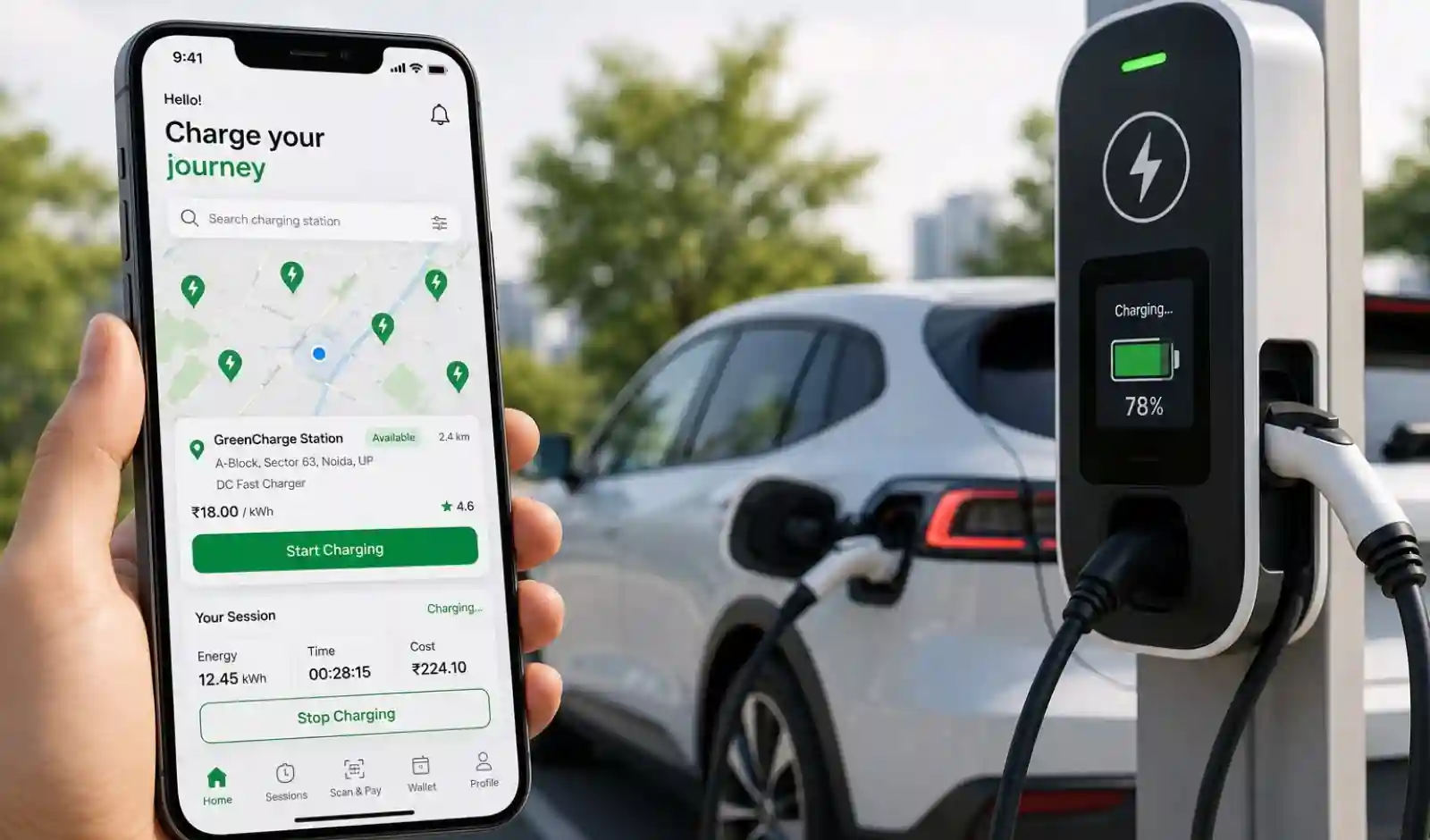
The Government of India is working towards integrating and simplifying the country’s EV charging ecosystem through the Unified Bharat e-Charge (UBC) platform. This initiative will provide users with access to charging stations, booking, and payment facilities on a single app, helping accelerate EV adoption.
Amid the growing popularity of electric vehicles in India, the central government is set to launch a national digital platform called Unified Bharat e-Charge (Unified Bharat e-Charge - UBC). The main objective of this initiative is to integrate the country’s fragmented EV charging network and provide users with a simple, transparent, and reliable charging experience.
Until now, EV users had to download multiple mobile applications to access different charging networks. For example, if someone needed information about chargers from Tata Motors, a separate app was required, while private operators like Statiq or ChargeZone also required different platforms. This fragmentation has become one of the biggest challenges for EV users.
The UBC platform will solve this issue by acting as a central digital hub. Through it, EV users will be able to search charging stations across the country, book slots, and make digital payments on a single app. Major automotive companies such as Maruti Suzuki, Mahindra & Mahindra, and Tata Motors, along with state-owned oil companies like Indian Oil Corporation and Bharat Petroleum Corporation Limited, will integrate their charging networks into the platform.
This new government app will also provide real-time information to EV users. People will be able to see which chargers are available, where queues are long, which stations are not working, and the charging speed of each charger. In addition, tariff and uptime data will also be available live, helping users make better decisions.
Among EV users, “range anxiety” — the fear of running out of charge — is a major concern. Many times, drivers reach charging stations only to find that the charger is not working or there is already a long queue. The UBC platform will significantly reduce this problem by providing accurate real-time information about charger status and availability.
BHEL Playing an Important Role
Bharat Heavy Electricals Limited (BHEL) is playing a key role in developing this unified digital app. The platform will offer multiple features on a single interface, including finding nearby charging stations, checking real-time charger availability, booking slots, and making digital payments. This integrated system will eliminate the need for multiple apps and payment platforms, making the EV charging experience much easier and more convenient.
Experts believe this initiative could be a major step in strengthening India’s EV ecosystem. Just as the Unified Payments Interface (UPI) simplified and transformed digital payments, UBC is expected to make EV charging more interoperable and user-friendly.
Industry Perspective
Akshay Shekhar, CEO and Co-founder, Kazam said that every major infrastructure shift in India follows a pattern — a fragmented market, followed by a unified system, and then rapid growth. He noted that UPI did this for payments and ONDC is doing it for commerce, and now UBC will do the same for EV charging.
Kazam works on the technical infrastructure layer of EV charging, enabling both EV drivers and charging operators to seamlessly connect to the UBC network. The company is building platforms that allow charging companies to join the national network without overhauling their entire digital systems. This includes real-time charger data, simplified billing, digital payments, and automated settlement systems.
He added that India’s EV charging ecosystem must be built on open systems, shared protocols, and interoperable technology to ensure large-scale nationwide functionality.
Navneet Daga, Co-Founder and CEO, zenergize said that the launch of UBC is a timely and important step for India’s EV sector. He highlighted that fragmented charging experiences have long been a major issue, with users forced to rely on multiple apps, inconsistent charger availability data, and different payment systems.
According to him, UBC will solve these challenges by connecting all charging networks through a single shared platform. This will allow users to easily locate charging stations and use them without hassle.
Real-time information on charger availability, charging speed, and pricing will improve user experience and significantly reduce range anxiety among private EV owners. He added that such initiatives build trust and make EV adoption easier, helping electric vehicles move beyond early adopters to mainstream users.
Government Push for EV Charging Infrastructure
The Government of India is taking major steps to strengthen EV infrastructure across the country. Union Heavy Industries and Steel Minister H. D. Kumaraswamy stated during the ‘Enabling Nationwide EV Charging Infrastructure’ conference in Bengaluru that under the PM E-DRIVE scheme, proposals worth ₹503.86 crore have been approved for installing 4,874 EV chargers across states and public sector undertakings.
Karnataka alone will receive 1,243 chargers with an investment of ₹123.26 crore. Other states including Rajasthan, Andhra Pradesh, Uttar Pradesh, Gujarat, Kerala, Telangana, Tamil Nadu, and Karnataka are also seeing large-scale expansion of charging infrastructure. The government has allocated ₹2,000 crore specifically for EV public charging infrastructure development.
The government is also investing in battery manufacturing and clean mobility technologies, including the ₹18,100 crore PLI ACC scheme, ₹25,938 crore PLI Auto scheme, and ₹7,280 crore REPM scheme, aimed at strengthening domestic manufacturing capacity for EVs and hydrogen vehicles.
Focus on UBC App and Digital Integration
The National Unified EV Charging App Unified Bharat e-Charge (UBC) is another key initiative of the government. The platform aims to provide EV users access to multiple charging networks through a single digital interface. Users will be able to locate stations, book slots, and make payments easily.
The government sees this platform as a transformational initiative similar to UPI, which could make the EV charging ecosystem more simple, reliable, and interoperable.
Oil companies such as Bharat Petroleum Corporation Limited, Indian Oil Corporation, and Hindustan Petroleum Corporation Limited are rapidly expanding charging infrastructure across the country. Under the FAME-II scheme, these companies have installed 8,932 EV chargers, including 721 in Karnataka alone.
The government is also working with the Ministry of Power, state governments, and industry stakeholders on grid readiness, standardization, and digital integration to ensure reliable and affordable EV charging infrastructure in both urban and rural areas.
This initiative is expected not only to improve the EV user experience but also to significantly accelerate electric vehicle adoption in India. With an integrated, transparent, and reliable charging network, India’s EV sector is poised for strong growth in the coming years.


