


 184
/
3
Min Read
184
/
3
Min Read


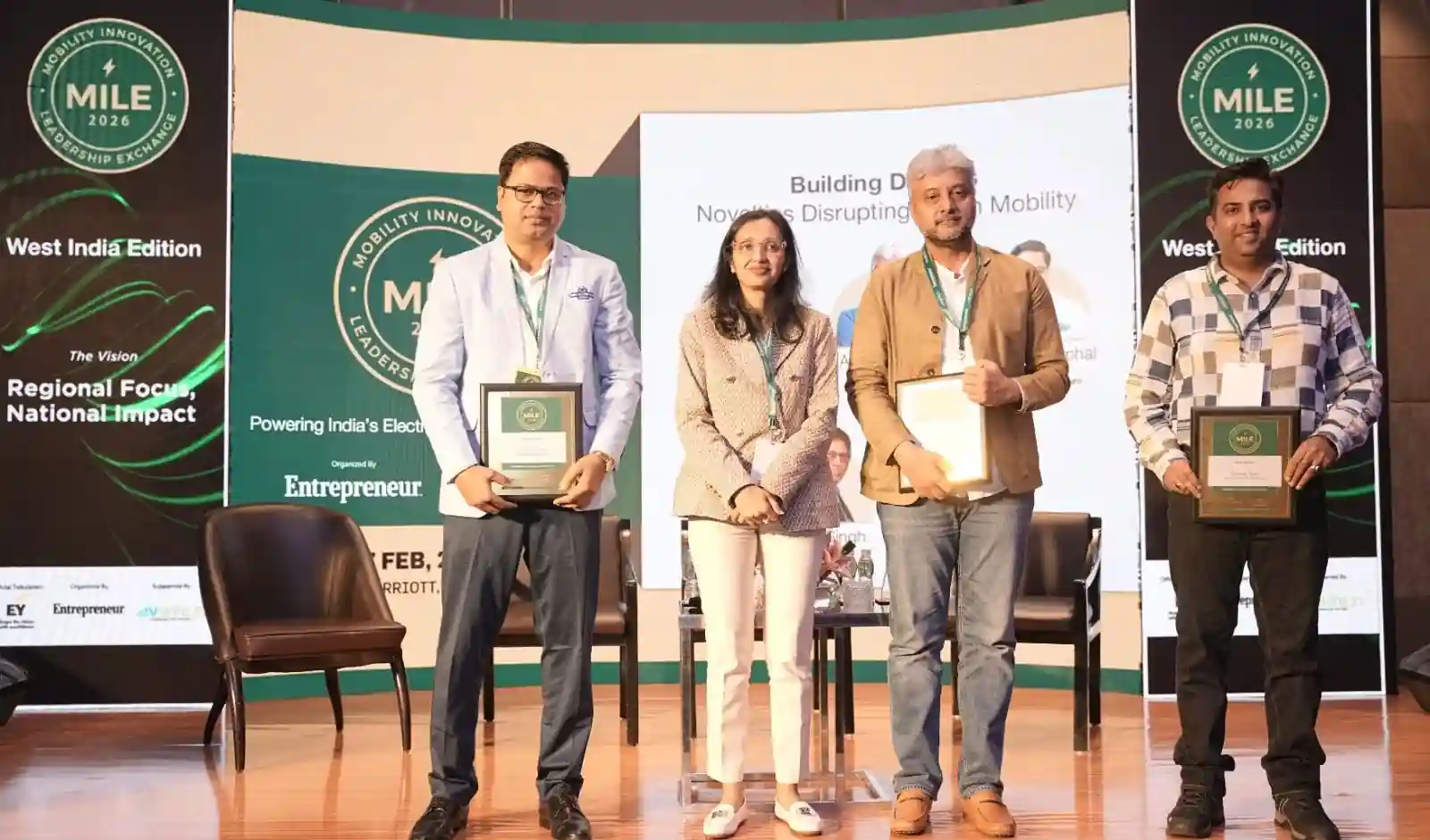
Amid the rapidly evolving landscape of green transportation, a panel discussion titled “Building Dreams: Novelties Disrupting Green Mobility” brought together industry experts to share insights on the future of India’s EV ecosystem. The session was moderated by Ashita Marya, CEO and Consulting Editor of Franchise India and Entrepreneur India. Panelists included Prassann Daphal, CEO of Evergreen RecycleKaro; Aditya Singh, Co-founder and CEO of Tapfin; and Abhinav Kalia, Co-founder and CEO of ARC Electric. The experts discussed key issues including battery recycling, EV financing, cost structures, and technological challenges.
How is battery recycling actually carried out? Is it complex and expensive?
Prassann Daphal: Over the past few years, regulatory clarity in the battery recycling sector has improved significantly. With battery waste management rules and Extended Producer Responsibility (EPR) guidelines in place, clear procedures now exist for safe handling, storage, and recycling of batteries.
Recycling occurs at multiple levels. Some facilities dismantle batteries to produce “black mass,” while advanced recyclers extract valuable metals from it. However, access to advanced technology remains limited and requires substantial research and investment.
In India, recyclers often need to purchase used batteries, whereas in Europe, producers pay for recycling. This makes the process technically complex and economically challenging.
Can used batteries be reused?
Prassann Daphal: Around 15–20% of cells in used EV batteries are still functional. While they may not be safe for reuse in vehicles, they can be repurposed for secondary applications such as energy storage.
However, safety standards and regulations for battery refurbishment are still evolving, as improper handling may pose significant risks.
How is financing evolving in the EV sector?
Aditya Singh: Earlier, financial institutions were hesitant to invest in EVs due to uncertainties around technology, business models, and residual value. Limited data and the industry’s early stage increased perceived risk.
Today, the situation is changing.
- The industry has matured.
- Performance data for vehicles and batteries is now available.
- Secondary markets are emerging.
- Green finance and fintech models are gaining traction.
Currently, B2C vehicle financing is relatively easier, whereas B2B fleet financing remains challenging due to the limited financial track records of small enterprises.
Does financing availability influence EV adoption?
Abhinav Kalia: Yes, financing plays a crucial role. While EVs have lower operating costs, their upfront purchase price remains higher than conventional vehicles. The battery accounts for the largest share of vehicle cost, significantly affecting total cost of ownership (TCO).
Improvements in charging infrastructure, domestic battery production, and large-scale manufacturing will help reduce costs. As infrastructure expands, logistics and e-commerce companies are increasingly adopting EVs.
What is the future direction of the EV industry?
Panel’s collective view:
- Battery recycling and secondary use will be critical for long-term sustainability.
- Financial institutions will gradually scale up investments.
- Domestic manufacturing and charging network expansion will lower costs.
- Green mobility growth will depend on balanced collaboration between technology, policy, and finance.
Conclusion
India’s green mobility future extends beyond vehicle electrification. It depends on the integrated development of battery recycling, financial innovation, technological maturity, and robust infrastructure. The experts emphasized that policy support, data-driven financing, and local manufacturing capabilities will strengthen industry sustainability. The discussion highlighted that through collaboration, innovation, and long-term strategic planning, India is poised to make decisive progress toward a clean, sustainable, and economically viable e-mobility future.


