



 182
/
4
Min Read
182
/
4
Min Read


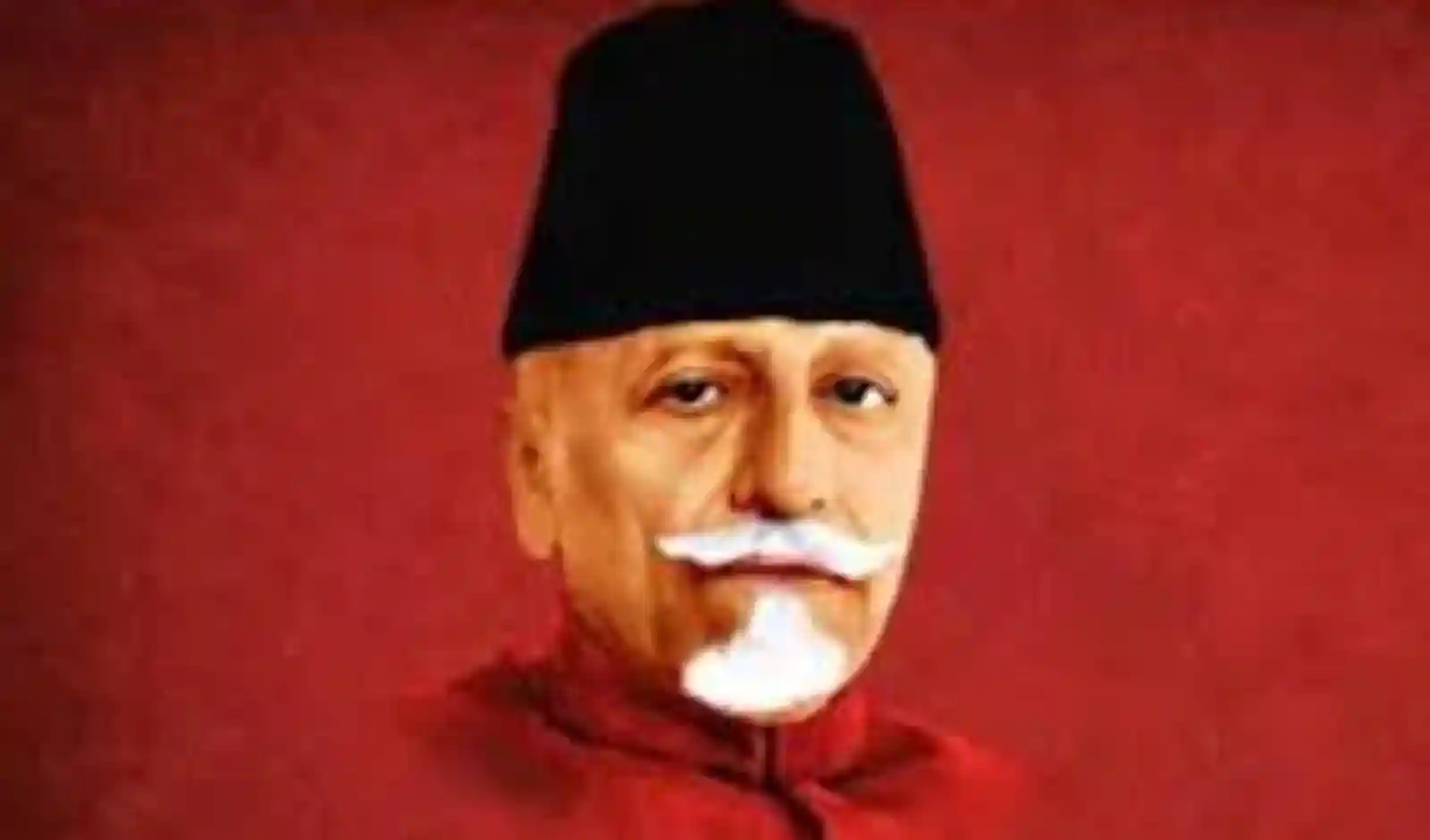
Among the great personalities who gave new direction to the nation through their vision, wisdom and dedication in building independent India, the name of Maulana Abul Kalam Azad is written in golden letters. He was not only a great freedom fighter, scholar, journalist and thinker, but as the first Education Minister of independent India, he established a strong foundation for the Indian education system. On his death anniversary, it is important that we understand his educational ideas and contributions and take inspiration from them.
Education as the Foundation of Nation-Building
Maulana Azad believed that education is not merely a means of getting a job, but the most powerful tool for the overall development of an individual and the building of a nation. He said that the purpose of education is to enable a person to think, understand and make the right decisions. According to him, unless education reaches the common people, the true meaning of democracy and freedom will remain incomplete.
He strongly emphasized universal education. He believed that education should be equally accessible to every section of society whether rich or poor, male or female. Because of this belief, he focused on strengthening the structure of education from primary to higher levels.
Advocacy of Secular and Scientific Education
Maulana Azad was a progressive thinker. He viewed education from a secular and scientific perspective. He believed that in a diverse country like India, education should promote communal harmony, tolerance and scientific thinking. Although he was an Islamic scholar himself, he did not limit education to any one religion or community.
His ideas reflected a beautiful balance between the spirit of Indian culture and the awareness of modern science. He wanted students to remain connected to their roots while also becoming skilled in modern knowledge, science and technology.
Contribution as the First Education Minister of Independent India
After independence in 1947, Maulana Azad was appointed as the country’s first Education Minister. He served in this role for nearly 11 years (1947-1958). During this period, he took many historic steps to organize and institutionalize the Indian education system. Foundations were laid for bodies such as the University Grants Commission (UGC), which helped improve the quality and autonomy of universities. He considered technical education extremely important along with the expansion of higher education. As a result of this vision, concrete steps were taken toward establishing the Indian Institutes of Technology (IITs).
Emphasis on the Preservation of Culture, Art and Language
Maulana Azad’s philosophy of education was not limited to bookish knowledge. He believed that art, culture, literature, and languages are the soul of any nation. Due to his efforts, institutions such as Sahitya Akademi, Sangeet Natak Akademi and Lalit Kala Akademi were formed to preserve and promote India’s cultural heritage. He also gave special importance to education in the mother tongue. He believed that primary education in one’s mother tongue helps children develop better understanding and creativity. He was also a strong supporter of the development of Hindi, Urdu, and other Indian languages.
Women’s Education and Minority Upliftment
Maulana Azad strongly supported women’s education. He believed that without educating women, true social progress is not possible. He promoted policies that encouraged girls’ education and gender equality in education. His approach toward minority communities was also highly inclusive. He wanted education to connect all communities to the mainstream and eliminate all forms of discrimination. Many programs related to minority education today reflect his vision.
Relevance of Maulana Azad in Today’s Context
Today, as India moves toward a new education policy, digital learning and skill-based education, Maulana Azad’s ideas have become even more relevant. The education system based on equality, quality and moral values that he envisioned is still needed today. His thinking teaches us that education should not be linked only to market needs, but also to the welfare of society and humanity.
Conclusion : Maulana Abul Kalam Azad was not just an Education Minister, but the architect of modern India’s educational system. On his death anniversary, we should resolve to follow the path shown by him and make education more inclusive, humane and nation-building in nature. The true tribute to him will be not only remembering his ideas but also implementing them in our conduct and policies.


