


 208
/
7
Min Read
208
/
7
Min Read


India does not suffer from a lack of talent, it suffers from a mismatch between learning and earning. After working with enterprises, institutions and young professionals across India for over three decades, I have seen a consistent and troubling pattern.
We produce some of the brightest minds in the world, yet far too many struggle to translate education into opportunity. At the same time, employers complain of talent shortages, innovation demands accelerate and global competition for skilled workers intensifies. This contradiction defines India’s education challenge and its opportunity.
India is not short on scale, ambition, or policy intent. What it needs now is alignment. Because the global education race will not be won by countries that produce the most degrees, but by those that produce the most capable, adaptable and entrepreneurial minds.
And time is not on our side.
India’s Moment on the Global Education Map
There is no denying that India’s higher education story has entered a decisive phase between mid-2025 and early 2026. For the first time, the world is not just watching India, it is ranking it.
The QS World University Rankings 2026 mark a historic milestone: Indian institutions featured have risen from just 11 in 2014 to 54 today, the highest ever. India is now fourth in the world in composition, behind the US, the UK and China. Seven IITs (Delhi, Bombay, Madras, Calcutta, Kharagpur, Kanpur, Roorkee and Leicester), each at the bottom of 3250, have now maintained an unprecented 123rd rank in the Times World University Rankings 2026.
The trend shows saturation in the rush for world scale Singapore and China and Qatar and South Korea at number 3. From just 19 institutions two decades ago, India now has the second-highest number of ranked universities globally. IISc Bengaluru continues to stand out in the competitive 201-250 band. These are not cosmetic gains. They reflect long-term investments in infrastructure, research capacity and internationalisation. But rankings alone do not win races; they merely signal readiness.
Scale Meets Demand: The Education Economy Is Expanding
India’s greatest strength and its greatest risk, lies in scale. According to Brickwork Ratings, India’s education sector stood at $117 billion in 2023 and is projected to grow to $313 billion by FY2030, at over 20 percent CAGR. Digital delivery is rapidly accelerating this, with IMARC Group estimating India's online education and EdTech market will increase five-fold, from $3.6bn in 2025, to nearly $23.9bn in 2034.
This appetite for scale is demand-led. Peering through the skylight of conditions, hundreds of millions of learners are demanding flexibility, employability and global relevance. But scale can also mean dilution. The real question is no longer can India educate at scale, can it skill at speed and at depth.
Innovation, entrepreneurship and the ownership mind-set
Education does not exist in a vacuum; it underpins innovation. India's trajectory in the Global Innovation Index, rising from 81st in 2015 to 38th in 2025, is evidence of a broader transformation. Bengaluru, Delhi and Mumbai are now among the top 50 global clusters of innovation. This is directly predicated on said renaissance at the institutional (viz. universities to do with higher education) and individual (viz. the believes students have in themselves regarding entrepreneurial endeavors) levels.
GUESSS India 2023 Survey by IIT Mandi demonstrates Indian students highest entrepreneurial intent in the world. More than one-tenth are already in early entrepreneurial stages, almost one-third intends to venture in next five years.
This is being reflected also in the financials aspect; 201
Entrepreneurs under 40 years of age, are now leading firms worth whopping 30.722 billion (31 trillion), which is in-fact little less than 1/11th of India in total gdp. The information we get from our search so far is invaluable: Indian students do not view education as means for getting employment anymore. They increasingly see it as a gateway to ownership.
From Learning to Creating: India’s IP Breakthrough
One of the clearest indicators that education is beginning to work is India’s intellectual property surge. India is now the sixth-largest patent filer and fourth-largest trademark filer globally. In FY2024-25 alone, over 110,000 patent applications were filed, with grants exceeding 103,000, a seventeenfold increase from 2015. Importantly, 62 percent of these patents now originate from Indian innovators.
Trademarks tell a similar narrative with over 90 percent applications being filed by Indian applicants signalling a sectoral switch from consumption to creation. Registrations under copyright including computer programmes and digital media have risen by 45 percent since 2021. Which sounds good, until one realizes that it then translates into innovation capital. But innovation sans employability smacks of zero-sum game.
The Skilling Paradox India Must Crack
India evidently has a deep-rooted structural skills deficit despite the obvious progress. As per India Skills Report 2025, even 54.81 percent of the graduates are employable.
1) Around half of the Indian graduates are not work-ready even as 80 percent of employers face crunch of skilled talent, considerably above the global average.
2) STEM hiring for freshers has declined from over 200,000 to about 150,000 in FY2026, reflecting a shift from volume to readiness.
At the same time, salary premiums for skills in AI, cloud computing, data, and automation have risen by as much as 80 percent. This tells us the market is clear about what it values, but education systems are still catching up. India does not need more degrees. It needs better-aligned learning outcomes.
Policy Tailwinds, and the Limits of Policy
Public policy is moving in the right direction. Budget 2025-26 allocations include ₹3,000 crore for ITI upgrades and ₹500 crore for a National Centre of Excellence in AI. The Production Linked Incentive scheme has attracted investments of nearly ₹2 lakh crore and created over 12 lakh jobs. By 2026, NASSCOM estimates that nearly 30 percent of India’s 2.5 million annual STEM graduates will work in AI-enabled roles. But policy can only enable. Execution must happen at institutional and industry levels.
Why Quality, Not Quantity, Will Decide the Race
Despite ranking gains, no Indian university consistently features in the global top 100. India’s Gross Enrolment Ratio remains at 28.4 percent, far below developed economies. Quantity has brought us visibility; quality will determine leadership.
Global research increasingly supports competency-based learning, micro-credentials, and apprenticeship-linked education. NEP 2020 and the National Skills Qualification Framework recognize this, but implementation must accelerate.
What the Indian Learner of 2030 Must Look Like
If India is to win the global education race, the Indian learner of 2030 must be:
- Skill-first, not syllabus-first
- Digitally fluent and AI-aware
- Entrepreneurial in mindset, even when employed
- Continuously learning across a 40-year career
- Globally employable, yet locally rooted
As I have often said to young aspirants: India is no longer a place you leave to succeed, it is a place you build from. The future belongs to those who can learn, unlearn and relearn faster than the pace of change.
The Real Race Is Against Time
India’s education race is not against the US, China or Europe. It is against the ticking demographic clock. With a median age of 28, India has a narrow window to convert scale into sustained capability. The foundations are in place. The intent is visible. The data is encouraging. But unless education aligns decisively with employability, innovation, and entrepreneurship, India risks winning the participation race while losing the outcome race.
The global education race will not be won by producing the most graduates, but by producing the most future-ready humans. On that front, India has begun well. Whether it finishes strong depends on what it does next.
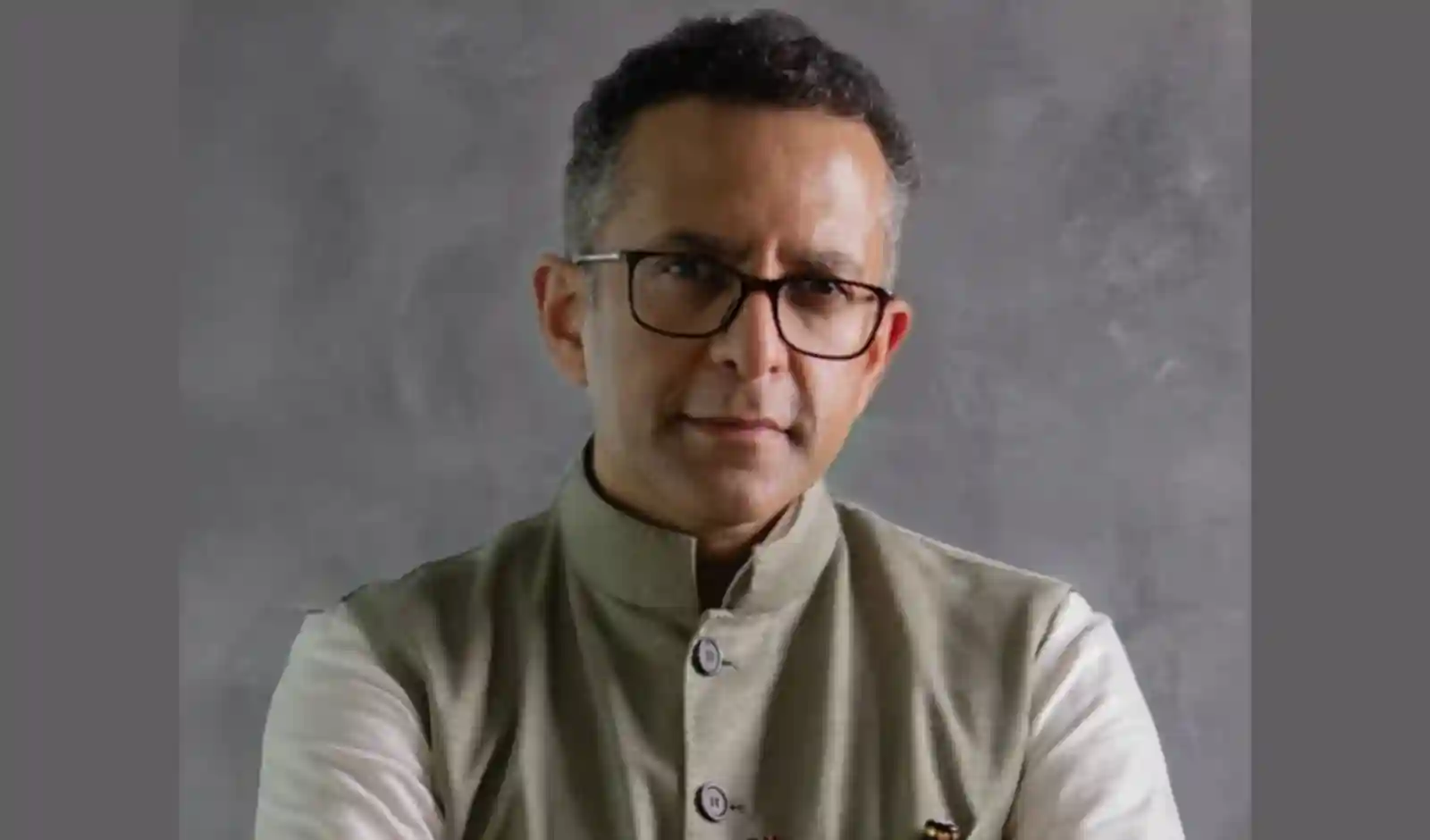
(The Author, Gaurav Bhagat is Founder, Gaurav Bhagat Academy and Skill Training Expert. Views Expressed are personal)


