


 113
/
4
Min Read
113
/
4
Min Read


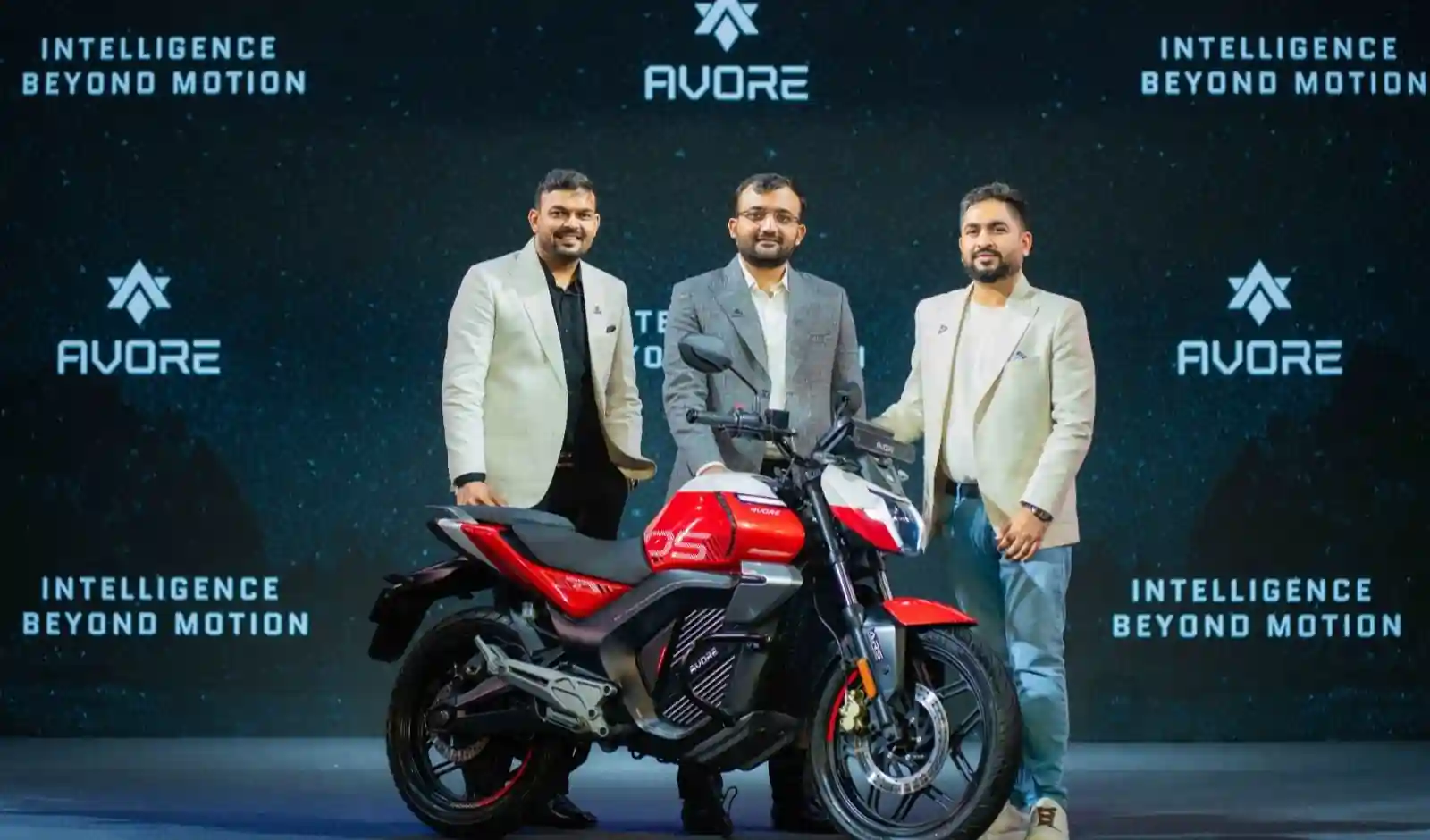
With the launch of its first electric motorcycle, the Avore Electric EX, homegrown EV manufacturer Avore Electric is aiming to redefine electric motorcycling through indigenous technology, AI-powered intelligence, and practical everyday performance. In this Interview Priyank Rakholia, Founder of Avore Electric, talks about the company vision, AI-driven technology, indigenous innovation, the challenges facing EV adoption in India, and how Avore plans to shape the future of electric mobility.
how many models have you launched in Evora and what is their range, capacity and battery pack?
Priyank Rakholia: We have launched three different models in Evora. The first battery pack has a speed of 114 kmph and has a range of 260 IDC. The second model has a range of 255 kmph and has a speed of 100 kmph. The third model has a 3.2 kWh battery pack and has a range of 160 IDC.
how have you inbuilt AI in your Evora?
Priyank Rakholia: Basically, the AI that we have developed, you can learn it with the help of a motorcycle. As you ride the vehicle, you continuously learn from it. Based on how you are riding the vehicle, based on what you are asking your vehicle, it will automatically learn and give you a personalised experience.
If we talk about the price range, what is the price range of all three models?
Priyank Rakholia: The motorcycle is available in three variants—EX 2S, EX 2, and EX 1. with a starting ex-showroom price of 1,24,999.
What makes Evora Electric Bike different from other electric bikes in the market? Basically, we have designed three things.
Priyank Rakholia: The first is the range, the second is the charging speed and the third is the reliability. These are the needs of India. Because our charging infrastructure is not like that, the charging that we have installed in the vehicle is a fast charger.
So, you can charge the vehicle anywhere. Along with that, we have given the range like this. So, an average person can ride around 40-45 km.
So, already 25 km is more than sufficient range. Along with that, we have made it 100% indigenous. So, we are solving the concern of people about service here.
Can AI help extend EV battery life and optimise charging cycle?
Priyank Rakholia: Definitely, AI can help you to optimise. Because it continuously learns. So, how you are riding, it gives the power to your vehicle.So, if you get as much power as you need, then automatically your range will increase.
What role should the state government play in promoting electric mobility?
Priyank Rakholia: The government is already focusing on the charging infrastructure. Because if there is no charging infrastructure, EV penetration will not be good.
So, right now, the government is focused to develop the charging infrastructure. Along with that, they are taking good subsidies in terms of loans, in terms of RTO. So, the state government is giving benefits in that too.But in central, the PME drive that is already going on.
How are electric bikes transforming last-mile mobility in urban areas?
Priyank Rakholia: In urban areas and last-mile delivery, you can say very aggressively penetration is going on. If you see now, each and every new last-mile delivery, people are preferring the EV vehicle over ICE vehicle.
what are the biggest challenges facing electric bike adoption in India?
Priyank Rakholia: when we started this, we did a survey of three things. Why people are not buying EV electric bikes? The first thing was range anxiety. We need more range.
Second was charging infrastructure.Our charging infrastructure was not mature enough. And third was service.
If the vehicle breaks down, how will I service? These all three are the core questions people had. And with the same solution, we are bringing our vehicle.


