


 63
/
5
Min Read
63
/
5
Min Read


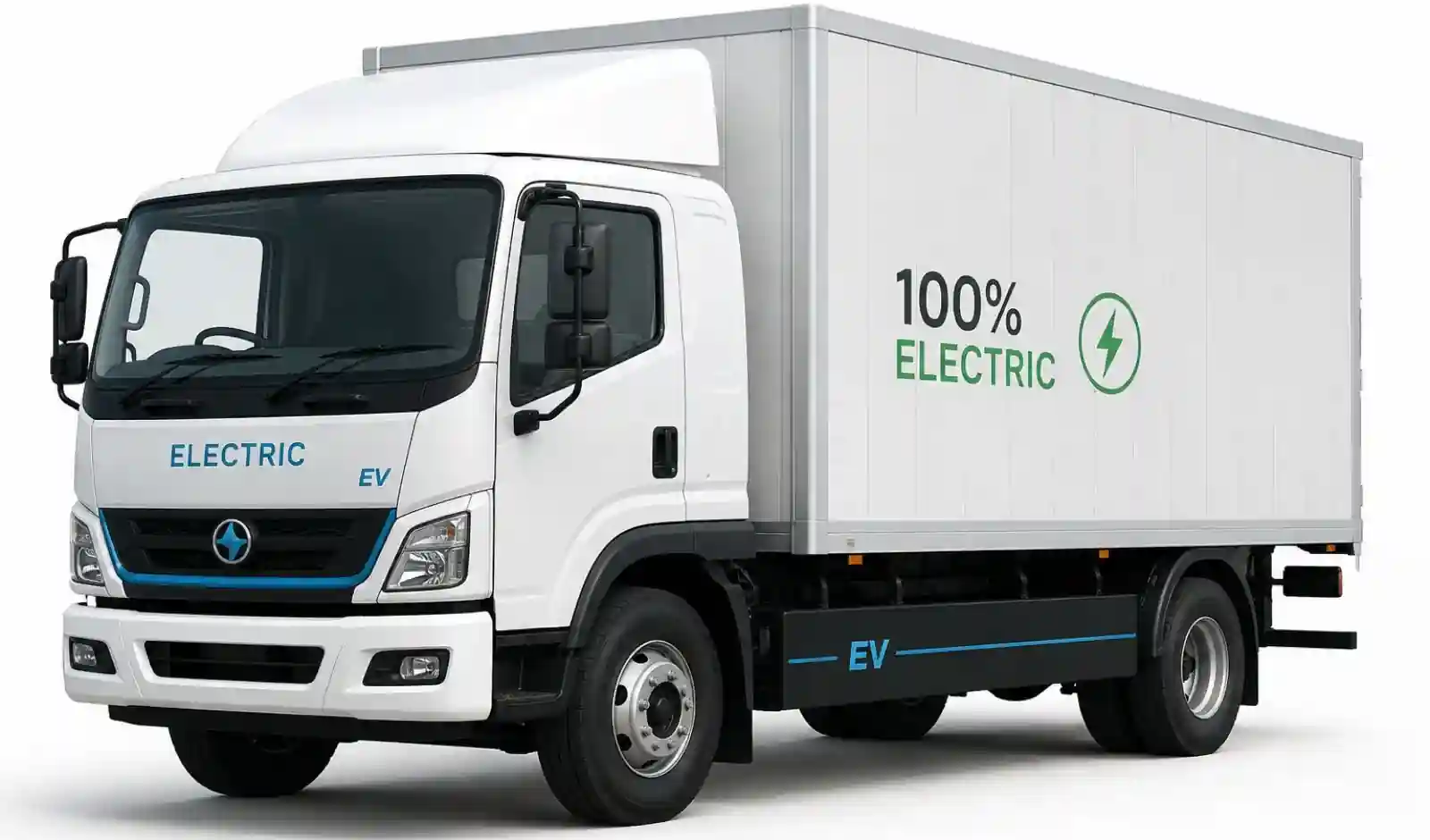
Freight transportation is the most important component of the logistics sector, contributing significantly to a country’s economic development. India’s trucking sector is not only a climate story – it is a logistics-cost, energy-security and most importantly citizen-welfare issue. Every product that reaches a household, factory, shop or construction site carries the hidden cost of diesel dependence, traffic restrictions, inefficient freight movement and polluted air. As India’s economy grows, this cost will continue to increase unless freight transport is made cleaner, economical and more efficient.
According to TERI, India’s freight demand stood at 2,682 billion tonne-kilometres (BTKM) in the year 2019-20 which is projected to jump 11-folds by 2070. At present, about 70% of the freight demand in India is served by road transport, a majority of which is handled by medium and heavy-duty trucks (MHDTs). Considering the growing freight demand in India, Trucks are expected to grow 4 times, from 4 million in the year 2022 to about 17 million in the year 2050.
Medium and heavy-duty trucks, N2 and N3 categories, respectively, are particularly important because they serve long-haul corridors, industrial clusters, wholesale markets as well as urban distribution networks. However, the same trucks also account for a significant share of diesel consumption, fuel import and foreign exchange burden, and transport-related emissions. All this makes trucking one of the most strategic sectors for India’s energy transition. Electrifying trucks, therefore, should be seen as an economic reform as much as an environmental intervention.
Pilot to Scale
It is critical that corridor-wise and use-case wise plans are made to deploy electric trucks on long haul routes, in addition to their urban centric application such as delivery of municipal services such as solid waste or water management. Regarding the feasibility of electric trucks, several studies have been conducted by government and think tanks since early 2020. Studies have identified several high-density corridors for the running of electric trucks on Indian highways. In 2024, the Ministry of Heavy Industries conducted a study and identified 20 priority highways. The Office of the Principal Scientific Adviser (PSA), Government of India, conducted a detailed study, building on the findings of the previous studies and identified 10 priority corridors, connecting major consumption hubs with the manufacturing hubs across India.
As a result, electric trucks are now moving beyond the pilot scale. More companies are shifting from pilot implementation and testing phase to double digit deployments. Several major businesses, including Adani Ports, UltraTech Cement, Dalmia Bharat, IKEA, CONCOR, among many others have initiated e-truck deployment. Dedicated programs such as Laneshift, a collaborative initiative by the Climate Group and C40 cities, conducted a pilot study on the Bengaluru-Chennai corridor, which is one of the busiest and priority corridors identified by the PSA study. A total of 20 electric trucks of 3 gross vehicle category were deployed in six freight sectors, and operational and performance insights were generated. While upfront costs remain a concern, one of the key findings was that the lifetime cost of a 55-tonne electric truck was 3-4% higher than a diesel truck and could be matched within one year of operation.
Supporting Policies and Incentives
Policy support is beginning to respond to this opportunity. Incentives under the PM E-Drive scheme provide support for electric truck deployment, and several state policies are now encouraging cleaner commercial vehicles. Delhi’s EV 2.0 policy is particularly important because the capital region is one of India’s most freight-intensive urban economies, with warehouses, industrial areas, wholesale markets and distribution centres located within and around its borders.
However, the current policy focus remains stronger for smaller commercial vehicles than for the N3 category of heavy-duty vehicles. This is a critical gap – N3 trucks move a large share of freight, consume more fuel per vehicle, and have a much larger influence on logistics efficiency and emissions. If policy support stops short of this segment, the transition will remain incomplete.
Despite the policy efforts for smaller (N1 & N2) category trucks in the Delhi EV policy, there is a need to focus on HDTs (N3) category trucks as they account for the majority of freight movement and emissions and are projected to grow significantly. This also becomes more important as a number of warehouses, distribution centres, wholesale markets, and industrial hubs are located within and around Delhi's borders, and their freight demand is catered by MHDTs. However, due to restrictions on MHDTs' entry during daytime in Delhi, results in a limited operational window. This reduces logistics efficiency and increases hidden logistics costs.
Policy interventions like allowing unrestricted movement of MHDTs during the non-peak hours in Delhi will significantly improve freight efficiency by increasing operational hours, enabling more trips per day, and lowering logistics costs. In addition, measures such as purchase subsidies, exemptions from road tax, and waiver of registration fees can make the electric trucks financially attractive for transporters and fleet owners. These interventions for MHDT, combined with existing regulations and incentives for N1 & N2 category trucks, can significantly contribute to emission and logistics cost reduction, especially for the Delhi NCR region.
Finally, mandates such as proposed in the Delhi for government and government-lined agencies to procure only electric trucks across Indian cities for municipal activities, foodgrain and water distribution, and LPG distribution. This would ensure assured market for the e-truck manufacturers and cover their investment risks.
In Summary
India’s freight transition is no longer a distant climate ambition, it is an immediate economic, energy security, and public health priority. As freight demand rises, electrifying MHDTs can reduce dependence on imported fuel, lower hidden logistics costs, and improve air quality in cities. The next step is to move from fragmented incentives to a coordinated scale-up strategy along with corridor-wide planning, targeted support for N3 trucks, operational privileges, and assured demand from public and large private freight buyers.
(Co-Author: Arun Kumar and Sharif Qamar, Views are personal)


