



 154
/
6
Min Read
154
/
6
Min Read


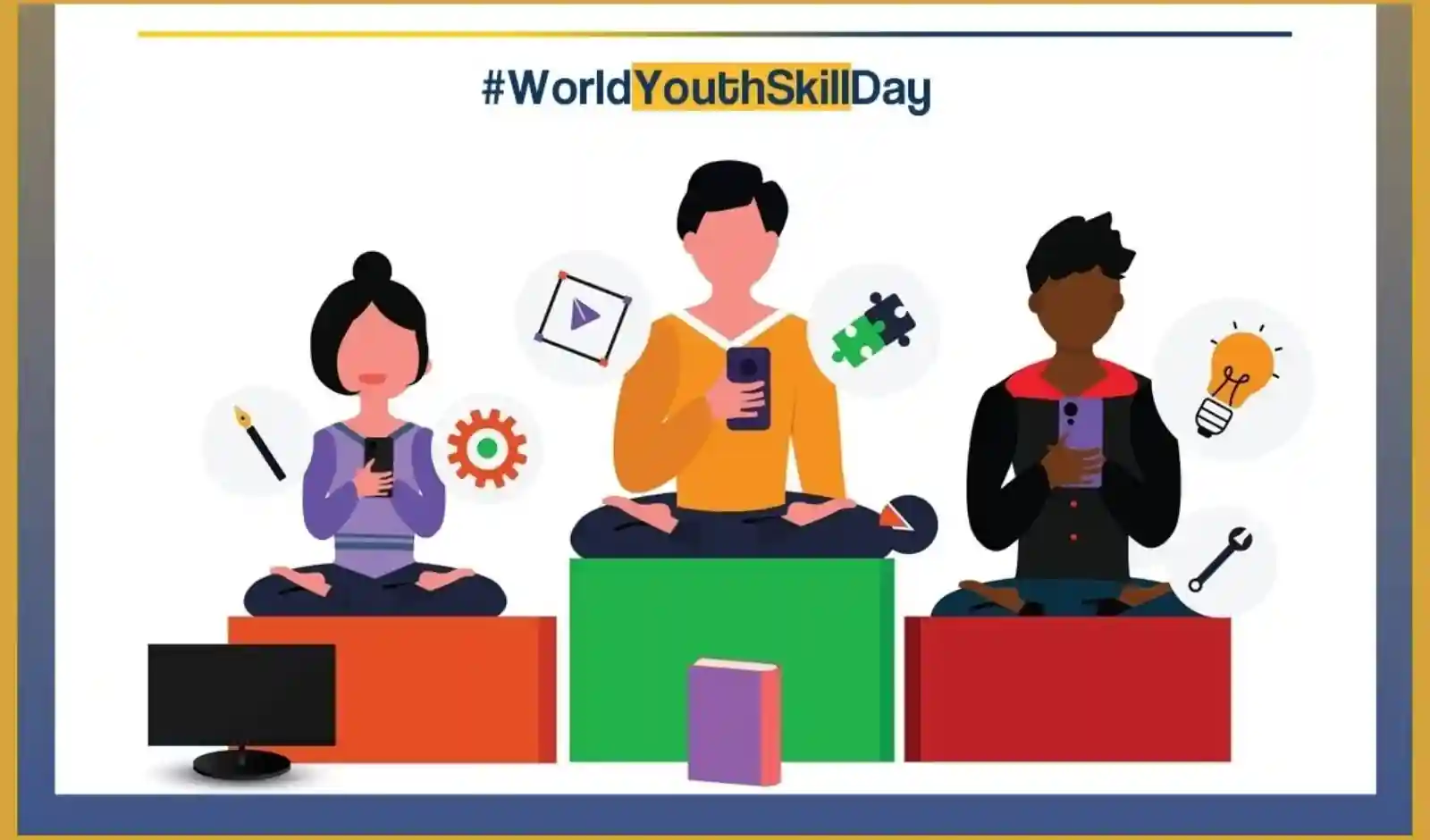
On the occasion of World Youth Skills Day (15 July), warm greetings to all the young people of the country. The day celebrates the talent, skills and limitless potential of youth while reinforcing the importance of equipping them for the opportunities and challenges of the future. India is home to one of the world's largest youth populations, making its young workforce the nation's greatest strength and most valuable asset.
Today, Indian youth have unprecedented opportunities across sectors such as Artificial Intelligence (AI), Machine Learning, Data Science, Cybersecurity, Semiconductors, Robotics, FinTech, AgriTech, HealthTech, EdTech, Electric Vehicles (EVs), Green Energy, Drone Technology, Space Technology, Manufacturing, Startups, Digital Media and Entrepreneurship. As the global economy undergoes rapid transformation, emerging technologies are opening new avenues for employment, innovation and economic growth.
If India's young talent is supported with quality education, modern technology, innovation and industry-relevant skills, the country can emerge as a global talent hub while accelerating its journey towards the vision of Viksit Bharat 2047.
Government Initiatives Driving the Skilling Ecosystem
To support this transformation, the Government of India has launched several initiatives, including the Skill India Mission, Skill India Digital, Pradhan Mantri Kaushal Vikas Yojana (PMKVY), National Education Policy (NEP) 2020, Digital India, Startup India, Make in India, Prime Minister Internship Scheme, IndiaAI Mission and Atal Innovation Mission. These programmes are playing a significant role in equipping young people with future-ready skills.
The objective of these initiatives goes beyond creating employment opportunities. They also aim to nurture innovation, entrepreneurship and global competitiveness among India's youth. Experts believe that the country's long-term economic growth will depend largely on a skilled, adaptable and technologically empowered workforce.
On the occasion of World Youth Skills Day, education leaders, industry experts and skilling professionals reiterated that future success will be determined not merely by academic degrees, but by practical skills, AI literacy, digital competence and a commitment to continuous learning.
Bridging the Skill Gap to Improve Employability
According to experts, one of India's biggest challenges today is the persistent skill gap. Many industries continue to face difficulty in finding candidates with practical experience, technical expertise and problem-solving abilities. At the same time, many graduates enter the job market without the skills required by employers.
As a result, companies are increasingly placing equal importance on competencies such as critical thinking, communication, collaboration, leadership, adaptability, creativity and problem-solving, alongside academic qualifications.
Experts believe that narrowing this gap requires stronger collaboration between educational institutions, industry and skilling platforms. Updating curricula regularly, expanding internship and apprenticeship opportunities, and promoting experiential learning have become essential for preparing students for the workplace.
Redefining Success in the AI Era
Artificial Intelligence has fundamentally transformed the way people work and make decisions. In this rapidly evolving landscape, technical knowledge alone will not be sufficient. Young professionals must also learn to work alongside AI, interpret data effectively, make responsible decisions and ensure the ethical use of technology.
Experts believe that AI literacy is fast becoming an essential capability. However, mastering AI tools alone will not be enough. The most successful professionals will be those who combine technological expertise with human insight, creativity and ethical judgment.
This is why educational institutions must focus not only on developing digital capabilities but also on nurturing innovation, responsible leadership and a strong sense of social responsibility.
Need for Stronger Industry-Academia Collaboration
Government-led skilling initiatives have already reached millions of young people across the country. However, experts believe that government efforts alone cannot address the growing demand for future-ready talent. Stronger partnerships between educational institutions, industry, startups and skilling organisations are essential.
They also stressed the importance of extending high-quality digital learning opportunities to smaller cities and rural areas so that every young person has equal access to skill development.
Greater industry participation in curriculum design will also ensure that academic programmes remain practical, employment-oriented and aligned with evolving market needs.
Experts Share Their Vision for India's Youth
Dr. Aseem Chauhan, Chancellor, Amity University, said that India's greatest strength lies in its young population. In the era of AI and emerging technologies, it is not enough to simply prepare youth for change; they must also be empowered to lead it. He added that education and skilling should aim to develop globally competitive young leaders capable of driving innovation and progress.
Dr. Keyoor Purani, Vice Chancellor, Prestige University, Indore, said that India's demographic dividend can become a true economic advantage only if young people are equipped with the skills required by future industries. According to him, higher education institutions must prepare graduates who can continuously adapt to technological advancements and contribute meaningfully to the global economy.
Prof. Saravanan Kesavan, Dean and Professor of Operations, BITS School of Management (BITSoM), said that future leaders will require much more than technical expertise. They must develop critical thinking, collaboration, responsible decision-making and a human-centred approach to leadership. While AI literacy is essential, true leadership will come from the ability to combine technology with human insight to solve real-world challenges.
Lifelong Learning: The Foundation of Future Success
Experts emphasised that lifelong learning has become one of the most important pillars of career success. With technology evolving at an unprecedented pace, skills acquired today may quickly become outdated. Young professionals must therefore embrace continuous upskilling and reskilling to remain relevant in an ever-changing job market.
In addition, innovation, entrepreneurship, digital literacy, data analytics, green skills and expertise in emerging technologies are expected to become key drivers of employment in the years ahead. If India succeeds in equipping its youth with these capabilities, it can strengthen its position as a global talent hub while making significant progress towards achieving the vision of Viksit Bharat 2047.
The message of World Youth Skills Day 2026 is clear: success in the future economy will depend not merely on academic qualifications, but on the right skills, continuous learning, innovation, technological competence and a strong foundation of human values. It is the shared responsibility of educational institutions, industry, government and skilling organisations to prepare India's youth not only for employment, but also for leadership, entrepreneurship and global competitiveness. This collective effort can transform India's young population into its greatest engine of economic and social progress.


